


Some error occured while loading the Quick View. Please close the Quick View and try reloading the page.
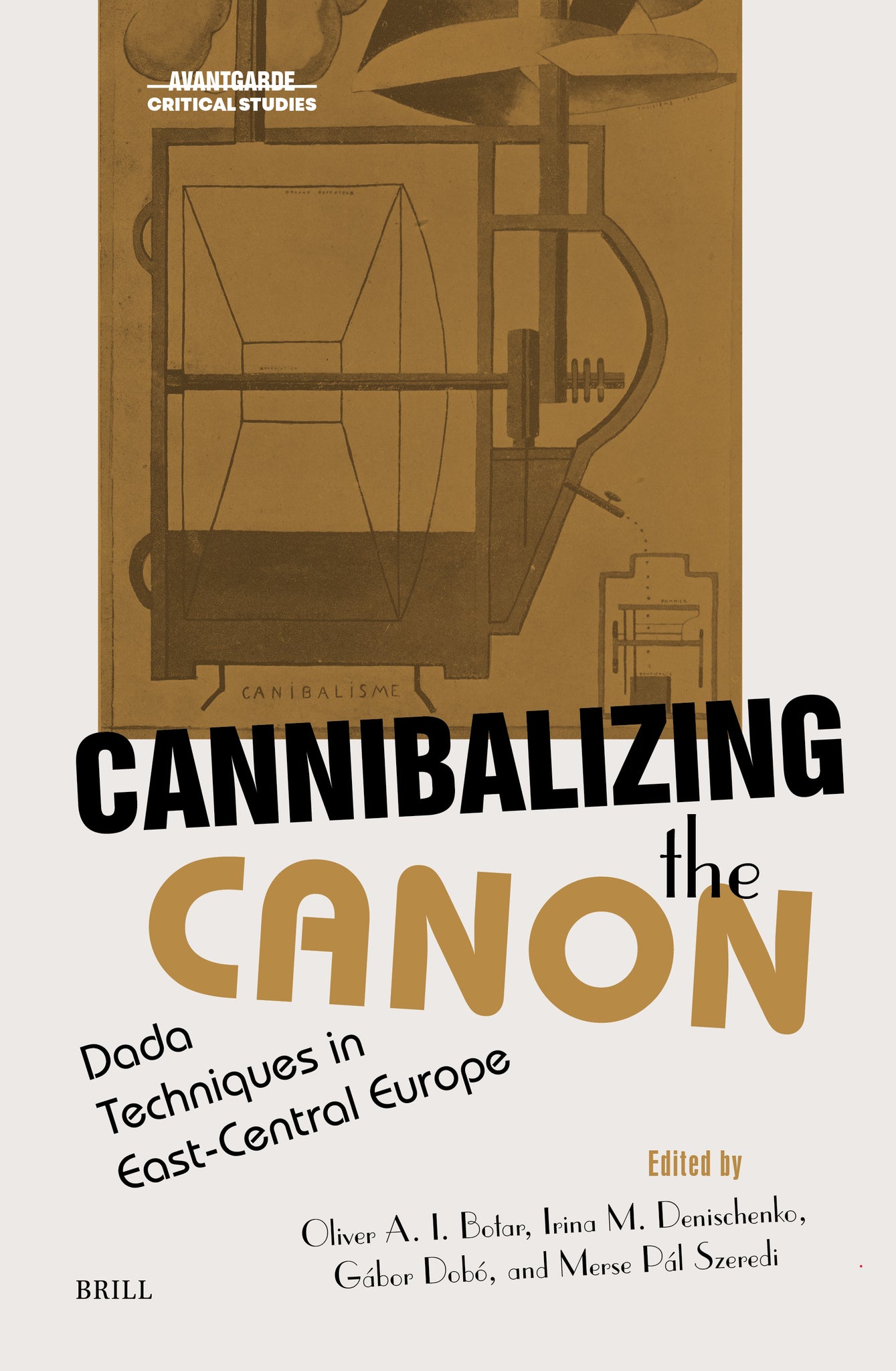
This rich, in-depth exploration of Dada’s roots in East-Central Europe is a vital addition to existing research on Dada and the avant-garde. Through deeply researched case studies and employing novel theoretical approaches, the volume rewrites the history of Dada as a story of cultural and political hybridity, border-crossings, transitions, and transgressions, across political, class and gender lines. Dismantling prevailing notions of Dada as a “Western” movement, the contributors to this volume present East-Central Europe as the locus of Dada activity and techniques. The articles explore how artists from the region pre-figured Dada as well as actively “cannibalized”, that is, reabsorbed and further hybridized, a range of avant-garde techniques, thus challenging “Western” cultural hegemony.

Price: $185.00
Pages: 634
Publisher: Brill
Imprint: Brill
Publication Date:
31 January 2024
ISBN: 9789004526730
Format: Hardcover

Cannibalizing the Canon has the merit of shedding light on under-researched territories and overlooked issues in avant-garde historiography, restoring the contributions of those artists who did not figure in the canonical constructions of Dadaism and incorporating ephemeral art forms. Using new theoretical approaches and methodological frameworks, the volume challenges the singularity of Dadaism and its founding myths. The focus on the connections between local avant-gardes, employing transmedial and transnational perspectives, corrects and nuances some directions from avant-garde histories, contesting the hegemony of the West and a hierarchical system. Thus, the volume brings a significant contribution to the Dada movement and to the research of the avant-garde.
Oliver Botar is a Professor of Art History and Associate Director of the School of Art at the University of Manitoba. His research focuses on early 20th-century Central European Modernism, particularly the work of Moholy-Nagy, with concentrations on art in alternative media, and “Biocentrism” and Modernism in early-to-mid 20th-century art.
Irina Denischenko is an Assistant Professor at Georgetown University. Her research focuses on 20th-century literature and visual art--especially the avant-garde, on critical theory, as well as on women’s contributions to avant-garde and modernist aesthetics in Central and Eastern Europe.
Gábor Dobó is a research fellow at the Kassák Museum in Budapest. He is the principal investigator of a project focusing on the artist couple Lajos Kassák and Jolán Simon. In 2022, he was a Fulbright visiting scholar at Columbia University.
Merse Pál Szeredi is department head at the Kassák Museum. His research focuses on Hungarian avant-garde art and the history of Lajos Kassák’s magazine Ma in Vienna between 1920 and 1925, with special emphasis on its international networks.
Irina Denischenko is an Assistant Professor at Georgetown University. Her research focuses on 20th-century literature and visual art--especially the avant-garde, on critical theory, as well as on women’s contributions to avant-garde and modernist aesthetics in Central and Eastern Europe.
Gábor Dobó is a research fellow at the Kassák Museum in Budapest. He is the principal investigator of a project focusing on the artist couple Lajos Kassák and Jolán Simon. In 2022, he was a Fulbright visiting scholar at Columbia University.
Merse Pál Szeredi is department head at the Kassák Museum. His research focuses on Hungarian avant-garde art and the history of Lajos Kassák’s magazine Ma in Vienna between 1920 and 1925, with special emphasis on its international networks.