


Some error occured while loading the Quick View. Please close the Quick View and try reloading the page.
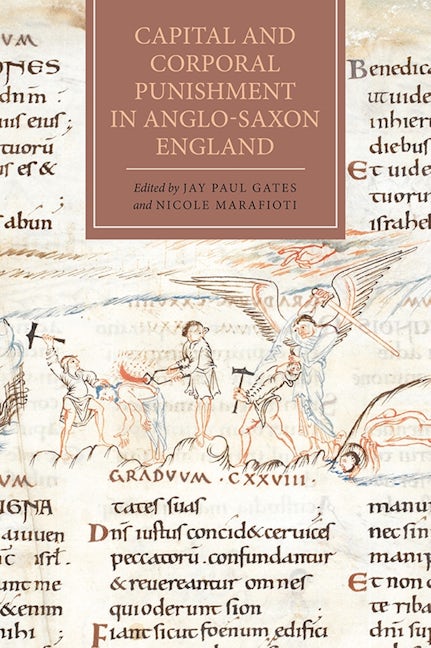
Essays examining how punishment operated in England, from c.600 to the Norman Conquest.
Anglo-Saxon authorities often punished lawbreakers with harsh corporal penalties, such as execution, mutilation and imprisonment. Despite their severity, however, these penalties were not arbitrary exercises of power. Rather, theywere informed by nuanced philosophies of punishment which sought to resolve conflict, keep the peace and enforce Christian morality.
The ten essays in this volume engage legal, literary, historical, and archaeological evidence to investigate the role of punishment in Anglo-Saxon society. Three dominant themes emerge in the collection. First is the shift from a culture of retributive feud to a system of top-down punishment, in which penalties were imposed by an authority figure responsible for keeping the peace. Second is the use of spectacular punishment to enhance royal standing, as Anglo-Saxon kings sought to centralize and legitimize their power. Third is the intersectionof secular punishment and penitential practice, as Christian authorities tempered penalties for material crime with concern for the souls of the condemned. Together, these studies demonstrate that in Anglo-Saxon England, capital and corporal punishments were considered necessary, legitimate, and righteous methods of social control.
Jay Paul Gates is Assistant Professor at John Jay College of Criminal Justice in The City University of New York; Nicole Marafioti is Assistant Professor of History and co-director of the Medieval and Renaissance Studies Program at Trinity University in San Antonio, Texas.
Contributors: Valerie Allen, Jo Buckberry, Daniela Fruscione, Jay Paul Gates, Stefan Jurasinski, Nicole Marafioti, Daniel O'Gorman, Lisi Oliver, Andrew Rabin, Daniel Thomas.
Anglo-Saxon authorities often punished lawbreakers with harsh corporal penalties, such as execution, mutilation and imprisonment. Despite their severity, however, these penalties were not arbitrary exercises of power. Rather, theywere informed by nuanced philosophies of punishment which sought to resolve conflict, keep the peace and enforce Christian morality.
The ten essays in this volume engage legal, literary, historical, and archaeological evidence to investigate the role of punishment in Anglo-Saxon society. Three dominant themes emerge in the collection. First is the shift from a culture of retributive feud to a system of top-down punishment, in which penalties were imposed by an authority figure responsible for keeping the peace. Second is the use of spectacular punishment to enhance royal standing, as Anglo-Saxon kings sought to centralize and legitimize their power. Third is the intersectionof secular punishment and penitential practice, as Christian authorities tempered penalties for material crime with concern for the souls of the condemned. Together, these studies demonstrate that in Anglo-Saxon England, capital and corporal punishments were considered necessary, legitimate, and righteous methods of social control.
Jay Paul Gates is Assistant Professor at John Jay College of Criminal Justice in The City University of New York; Nicole Marafioti is Assistant Professor of History and co-director of the Medieval and Renaissance Studies Program at Trinity University in San Antonio, Texas.
Contributors: Valerie Allen, Jo Buckberry, Daniela Fruscione, Jay Paul Gates, Stefan Jurasinski, Nicole Marafioti, Daniel O'Gorman, Lisi Oliver, Andrew Rabin, Daniel Thomas.

Price: $120.00
Pages: 224
Publisher: Boydell & Brewer Inc.
Imprint: Boydell Press
Publication Date:
17 July 2014
Trim Size: 9.21 X 6.14 in
ISBN: 9781843839187
Format: Hardcover
BISACs:
HISTORY / Europe / Medieval, European history: medieval period, middle ages

Legal studies can seem a more-than-usually specialized subdiscipline of any field, with distinctive vocabulary, textual forms, and mode of analysis. This collection not only renders all these aspects accessible, but it also demonstrates that legal discourse, broadly conceived, is related in some way to almost every other corner of the field. Attentive readers will find much to reward them here, and likely some new insights into their own work, whatever that may be.
Introduction: Capital and Corporal Punishment in Anglo-Saxon England - Nicole Marafioti and Jay Paul Gates
When Compensation Costs an Arm and a Leg - Valerie Allen
Beginnings and Legitimation of Punishment in Early Anglo-Saxon Legislation From the Seventh to the Ninth Century - Daniela Fruscione
Genital Mutilation in Medieval Germanic Law - Lisi Oliver
'Sick-Maintenance' and Earlier English Law - Stefan Jurasinski
Incarceration as Judicial Punishment in Anglo-Saxon England - Daniel Thomas
Earthly Justice and Spiritual Consequences: Judging and Punishing in the Old English Consolation of Philosophy - Nicole Marafioti
Osteological Evidence of Corporal and Capital Punishment in Later Anglo-Saxon England - Jo Buckberry
Mutilation and Spectacle in Anglo-Saxon Legislation - Daniel O'Gorman
The 'Worcester' Historians and Eadric Streona's Execution - Jay Paul Gates
Capital Punishment and the Anglo-Saxon Judicial Apparatus: A Maximum View? - Andrew Rabin
When Compensation Costs an Arm and a Leg - Valerie Allen
Beginnings and Legitimation of Punishment in Early Anglo-Saxon Legislation From the Seventh to the Ninth Century - Daniela Fruscione
Genital Mutilation in Medieval Germanic Law - Lisi Oliver
'Sick-Maintenance' and Earlier English Law - Stefan Jurasinski
Incarceration as Judicial Punishment in Anglo-Saxon England - Daniel Thomas
Earthly Justice and Spiritual Consequences: Judging and Punishing in the Old English Consolation of Philosophy - Nicole Marafioti
Osteological Evidence of Corporal and Capital Punishment in Later Anglo-Saxon England - Jo Buckberry
Mutilation and Spectacle in Anglo-Saxon Legislation - Daniel O'Gorman
The 'Worcester' Historians and Eadric Streona's Execution - Jay Paul Gates
Capital Punishment and the Anglo-Saxon Judicial Apparatus: A Maximum View? - Andrew Rabin