


Some error occured while loading the Quick View. Please close the Quick View and try reloading the page.
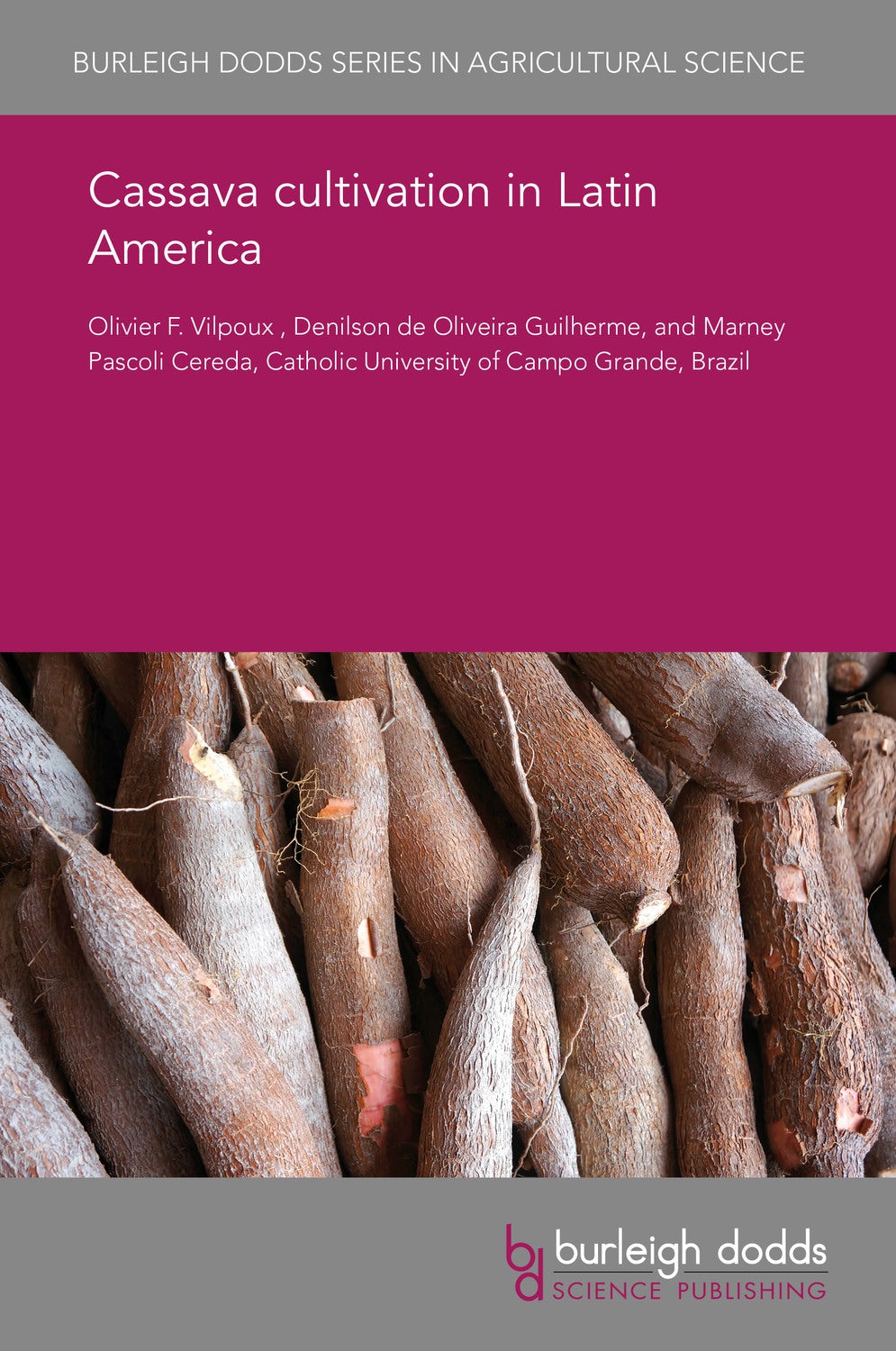
Cassava was domesticated from its wild species ancestors in the New World, probably in South America. This origin, with its connection to indigenous cultures, has been presented as both advantage and disadvantage. It has helped to maintain the production of cassava, but has also been the cause of difficulty in modernising the crop. A well-known contrast is Thailand, a country with little or no traditional use of cassava, which has managed to establish more commercial and industrial avenues of production and use. This chapter reviews the challenges which Latin American cassava production systems must address in order to increase their productivity and impact. We review global and Latin American approaches to cassava production and the competitiveness of cassava produced in Latin American. We then discuss how research can help to boost cassava production and increase benefits to producers and consumers along the cassava value chain.

Price: $32.50
Publisher: Burleigh Dodds Science Publishing
Imprint: Burleigh Dodds Science Publishing
Series: Burleigh Dodds Series in Agricultural Science
Publication Date:
12 July 2017
ISBN: 9781838790561
Format: eBook
BISACs:
TECHNOLOGY & ENGINEERING / Agriculture / Tropical Agriculture, TECHNOLOGY & ENGINEERING / Agriculture / Agronomy / Crop Science, TECHNOLOGY & ENGINEERING / Agriculture / Sustainable Agriculture

1 Introduction 2 Global and Latin American approaches to cassava production 3 Cassava competitiveness in Latin America 4 Boosting cassava production in Latin America 5 Improving the Latin American starch industry 6 Brazilian cassava flour (farinha) 7 Consumption of boiled and fried cassava 8 Future trends: cassava for animal feed 9 Where to look for further information 10 References