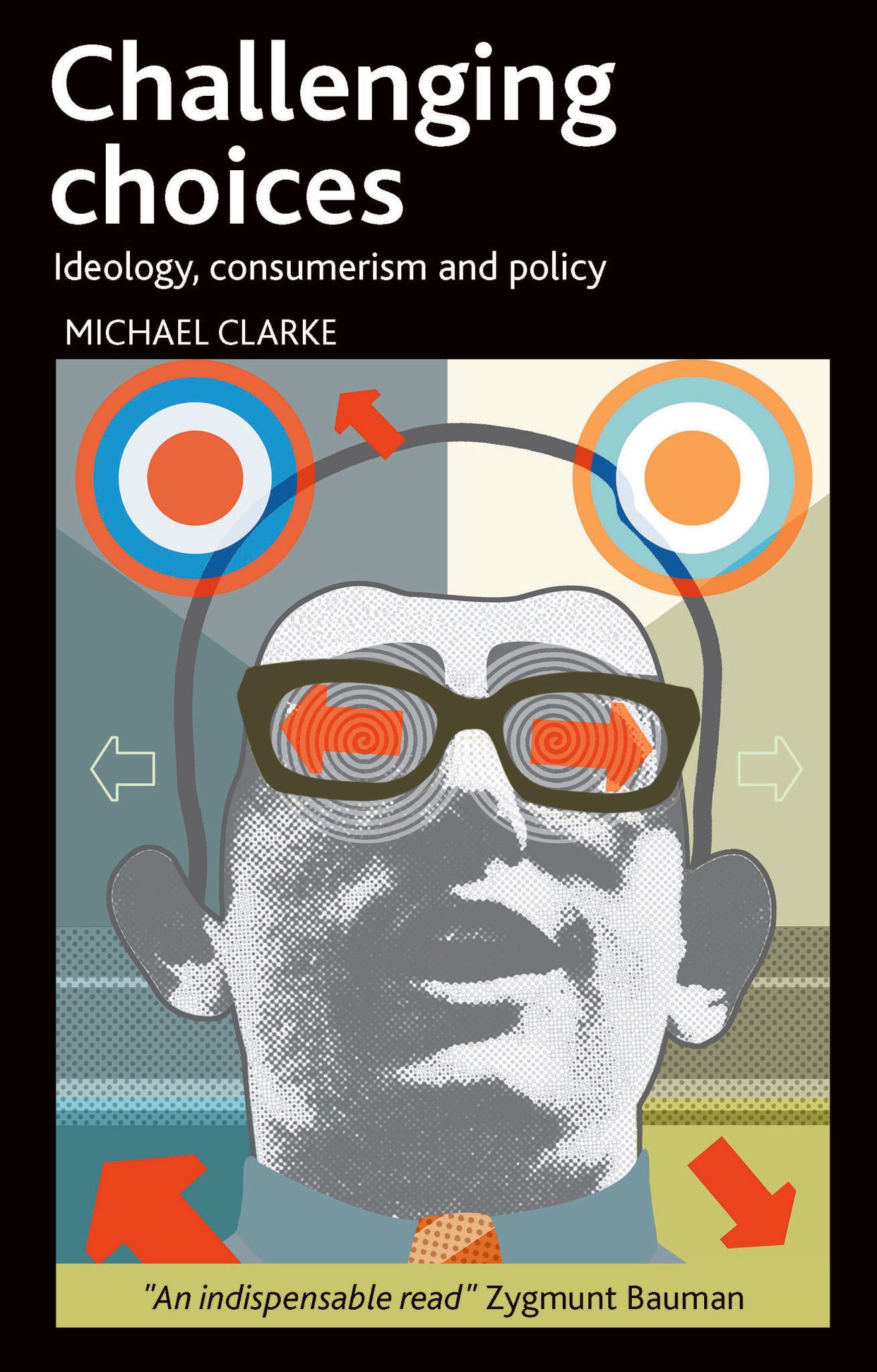
Choice pervades our society: it is founded on political rights to choose and our economy on market choices, but we have now reached the point where choice is extended almost everywhere.
This lively and topical book provides a critique of choice in contemporary society and policy, arguing that we can have too much of a good thing. And there are alternatives.
In part one, the author shows how choice works at a personal level, its demands, and how it can fail. By examining healthcare, education and pensions, he then explores the alternatives, such as provision.
In part two the book reviews the impact of choice through the life cycle, in areas such as careers, relationships fertility, retirement and death. The author considers whether this enhances or burdens our lives, and questions the assumption that more choice is always for the better.
Price: $126.95
Pages: 224
Publisher: Bristol University Press
Imprint: Policy Press
Publication Date:
17 February 2010
ISBN: 9781847423986
Format: Hardcover
BISACs:
POLITICAL SCIENCE / Public Policy / General, Public administration / Public policy

"This is a book about the activity in which we are engaged most - 24 hours a day, 7 days a week; and from still tender years to as old an age as we manage to reach: the activity of choosing. We have been told, and we believe, that anything in the world is open to choice. What we overlook is that one thing that is not open to choice is the choosing itself. Clarke masterfully demonstrates how the acclaimed epitome of freedom and self-assertion has been reforged into a 'must' and 'there is no alternative': the two pillars, and two faces of unfreedom. He also unravels the intricate mechanisms of that sleight-of-hand - one of the most guarded secrets of our society of consumers. An eye-opening study, indeed! An indispensable read for everyone fond of freedom and wishing self-assertion..." Zygmunt Bauman, University of Leeds
"In this book, Michael Clarke takes on the ideology of choice and challenges it by pitting it against social science studies and the difficult dilemmas the people wrestle with in everyday life. Both challenges clearly demonstrate the limits and problems of individualised consumer choice as a basis for policy and practice." John Clarke, Professor of Social Policy, The Open University.
Michael Clarke held posts in the departments of Sociology at the Universities of Birmingham and of Liverpool, where his research was mainly on business crime and regulation. He is now retired and lives in Herefordshire, where he cultivates his garden.
Introduction; Part One: Choice and consumerism: What is choice?; Making choices: just fun?; Choice and the consumer society; When choice does not work; Some wider problems with choice; Part Two: Choice and the life cycle: Introduction: choice and the life cycle; Jobs and careers; Lovers, partners, spouses; Fertility and family; Retirement; Death; Part three: Conclusions: Choice and meaning; Conclusion.