Skip to product information
1 of 1

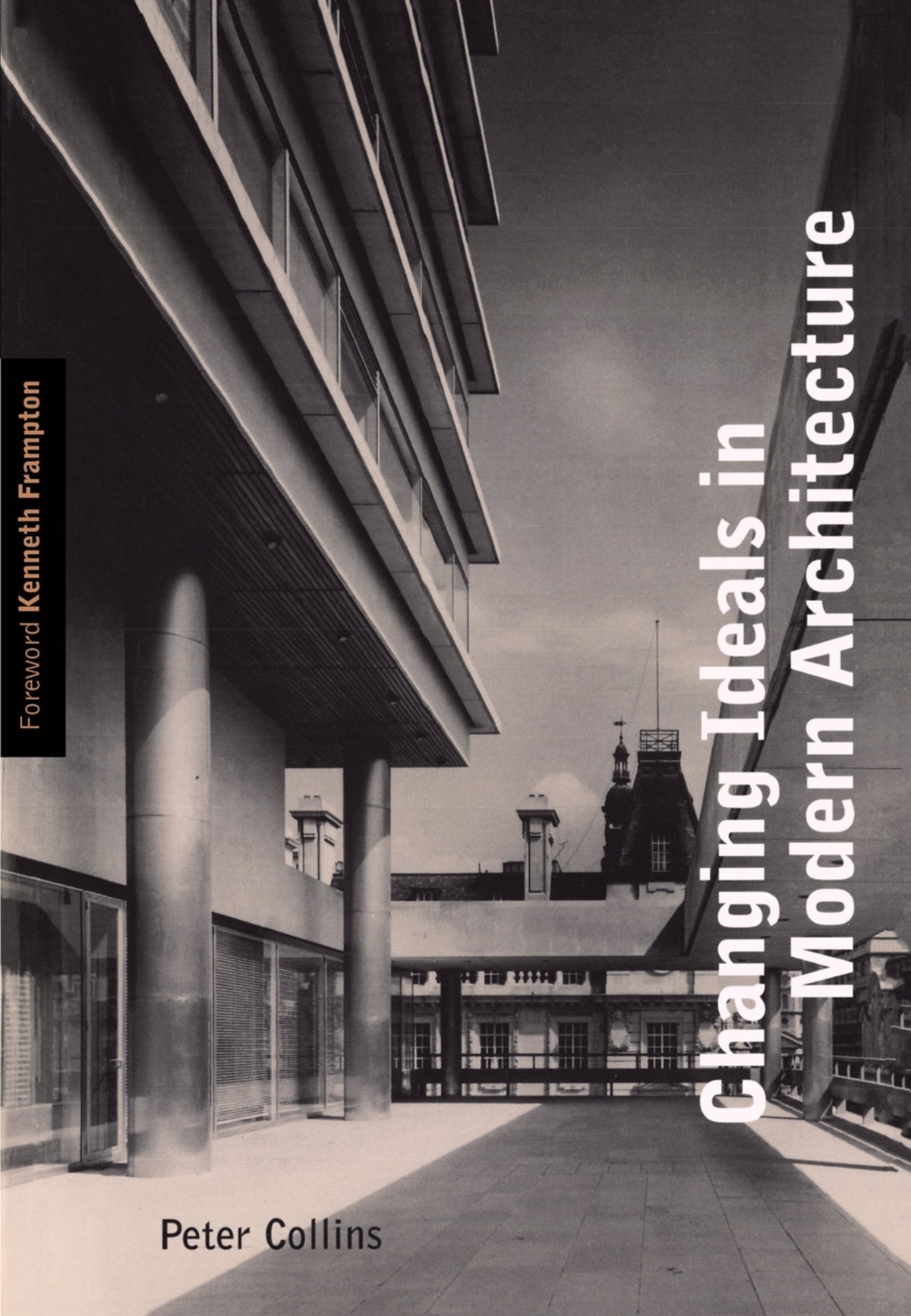
Changing Ideals in Modern Architecture, 1750-1950, Second Edition

Regular price $34.95
Regular price $0.00 Sale price $34.95
Sold out
Changing Ideals in Modern Architecture revolutionized the understanding of modernism in architecture, pushing back the sense of its origin from the early twentieth century to the 1750s and thus pla...
Read More
  • 21 July 1998
View Product Details

Peter Collins's classic study surveys two hundred years of architectural theories and ideas. It explains what Revivalism, Rationalism, Eclecticism, and Functionalism meant to those who practised them, examining the influence of the other arts and sciences on architectural theory, and analysing notions that are commonly used in discussions about modern architecture but have implications frequently unsuspected or overlooked. Infused with a deep sympathy for the nineteenth century, Changing Ideals in Modern Architecture suggests that many nineteenth-century ideas can be of real value to practising architects, particularly now that technology has made it possible to put them into effect properly.

This new edition will be of interest not only to those who specialize in architecture and have read the standard works of Hitchcock, Giedion, Pevsner, and Joedicke but also to all those with a general interest in modern history and the philosophy of art.

files/i.png Icon
Price: $34.95
Publisher: McGill-Queen's University Press
Imprint: McGill-Queen's University Press
Publication Date: 21 July 1998
ISBN: 9780773517752
Format: Paperback
BISACs: ARCHITECTURE / History / General
REVIEWS Icon
"Even now, after so much of its substance has been elaborated by subsequent scholarship, Changing Ideals in Modern Architecture remains a pioneering achievement. It still provides an ideological history of the modern movement, covering an extremely wide trajectory and one which is animated throughout by a sharp critical bias. Its challenging originality stems from the way in which Collins constantly begs the question as to the fundamental nature of tectonic modernity as this has evolved over the last two centuries." Kenneth Frampton, from the Introduction