


Some error occured while loading the Quick View. Please close the Quick View and try reloading the page.
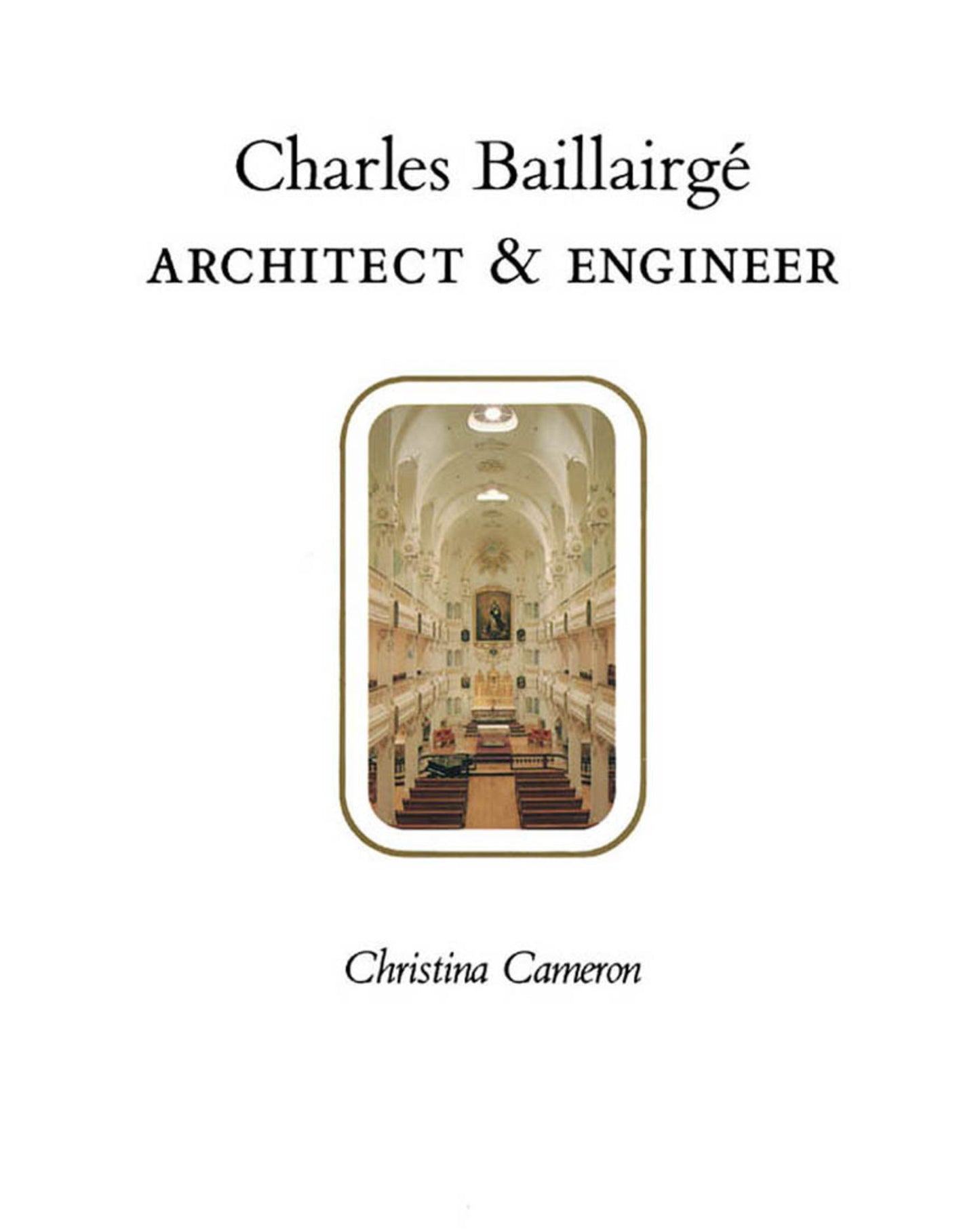
During his career as an architect, he designed major public buildings such as the Quebec Music Hall, Laval University, Sainte-Marie de Beauce church, and Dufferin Terrace, and was supervising architect for the first Parliament Buildings in Ottawa. He was responsible for introducing Gothic and Greek Revival styles to Quebec city and fostered the use of contemporary materials in residential and commercial structures. Christina Cameron's biography of this remarkable man includes an analysis of innovations in architectural design and construction technology in Quebec City during the middle of the nineteenth century, and includes a discussion of the radical change in the role of the architect from the architect/artisan of the previous century to the professional man who no longer took any part in the actual construction. In this first full-scale study of Baillairgé, Cameron has provided a fascinating picture not only of the life of an important architect but of developments in Canadian architecture during this period.

Price: $110.00
Publisher: McGill-Queen's University Press
Imprint: McGill-Queen's University Press
Publication Date:
01 July 1988
ISBN: 9780773561557
Format: eBook
BISACs:
HISTORY / General, ARCHITECTURE / Individual Architects & Firms / General

"a fascinating story about a compelling character....clearly analyses the architectural works and career of a Canadian who created works of considerable importance....a splendid chunk of Canadian cultural history." J. Douglas Stewart, Art History, Queen's University