


Some error occured while loading the Quick View. Please close the Quick View and try reloading the page.
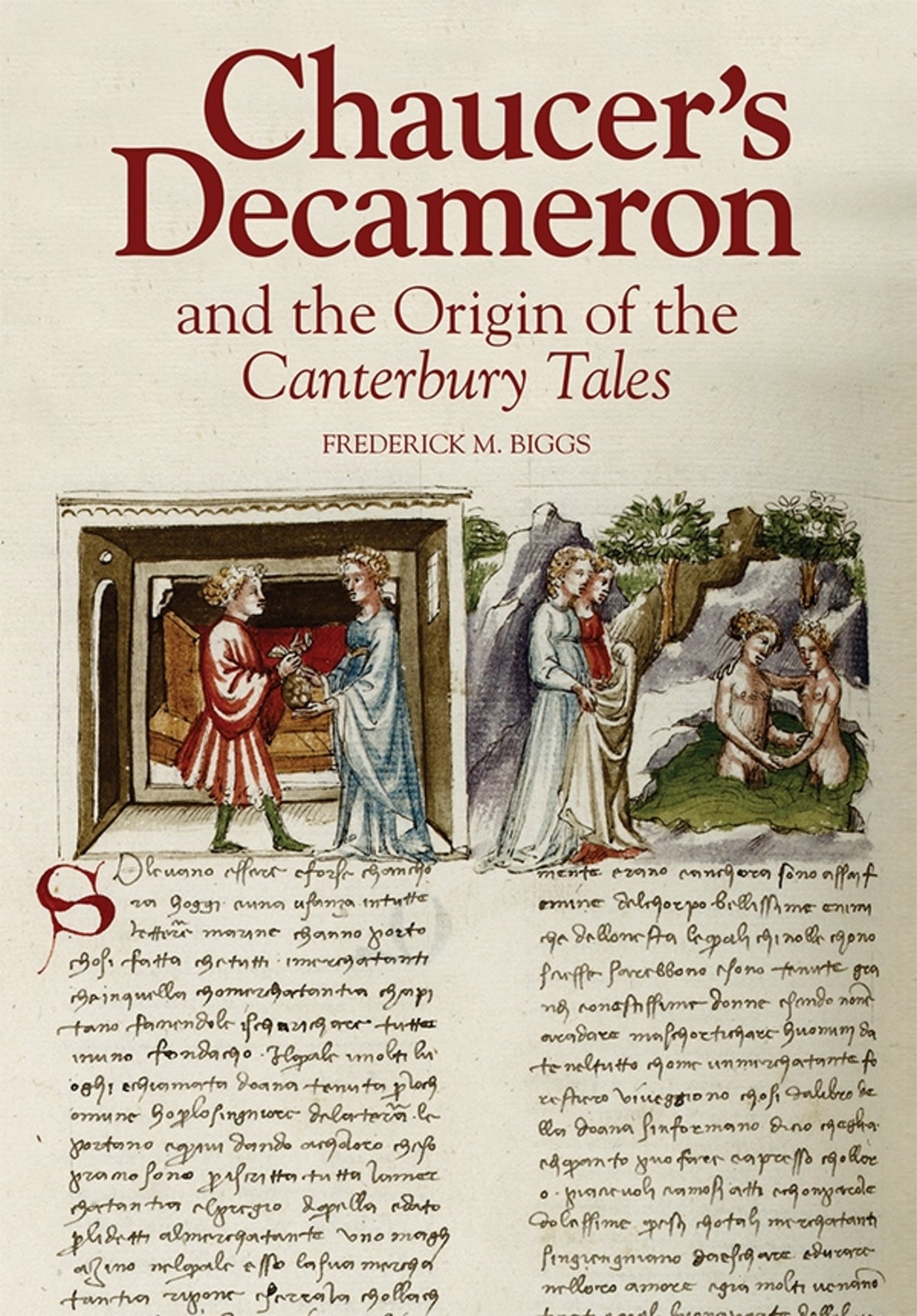
A major and original contribution to the debate as to Chaucer's use and knowledge of Boccaccio, finding a new source for the "Shipman's Tale".
A possible direct link between the two greatest literary collections of the fourteenth century, Boccaccio's Decameron and Chaucer's Canterbury Tales, has long tantalized readers because these works share many stories, which are, moreover, placed in similar frames. And yet, although he identified many of his sources, Chaucer never mentioned Boccaccio; indeed when he retold the Decameron's final novella, his pilgrim, the Clerk, states that it was written by Petrarch. For these reasons, most scholars now believe that while Chaucer might have heard parts of the earlier collection when he was in Italy, he did not have it at hand as he wrote.
This volumeaims to change our understanding of this question. It analyses the relationship between the "Shipman's Tale", originally written for the Wife of Bath, and Decameron 8.10, not seen before as a possible source. The book alsoargues that more important than the narratives that Chaucer borrowed is the literary technique that he learned from Boccaccio - to make tales from ideas. This technique, moreover, links the "Shipman's Tale" to the "Miller's Tale"and the new "Wife of Bath's Tale". Although at its core a hermeneutic argument, this book also delves into such important areas as alchemy, domestic space, economic history, folklore, Irish/English politics, manuscripts, and misogyny.
FREDERICK M. BIGGS is Professor of English at the University of Connecticut.
A possible direct link between the two greatest literary collections of the fourteenth century, Boccaccio's Decameron and Chaucer's Canterbury Tales, has long tantalized readers because these works share many stories, which are, moreover, placed in similar frames. And yet, although he identified many of his sources, Chaucer never mentioned Boccaccio; indeed when he retold the Decameron's final novella, his pilgrim, the Clerk, states that it was written by Petrarch. For these reasons, most scholars now believe that while Chaucer might have heard parts of the earlier collection when he was in Italy, he did not have it at hand as he wrote.
This volumeaims to change our understanding of this question. It analyses the relationship between the "Shipman's Tale", originally written for the Wife of Bath, and Decameron 8.10, not seen before as a possible source. The book alsoargues that more important than the narratives that Chaucer borrowed is the literary technique that he learned from Boccaccio - to make tales from ideas. This technique, moreover, links the "Shipman's Tale" to the "Miller's Tale"and the new "Wife of Bath's Tale". Although at its core a hermeneutic argument, this book also delves into such important areas as alchemy, domestic space, economic history, folklore, Irish/English politics, manuscripts, and misogyny.
FREDERICK M. BIGGS is Professor of English at the University of Connecticut.

Price: $130.00
Pages: 292
Publisher: Boydell & Brewer Inc.
Imprint: D.S.Brewer
Publication Date:
21 July 2017
Trim Size: 9.21 X 6.14 in
ISBN: 9781843844754
Format: Hardcover
BISACs:
LITERARY CRITICISM / Medieval, Literary studies: ancient, classical and medieval, LITERARY CRITICISM / European / General

Biggs has written a learned book that enlists a wide range of scholarship (manu-script and textual studies, medieval economics, architecture, and urban history) to support his account of Boccaccio's impact on Chaucer.
An immensely learned study, an omnium gatherum full of rewarding nuggets.
Biggs offer a broad reading of Boccaccio and Chaucer as anti-authoritarian advocates of freedom, particularly women's freedom, as explorers of class competition, and as proponents of secularism. These provocative big-picture issues will give readers something to think about as they reconsider the relationship between the Italian and English poets studied in this assertive book, where Biggs displays a tremendous mastery of potential sources and stories behind some of the greatest works of medieval literature.
Biggs has opened an early window on the genesis of Chaucer's idea of a narrative frame with multiple and incomplete structures of play and evaluation.
What did the Decameron teach Chaucer? A new way of understanding literature, of considering the relationship between stories, themes and motifs in order to write fascinating, intriguing tales. Chaucer learned how to elaborate his own ideas in a new narrative style and in doing so - according to Biggs - went far beyond what Boccaccio had written. Let's face it, Chaucer knew the Decameron, and in reworking it showed that he fully possessed the characteristic English ability to take an existing literary work and perfect it - an extraordinary example of what Dryden termed 'the Genius of our Countrymen [...] to improve an Invention'.
[T]his wide-ranging study demonstrates that there is still a great deal more room for debate and development of understanding of Chaucer's debt to Boccaccio. Highly recommended.
Chaucer's Decameron presents an exceptional breadth of scholarship, supporting its bold argument by compiling evidence from an extensive range of historical sources.
This book deserves to be read and recognized for its deep learning and astute critical analysis of Chaucer's tales, the historical and cultural contextualization of them, and beyond that, the nature of source study itself.
An immensely learned study, an omnium gatherum full of rewarding nuggets.
Biggs offer a broad reading of Boccaccio and Chaucer as anti-authoritarian advocates of freedom, particularly women's freedom, as explorers of class competition, and as proponents of secularism. These provocative big-picture issues will give readers something to think about as they reconsider the relationship between the Italian and English poets studied in this assertive book, where Biggs displays a tremendous mastery of potential sources and stories behind some of the greatest works of medieval literature.
Biggs has opened an early window on the genesis of Chaucer's idea of a narrative frame with multiple and incomplete structures of play and evaluation.
What did the Decameron teach Chaucer? A new way of understanding literature, of considering the relationship between stories, themes and motifs in order to write fascinating, intriguing tales. Chaucer learned how to elaborate his own ideas in a new narrative style and in doing so - according to Biggs - went far beyond what Boccaccio had written. Let's face it, Chaucer knew the Decameron, and in reworking it showed that he fully possessed the characteristic English ability to take an existing literary work and perfect it - an extraordinary example of what Dryden termed 'the Genius of our Countrymen [...] to improve an Invention'.
[T]his wide-ranging study demonstrates that there is still a great deal more room for debate and development of understanding of Chaucer's debt to Boccaccio. Highly recommended.
Chaucer's Decameron presents an exceptional breadth of scholarship, supporting its bold argument by compiling evidence from an extensive range of historical sources.
This book deserves to be read and recognized for its deep learning and astute critical analysis of Chaucer's tales, the historical and cultural contextualization of them, and beyond that, the nature of source study itself.
Introduction
Boccaccio as the Source for Chaucer's Use of Sources
The Shipman's Trade in Three Novelle from the Decameron
Licisca's Outburst: The Origin of the Canterbury Tales
Friar Puccio's Penance: Upending the Knight's Order
The Wife of Bath's Tale and the Tale of Florent
Conclusion
Appendix
Bibliography
Boccaccio as the Source for Chaucer's Use of Sources
The Shipman's Trade in Three Novelle from the Decameron
Licisca's Outburst: The Origin of the Canterbury Tales
Friar Puccio's Penance: Upending the Knight's Order
The Wife of Bath's Tale and the Tale of Florent
Conclusion
Appendix
Bibliography