


Some error occured while loading the Quick View. Please close the Quick View and try reloading the page.
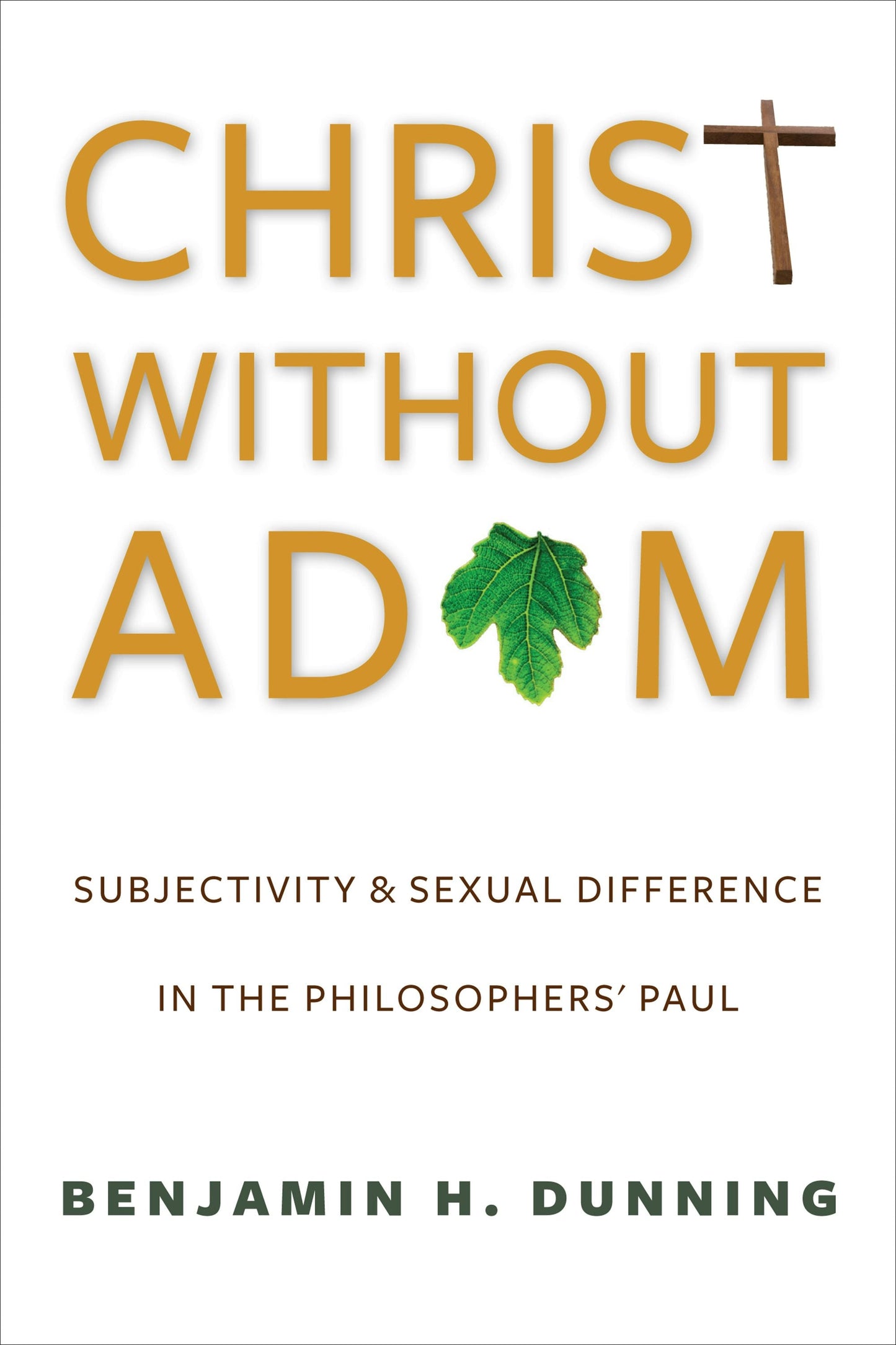
The apostle Paul deals extensively with gender, embodiment, and desire in his authentic letters, yet many of the contemporary philosophers interested in his work downplay these aspects of his thought. Christ Without Adam is the first book to examine the role of gender and sexuality in the turn to the apostle Paul in recent Continental philosophy. It builds a constructive proposal for embodied Christian theological anthropology in conversation with—and in contrast to—the "Paulinisms" of Stanislas Breton, Alain Badiou, and Slavoj iek.
Paul's letters bequeathed a crucial anthropological aporia to the history of Christian thought, insofar as the apostle sought to situate embodied human beings typologically with reference to Adam and Christ, but failed to work out the place of sexual difference within this classification. As a result, the space between Adam and Christ has functioned historically as a conceptual and temporal interval in which Christian anthropology poses and re-poses theological dilemmas of embodied difference. This study follows the ways in which the appropriations of Paul by Breton, Badiou, and iek have either sidestepped or collapsed this interval, a crucial component in their articulations of a universal Pauline subject. As a result, sexual difference fails to materialize in their readings as a problem with any explicit force. Against these readings, Dunning asserts the importance of the Pauline Adam–Christ typology, not as a straightforward resource but as a witness to a certain necessary failure—the failure of the Christian tradition to resolve embodied difference without remainder. This failure, he argues, is constructive in that it reveals the instability of sexual difference, both masculine and feminine, within an anthropological paradigm that claims to be universal yet is still predicated on male bodies.


Acknowledgments
Introduction
1. Reading Anthropology in Breton's Saint Paul
2. Mysticism, Femininity, and Difference in Badiou's Theory of Pauline Discourses
3. "Adam Is Christ": Žižek, Paul, and the Collapse of the Anthropological Interval
4. Pauline Typology, Theological Anthropology, and the Possibilities of Impossible Difference
Notes
Bibliography
Index