


Some error occured while loading the Quick View. Please close the Quick View and try reloading the page.
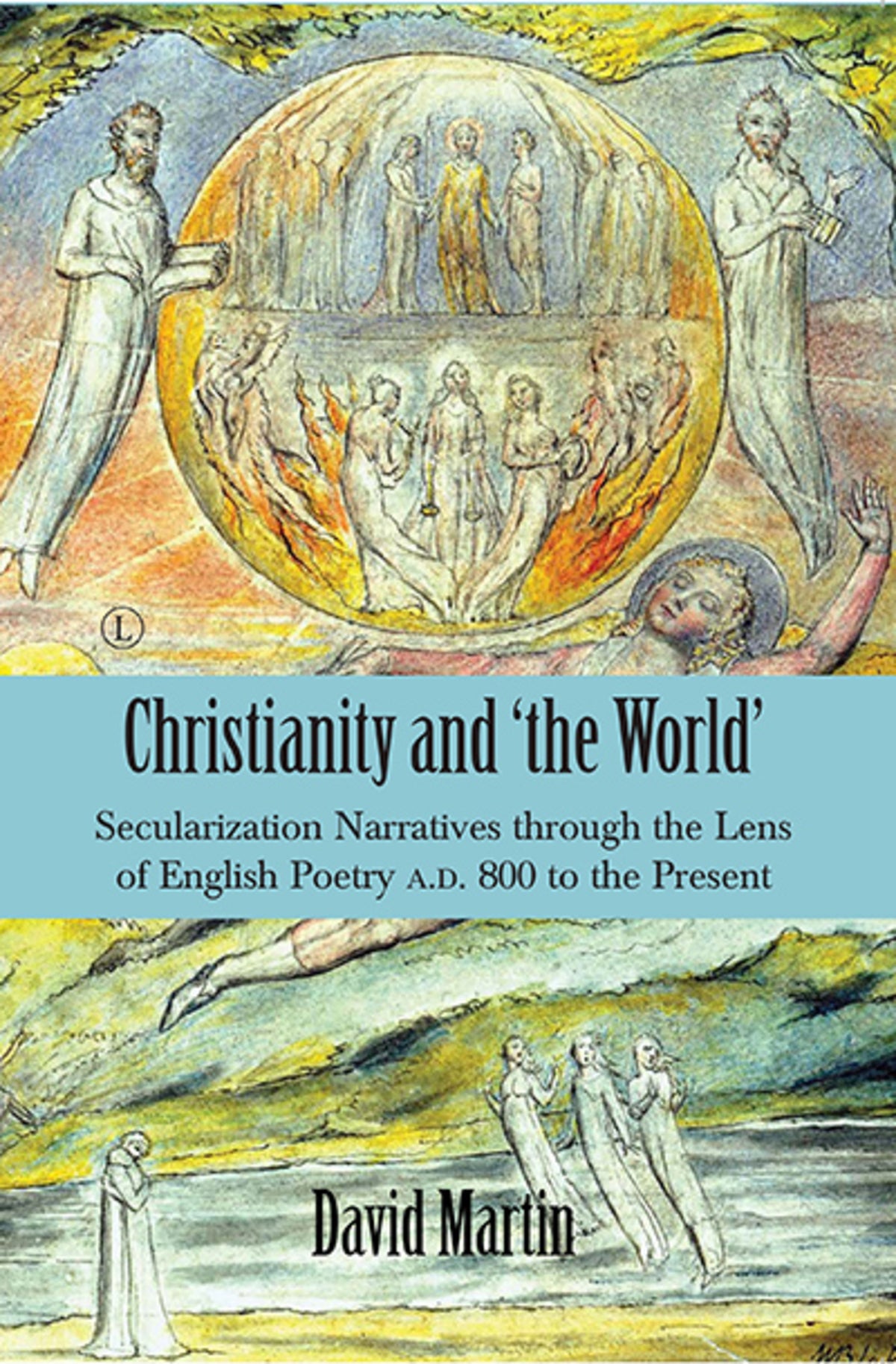
A development of David Martin's secularization theory with reference to the history of poetry.
David Martin was one of the world's leading commentators on secularization theory. He was also a committed and lifelong reader of English poetry. Christianity and 'The World' develops Martin's argument against simplistic secularization narratives with reference to the history of poetry, a topic with which few social theorists have been concerned. Martin shows the enduring but ever-changing centrality of Christian thought and practice, in its many different forms, to English poetry.
Always mindful that the most important aspects of poetry's history can be captured only by attending to the minutest particulars of individual poems and poets, Martin's study sheds unexpected light on a wide range of English poets, from Spenser and Shakespeare to T.S. Eliot and Geoffrey Hill. The result is a study at once informed by an authoritative sociological perspective on secularization and richly coloured by the singular intensity of Martin's own reading life.
David Martin was one of the world's leading commentators on secularization theory. He was also a committed and lifelong reader of English poetry. Christianity and 'The World' develops Martin's argument against simplistic secularization narratives with reference to the history of poetry, a topic with which few social theorists have been concerned. Martin shows the enduring but ever-changing centrality of Christian thought and practice, in its many different forms, to English poetry.
Always mindful that the most important aspects of poetry's history can be captured only by attending to the minutest particulars of individual poems and poets, Martin's study sheds unexpected light on a wide range of English poets, from Spenser and Shakespeare to T.S. Eliot and Geoffrey Hill. The result is a study at once informed by an authoritative sociological perspective on secularization and richly coloured by the singular intensity of Martin's own reading life.

Price: $29.99
Pages: 227
Publisher: Boydell & Brewer Inc.
Imprint: Lutterworth Press
Publication Date:
June 24, 2021
Trim Size: 5.98 X 8.98 in
ISBN: 9780718895785
Format: Paperback
BISACs:
SOCIAL SCIENCE / Sociology of Religion, Social groups: religious groups and communities

This is a genuinely unique book. David Martin - probably the greatest British sociologist of religion in recent decades - maps out the basic tensions between Christianity's innate urge to construct an alternative reality, and its accommodations to that world. . . . A treasury for intellect and imagination alike.
— Rowan Williams, Archbishop of Canterbury 2002-2012
David Martin, the sociologist who taught us that secularization is not a continuous and uni-directional process, but rather a many-stranded and shifting one, has now added a new dimension to this picture. Looking at the whole story through the lens of poetry, not primarily as expression of belief but through its affinity to invocation, worship, ritual and liturgy, yields an extraordinarily rich and perspicuous account of the currents of English spirituality through many centuries.
— Charles Taylor, McGill University
In a single volume, David Martin brings together a lifetime's work on secularization, a thousand years of English poetry, and deep theological insight. A chronological sequence of reflections relates each of these strands to the others. Readers will arrive by different routes, but all of them will be enriched by what they find. I recommend this book very warmly.
— Grace Davie, University of Exeter
Not since George MacDonald's England's Antiphon in 1868 has there been an attempt to survey the tradition of English religious poetry in this manner. David Martin, however, is at once a sociologist, a theologian, and (though he modestly denies it) a penetrating literary critic. The resulting cross-fertilization produces so many fresh insights that one's whole field of vision is permanently altered.
— Stephen Prickett, University of Glasgow, University of Kent
— Rowan Williams, Archbishop of Canterbury 2002-2012
David Martin, the sociologist who taught us that secularization is not a continuous and uni-directional process, but rather a many-stranded and shifting one, has now added a new dimension to this picture. Looking at the whole story through the lens of poetry, not primarily as expression of belief but through its affinity to invocation, worship, ritual and liturgy, yields an extraordinarily rich and perspicuous account of the currents of English spirituality through many centuries.
— Charles Taylor, McGill University
In a single volume, David Martin brings together a lifetime's work on secularization, a thousand years of English poetry, and deep theological insight. A chronological sequence of reflections relates each of these strands to the others. Readers will arrive by different routes, but all of them will be enriched by what they find. I recommend this book very warmly.
— Grace Davie, University of Exeter
Not since George MacDonald's England's Antiphon in 1868 has there been an attempt to survey the tradition of English religious poetry in this manner. David Martin, however, is at once a sociologist, a theologian, and (though he modestly denies it) a penetrating literary critic. The resulting cross-fertilization produces so many fresh insights that one's whole field of vision is permanently altered.
— Stephen Prickett, University of Glasgow, University of Kent
The Rationale of This Book | ix
Acknowledgments | xvii
Introduction | 1
Chapter 1 An Overview of the Problem | 14
Chapter 2 Ninth to Sixteenth Centuries | 21
Chapter 3 Seventeenth and Eighteenth Centuries | 30
Chapter 4 The Nineteenth Century: The Early Romantics | 43
Chapter 5 The Mid-Victorians | 51
Chapter 6 The Early Twentieth Century | 83
Chapter 7 War Poets; Pacifists and Marxists;
Poets of Wars Post-1945 | 91
Chapter 8 Eliot and Auden | 108
Chapter 9 Faith and Place | 118
Chapter 10 Larkin to Hughes; Plath to Duffy | 129
Chapter 11 Donald Davie, Charles Sisson, and Geoffrey Hill;
Denise Levertov, Andrew Motion,
and Michael Symmonds Roberts | 137
Chapter 12 Conclusion | 147
Chapter 13 Afterword | 158
Appendix Hymnody | 166
Bibliography | 183
Index | 191
Acknowledgments | xvii
Introduction | 1
Chapter 1 An Overview of the Problem | 14
Chapter 2 Ninth to Sixteenth Centuries | 21
Chapter 3 Seventeenth and Eighteenth Centuries | 30
Chapter 4 The Nineteenth Century: The Early Romantics | 43
Chapter 5 The Mid-Victorians | 51
Chapter 6 The Early Twentieth Century | 83
Chapter 7 War Poets; Pacifists and Marxists;
Poets of Wars Post-1945 | 91
Chapter 8 Eliot and Auden | 108
Chapter 9 Faith and Place | 118
Chapter 10 Larkin to Hughes; Plath to Duffy | 129
Chapter 11 Donald Davie, Charles Sisson, and Geoffrey Hill;
Denise Levertov, Andrew Motion,
and Michael Symmonds Roberts | 137
Chapter 12 Conclusion | 147
Chapter 13 Afterword | 158
Appendix Hymnody | 166
Bibliography | 183
Index | 191