


Some error occured while loading the Quick View. Please close the Quick View and try reloading the page.
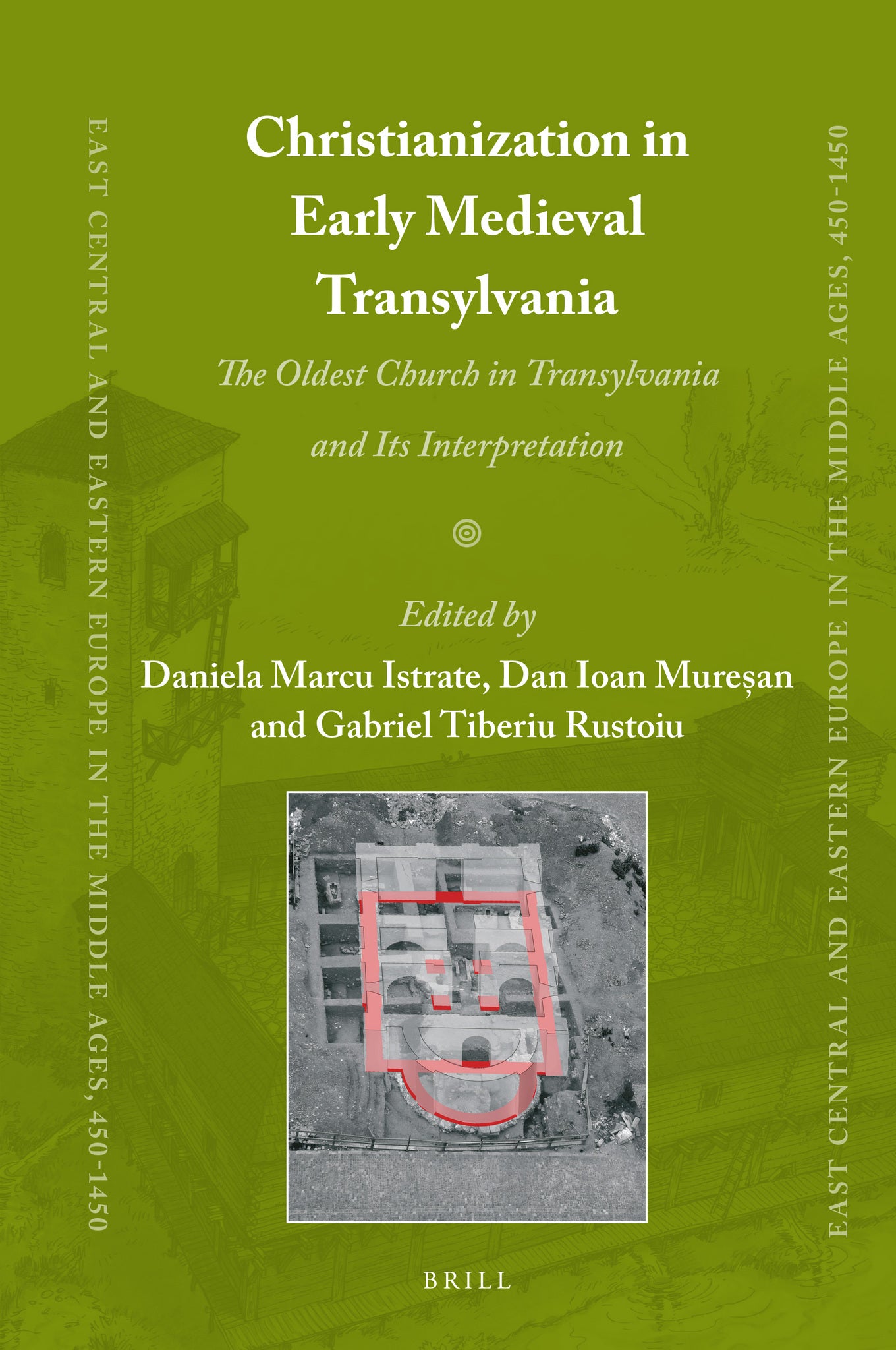
Little is known about the Christianization of east-central and eastern Europe, due to the fragmentary nature of the historical record. Yet occasionally, unexpected archaeological discoveries can offer fresh angles and new insights. This volume presents such an example: the discovery of a Byzantine-like church in Alba Iulia, Transylvania, dating from the 10th century - a unique find in terms of both age and function. Next to its ruins, another church was built at the end of the 11th century, following a Roman Catholic architectural model, soon to become the seat of the Latin bishopric of Transylvania.
Who built the older, Byzantine-style church, and what was the political, religious and cultural context of the church? How does this new discovery affect our perception of the ecclesiastical history of Transylvania? A new reading of the archaeological and historical record prompted by these questions is presented here, thereby opening up new challenges for further research.
Contributors are: Daniela Marcu Istrate, Florin Curta, Horia I. Ciugudean, Aurel Dragotă, Monica-Elena Popescu, Călin Cosma, Tudor Sălăgean, Jan Nicolae, Dan Ioan Mureșan, Alexandru Madgearu, Gábor Thoroczkay, Éva Tóth-Révész, Boris Stojkovski, Șerban Turcuș, Adinel C. Dincă, Mihai Kovács, Nicolae Călin Chifăr, Marius Mihail Păsculescu, and Ana Dumitran.
Who built the older, Byzantine-style church, and what was the political, religious and cultural context of the church? How does this new discovery affect our perception of the ecclesiastical history of Transylvania? A new reading of the archaeological and historical record prompted by these questions is presented here, thereby opening up new challenges for further research.
Contributors are: Daniela Marcu Istrate, Florin Curta, Horia I. Ciugudean, Aurel Dragotă, Monica-Elena Popescu, Călin Cosma, Tudor Sălăgean, Jan Nicolae, Dan Ioan Mureșan, Alexandru Madgearu, Gábor Thoroczkay, Éva Tóth-Révész, Boris Stojkovski, Șerban Turcuș, Adinel C. Dincă, Mihai Kovács, Nicolae Călin Chifăr, Marius Mihail Păsculescu, and Ana Dumitran.

Price: $196.00
Pages: 502
Publisher: Brill
Imprint: Brill
Publication Date:
23 June 2022
ISBN: 9789004515772
Format: Hardcover

Daniela Marcu Istrate, Ph.D. (2000), Babeș-Bolyai University, Cluj-Napoca, is senior researcher at the Vasile Pârvan Institute of Archaeology, Bucharest. She has long experience and many publications in church archaeology, being noted especially for exceptional finds related to medieval Transylvania and Hungary.
Dan Ioan Mureșan, Ph.D. (2005), École des Hautes l'Études en Sciences Sociales, Paris, and Babeș-Bolyai University, Cluj-Napoca, is associate professor of Medieval History at the University of Rouen. He is a specialist in the history of the Ecumenical Patriarchate of Constantinople, and on the history of political ideology of Eastern and Western Europe.
Gabriel Tiberiu Rustoiu, Ph.D. (2008), Babeș-Bolyai University, Cluj-Napoca, is general director of the Alba Iulia National Museum of the Union. He has authored or co-authored over 90 archaeological reports, studies and books of history, archaeology and other related topics. His research interests concern prehistory, the migration period and the early medieval period.
Dan Ioan Mureșan, Ph.D. (2005), École des Hautes l'Études en Sciences Sociales, Paris, and Babeș-Bolyai University, Cluj-Napoca, is associate professor of Medieval History at the University of Rouen. He is a specialist in the history of the Ecumenical Patriarchate of Constantinople, and on the history of political ideology of Eastern and Western Europe.
Gabriel Tiberiu Rustoiu, Ph.D. (2008), Babeș-Bolyai University, Cluj-Napoca, is general director of the Alba Iulia National Museum of the Union. He has authored or co-authored over 90 archaeological reports, studies and books of history, archaeology and other related topics. His research interests concern prehistory, the migration period and the early medieval period.