


Some error occured while loading the Quick View. Please close the Quick View and try reloading the page.
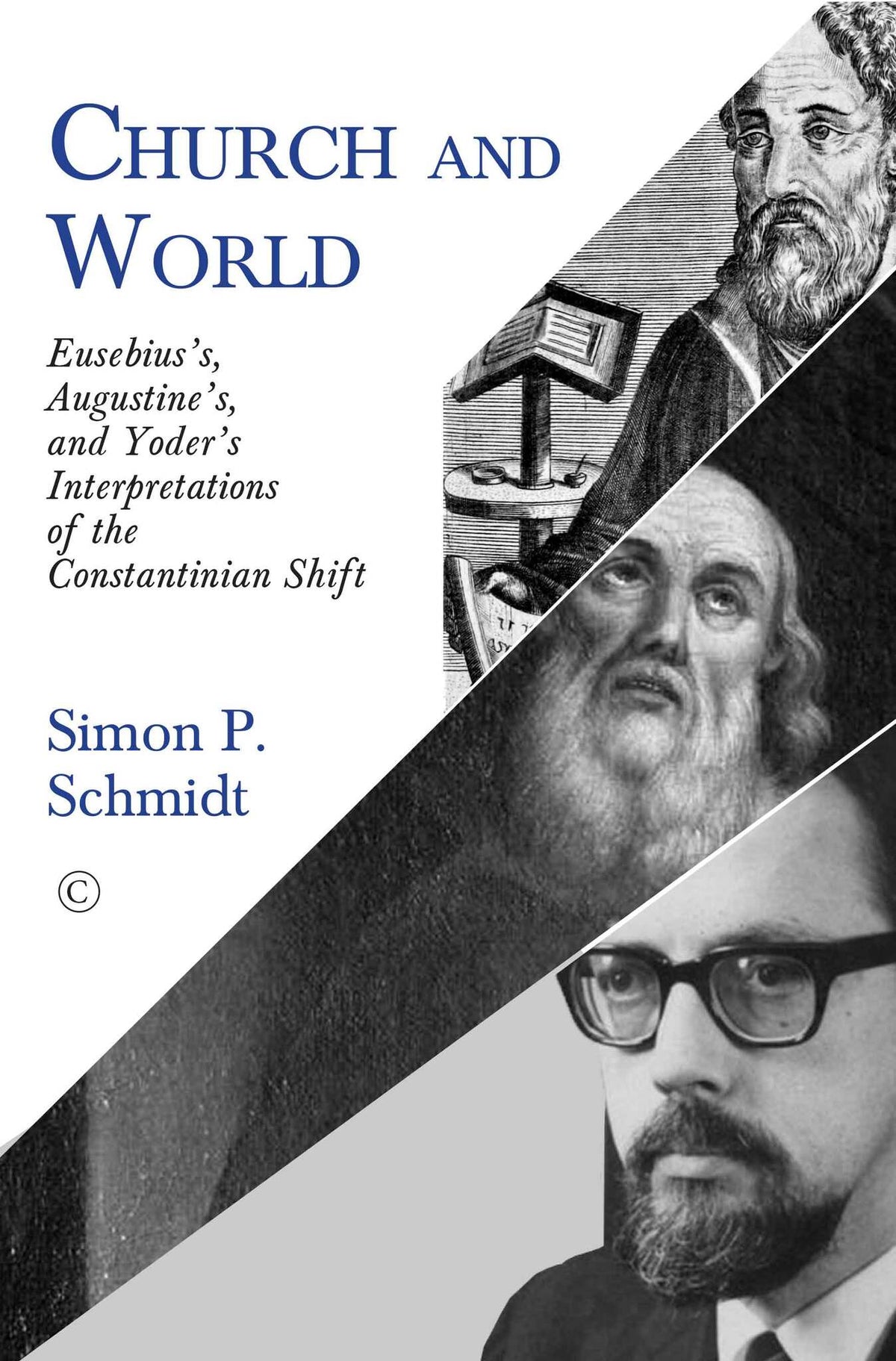
An exploration of how three theologians have interpreted the pivotal moment when Christianity became the dominant faith of the Roman Empire.
"In the world but not of it" - an expression that has been interpreted in a multitude of ways. With the publication of Rod Dreher's much-debated book The Benedict Option in 2017, the question of just how the church is to exist "in but not of the world" is once again on the minds of many. To provide answers true to the context in which the Western church now finds itself, it is worth first investigating how the question has been answered in the past. In determining what to do today, it helps to understand how we got here in the first place.
At the beginning of the fourth century, people were persecuted for being Christians; by the end of the fourth century, people were persecuted for not being Christians. This book is an academic investigation of how three paradigmatic theologians interpreted this so-called Constantinian shift: Eusebius of Caesarea (ca. 260-339), Augustine of Hippo (354-430), and John Howard Yoder (1927-1997).
Surprising similarities between the theology of Eusebius and Yoder become apparent, and underlying theological structures of how to interpret what it looks like to be a community that follows Christ are revealed.
"In the world but not of it" - an expression that has been interpreted in a multitude of ways. With the publication of Rod Dreher's much-debated book The Benedict Option in 2017, the question of just how the church is to exist "in but not of the world" is once again on the minds of many. To provide answers true to the context in which the Western church now finds itself, it is worth first investigating how the question has been answered in the past. In determining what to do today, it helps to understand how we got here in the first place.
At the beginning of the fourth century, people were persecuted for being Christians; by the end of the fourth century, people were persecuted for not being Christians. This book is an academic investigation of how three paradigmatic theologians interpreted this so-called Constantinian shift: Eusebius of Caesarea (ca. 260-339), Augustine of Hippo (354-430), and John Howard Yoder (1927-1997).
Surprising similarities between the theology of Eusebius and Yoder become apparent, and underlying theological structures of how to interpret what it looks like to be a community that follows Christ are revealed.

Price: $29.99
Pages: 184
Publisher: Boydell & Brewer Inc.
Imprint: James Clarke
Publication Date:
25 June 2020
Trim Size: 9.02 X 5.98 in
ISBN: 9780227177259
Format: Paperback
BISACs:
RELIGION / History, History of religion

There is no debate that significant shifts happened in theology, ethics, and the relationship of church and world following the advent of Constantine as the first 'Christian emperor.' The only debate is how we are to understand these changes. This carefully researched and well-organized book is ideal to move this conversation forward. Even where readers disagree - and at places I certainly do - Schmidt carries the discussion forward through a careful naming of the pertinent issues.
— Mark Thiessen Nation, Professor of Theology Emeritus, Eastern Mennonite Seminary, author, John Howard Yoder: Mennonite Patience, Evangelical Witness, Catholic Convictions
How to understand the Constantinian shift has been debated intensively for many years. Schmidt's substantial contribution to the debate demonstrates how Eusebius, Augustine, and Yoder interpret this shift - illuminating how to be a church in the world but not of the world. This book is a remarkable combination of sober analysis and constructive ambition - letting voices of the past guide the church of the present.
— Jeppe Bach Nikolajsen, Associate Professor of Systematic Theology at Lutheran School of Theology in Aarhus, Denmark, and Adjunct Professor of Missiology at MF Norwegian School of Theology, Religion, and Society in Oslo, Norway
— Mark Thiessen Nation, Professor of Theology Emeritus, Eastern Mennonite Seminary, author, John Howard Yoder: Mennonite Patience, Evangelical Witness, Catholic Convictions
How to understand the Constantinian shift has been debated intensively for many years. Schmidt's substantial contribution to the debate demonstrates how Eusebius, Augustine, and Yoder interpret this shift - illuminating how to be a church in the world but not of the world. This book is a remarkable combination of sober analysis and constructive ambition - letting voices of the past guide the church of the present.
— Jeppe Bach Nikolajsen, Associate Professor of Systematic Theology at Lutheran School of Theology in Aarhus, Denmark, and Adjunct Professor of Missiology at MF Norwegian School of Theology, Religion, and Society in Oslo, Norway
Preface xi
Abbreviations xiv
Part I: The Constantinian Shift - An Introduction
Part II: An Early Interpretation
Part III: A Corrective
Part IV: A Current Interpretation
Part V: Perspectives
Bibliography 161
Abbreviations xiv
Part I: The Constantinian Shift - An Introduction
Part II: An Early Interpretation
Part III: A Corrective
Part IV: A Current Interpretation
Part V: Perspectives
Bibliography 161