


Some error occured while loading the Quick View. Please close the Quick View and try reloading the page.
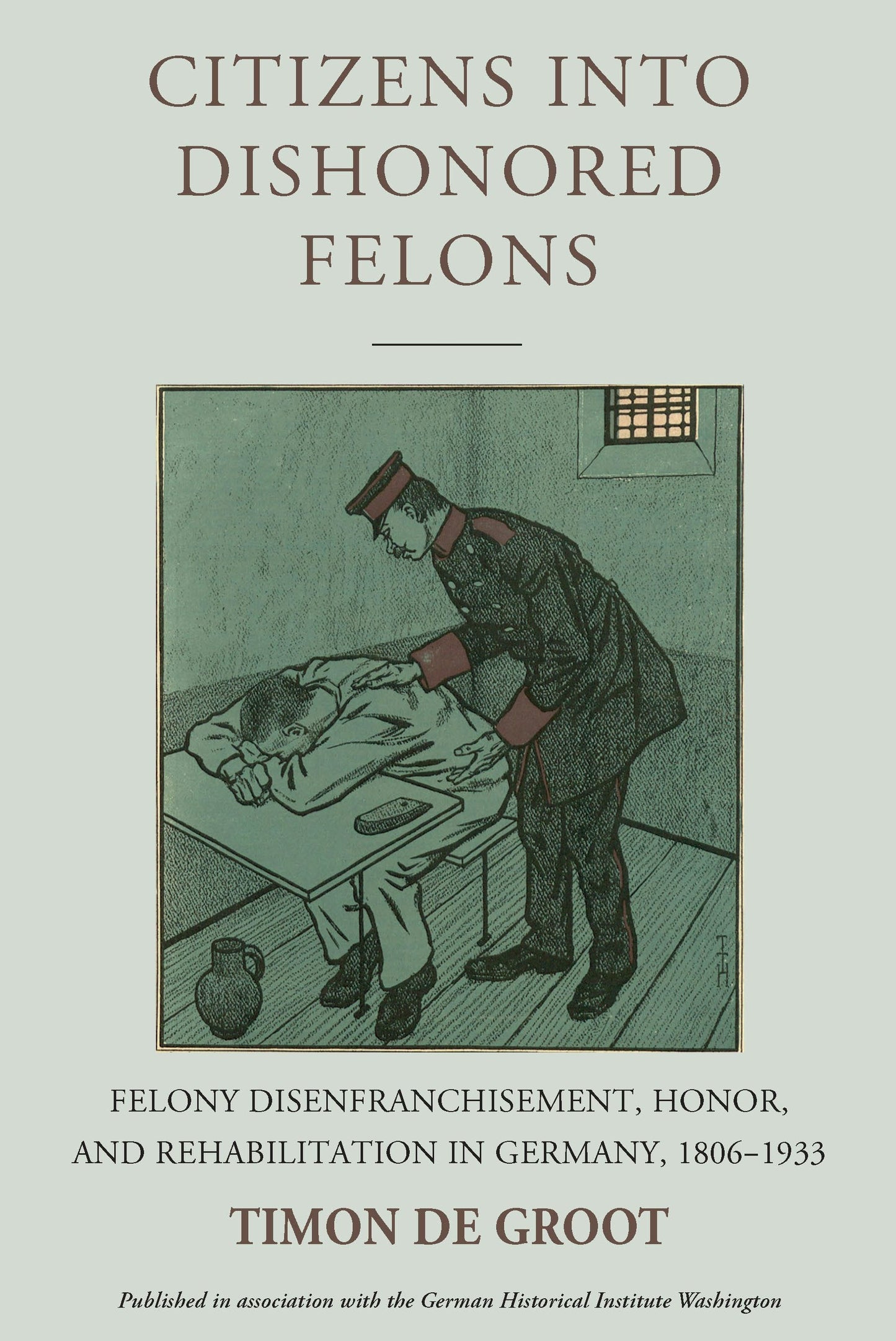
Over the course of its history, the German Empire increasingly withheld basic rights—such as joining the army, holding public office, and even voting—as a form of legal punishment. Dishonored offenders were often stigmatized in both formal and informal ways, as their convictions shaped how they were treated in prisons, their position in the labour market, and their access to rehabilitative resources. With a focus on Imperial Germany’s criminal policies and their afterlives in the Weimar era, Citizens into Dishonored Felons demonstrates how criminal punishment was never solely a disciplinary measure, but that it reflected a national moral compass that authorities used to dictate the rights to citizenship, honour and trust.


“Citizens into Dishonored Felonshas a great potential to intervene in different intellectual and public debates, it has the detail to be convincing, and the author has been skillful in interpreting the historiography and the data.” • Barry Godfrey, University of Liverpool
“Timon de Groot offers a fresh perspective on the history of German criminal policy. This well-written, well-researched book demonstrates the role of punishment as an expressive act, delineating the contours and the boundaries of citizenship in modern Germany. The work makes an important contribution to both the study of law and society and German history.” • Warren Rosenblum, Webster University
Timon de Groot has a PhD from Humboldt-Universität zu Berlin / Max Planck Institute for Human Development.
List of Figures
List of Abbreviations
Acknowledgments
Chapter 1. “Rights of citizenship are conditional rights”: Disenfranchisement, Honor, and Trust in the Criminal Codes before German Unification
Chapter 2. Institutions of Honor: A Leveling Society Searching to Protect Its Institutions
Chapter 3. Political Offenders vs. Common Criminals: Challenging the Distinction
Chapter 4. “The chain of dishonor”: Petitioning for Rehabilitation in Imperial Germany
Chapter 5. “The blessing of the war”: World War I as a Chance for Rehabilitation
Chapter 6. “Your honor is not my honor”: Disenfranchisement and Rehabilitation as a Political Battleground from the War to the End of the Weimar Republic
Bibliography
Index