


Some error occured while loading the Quick View. Please close the Quick View and try reloading the page.
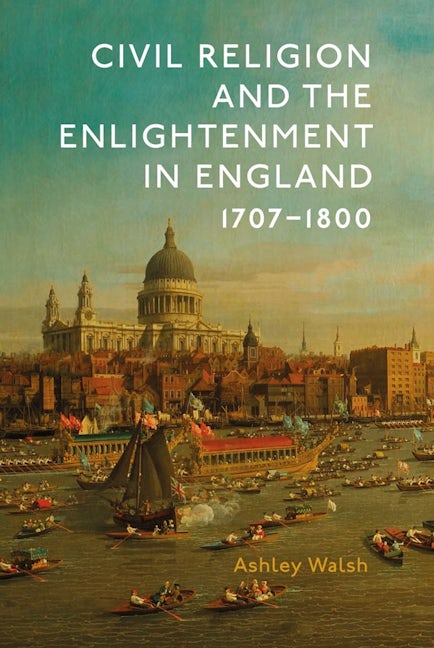
Reveals how Enlightened writers in England, both lay and clerical, proclaimed public support for Christianity by transforming it into a civil religion.
In the aftermath of the seventeenth-century European wars of religion, civil religionists such as David Hume, Edward Gibbon, the third earl of Shaftesbury, and William Warburton sought to reconcile Christian ecclesiology with the civil state and Christian practice with civilized society. They built their arguments in the context of England's long Reformation, syncretizing 'primitive' gospel Christianity with ancient paganism as they attempted to render Christianity a modern version of Roman republican civil religion. They believed that outward observance of the reformed Protestant faith was vital for belonging to the Christian commonwealth of Hanoverian England.
Uncovering a major theme in eighteenth-century intellectual and religious history that connected classical Rome with Italian Renaissance humanism and the Enlightenment, this deeply interdisciplinary book draws from recent post-secular trends in social and political theory. Combining intellectual history with the political and ecclesiastical history of the Church of England, it will prove as indispensable for historians as studentsof political theory, theology, and literature.
In the aftermath of the seventeenth-century European wars of religion, civil religionists such as David Hume, Edward Gibbon, the third earl of Shaftesbury, and William Warburton sought to reconcile Christian ecclesiology with the civil state and Christian practice with civilized society. They built their arguments in the context of England's long Reformation, syncretizing 'primitive' gospel Christianity with ancient paganism as they attempted to render Christianity a modern version of Roman republican civil religion. They believed that outward observance of the reformed Protestant faith was vital for belonging to the Christian commonwealth of Hanoverian England.
Uncovering a major theme in eighteenth-century intellectual and religious history that connected classical Rome with Italian Renaissance humanism and the Enlightenment, this deeply interdisciplinary book draws from recent post-secular trends in social and political theory. Combining intellectual history with the political and ecclesiastical history of the Church of England, it will prove as indispensable for historians as studentsof political theory, theology, and literature.

Price: $36.95
Pages: 268
Publisher: Boydell & Brewer Inc.
Imprint: Boydell Press
Publication Date:
14 May 2024
Trim Size: 9.21 X 6.14 in
ISBN: 9781837651498
Format: Paperback
BISACs:
HISTORY / Europe / Great Britain / Georgian Era (1714-1837), European history, RELIGION / Christianity / History, POLITICAL SCIENCE / History & Theory, Christianity, History of religion

[This] an excellent book and will become essential reading for all scholars of the Enlightenment and eighteenth-century religion.
Introduction: Hanoverian Civil Religion and its Intellectual Resources
1. Building Athens from Jerusalem: Anthony Ashley Cooper, Third Earl of Shaftesbury
2. The Politics of Priestcraft: John Trenchard and Thomas Gordon
3. The Church-State Alliance: Henry St John, Viscount Bolingbroke, and William Warburton
4. The Civil Faith of Common Sense: David Hume
5. The Legacy of Ancient Rome: Edward Gibbon and Conyers Middleton
6. Subscription, Reform, and Dissent: Civil Religion and Enlightened Divinity during the Late Eighteenth Century
Conclusion: Hanoverian Civil Religion and its Aftermath
Bibliography
1. Building Athens from Jerusalem: Anthony Ashley Cooper, Third Earl of Shaftesbury
2. The Politics of Priestcraft: John Trenchard and Thomas Gordon
3. The Church-State Alliance: Henry St John, Viscount Bolingbroke, and William Warburton
4. The Civil Faith of Common Sense: David Hume
5. The Legacy of Ancient Rome: Edward Gibbon and Conyers Middleton
6. Subscription, Reform, and Dissent: Civil Religion and Enlightened Divinity during the Late Eighteenth Century
Conclusion: Hanoverian Civil Religion and its Aftermath
Bibliography