


Some error occured while loading the Quick View. Please close the Quick View and try reloading the page.
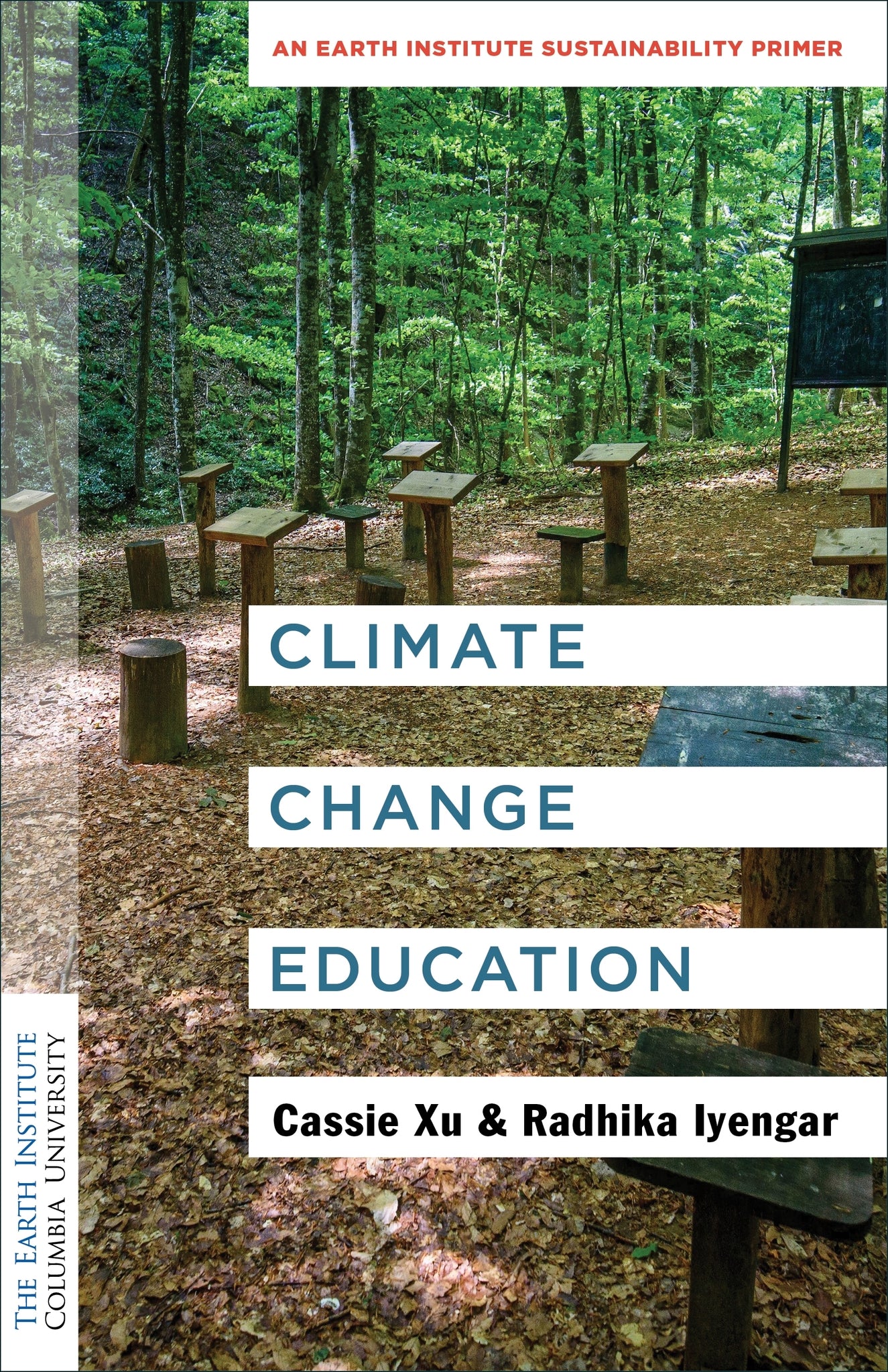
Climate change affects every person and society, every community and industry. Education at all levels, in all disciplines, and both inside and outside official institutions must now address climate change and its many effects on social and environmental systems. This book provides a framework for putting climate change at the forefront of educational agendas and pedagogical tools for teaching climate science across local and global settings.
Cassie Xu and Radhika Iyengar present evidence-based teaching practices and strategies that are grounded in a broad conception of education and emphasize a systems approach. They share examples of effective approaches in diverse learning environments—not just in classrooms and other formal settings but also informal contexts with communities and families. This book makes the case that students and other learners need to understand climate science and the physical and social impacts of climate change not only to be good citizens but also to be well prepared for different career paths. Xu and Iyengar highlight systemic barriers and inequalities, reflecting on how to bring marginalized voices and perspectives into educational spaces. Providing a foundation for interdisciplinary environmental education, this book underscores that how we teach future generations about climate change will shape our future.


Cassie Xu is the former director of K-12 and continuing education at the Columbia Climate School, where she led efforts to establish the Office of Education and Outreach.
Radhika Iyengar is a research scholar and the director of education at the Columbia Climate School’s Center for Sustainable Development.
Foreword, by Alex Halliday
Acknowledgments
Introduction
Part I. Why Climate Education Needs Systems Thinking
1. Defining Systems Thinking and Climate Change
Part II. Climate Change Education and Future Workforces
2. Systems Thinking Skills and Outcomes
3. Strategies in Instructional Design
Part III. Examples and Case Studies of Climate Change Education in Practice
4. Climate Change in Formal Learning Environments
5. Community-Based (Informal) Education
6. Teaching Climate Change in Nonformal Settings
Part IV. The Future of Climate Education
7. Diversity, Equity, Inclusion, and Access as a Tool for Addressing Social and Environmental Justice
8. Role of the Columbia Climate School in Climate Education
Conclusion
Notes
Index