


Some error occured while loading the Quick View. Please close the Quick View and try reloading the page.
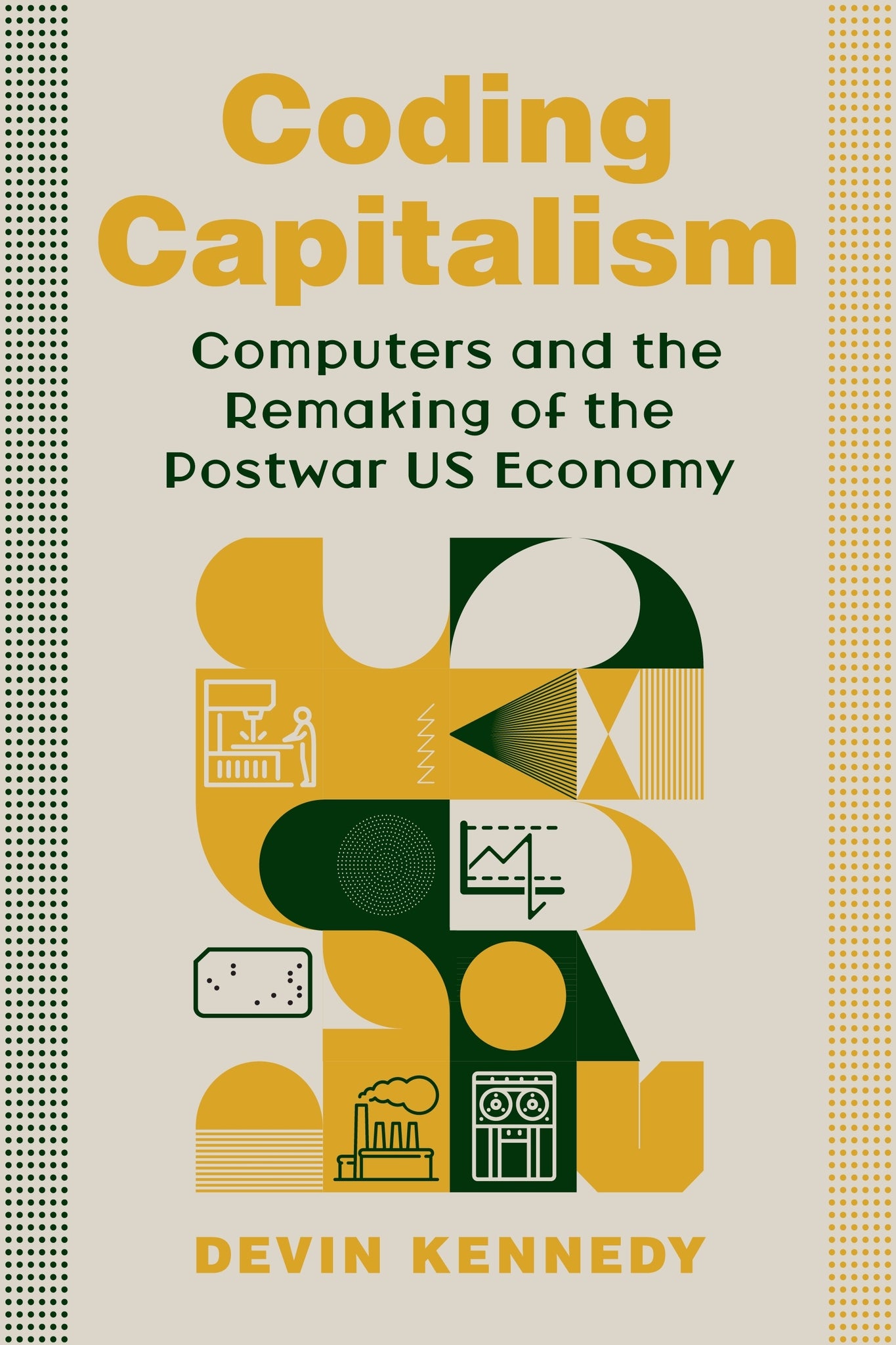
Long before Google, Amazon, or Microsoft, computer technology shaped how people worked, how markets operated, and how businesses became big. After World War II, military officials and their partners in industry looked to the newly invented electronic computer as they sought to cut costs, speed up labor, manage supply chains, and—they hoped—bring stability to the postwar economy. Their efforts would shape early computer science and the first applications of computer technology in manufacturing and business, with profound consequences for workers and managers alike. By the 1960s, practices originally developed to improve industrial efficiency were being used by Wall Street, influencing how markets worked and even how traders thought. Digital technology became central to finance, tying together far-flung trading floors and automating decision making—with alarming consequences, including the 1987 Black Monday crash.
Devin Kennedy offers a new history of the digital economy, showing how the computer emerged from—and transformed—capitalism in the United States. He traces how computer science and technology were made by industry, which molded computation to manage factories, financial markets, and entire firms. Drawing on the archives of businesses, computer researchers, regulators, and financial institutions, Coding Capitalism retells the story of the postwar economy and the computer, revealing how midcentury business laid the foundations of the digital world. Bridging business and economic history with the history of science and technology, this book uncovers the prehistory of big tech and demonstrates how capitalism has shaped computing since its invention.


— Margaret O’Mara, author of The Code: Silicon Valley and the Remaking of America
Coding Capitalism is a remarkable achievement: an impressive, synthetic overview of forty years of computational practices in industry, management science, and finance. For historians of computing, business, and finance, this book will connect many dots.
— Paul N. Edwards, author of A Vast Machine: Computer Models, Climate Data, and the Politics of Global Warming
The histories of capitalism and computing are usually told separately. Kennedy powerfully shows that in the postwar era, neither field can be understood without deep engagement with the other. An indispensable book on a subject that couldn't be more timely.
— Angus Burgin, author of The Great Persuasion: Reinventing Free Markets since the Depression
Drawing from and contributing to a dialogue begun by top sociologists (Beniger, Castells, and MacKenzie), Kennedy’s Coding Capitalism is vital and new. It is an exhaustively researched, nuanced history of computing, capitalism, and political economy. With insights on everything from the shop floor to financialization, it is insightful and elegant at every turn.
— Jeffrey R. Yost, author of Making IT Work: A History of the Computer Services Industry
Introduction: The Industrial Roots of the Digital Revolution
1. Visions of Control
2. Commanding the Floor
3. Minds, Machines, and Managers
4. Wired for Profit
5. The Market Machine
6. Virtual Exchange
7. A Network of Markets
8. Nonstop
Epilogue: “The Machines Broke Down”
Acknowledgments
Archival Sources and Abbreviations
Notes
Index