


Some error occured while loading the Quick View. Please close the Quick View and try reloading the page.
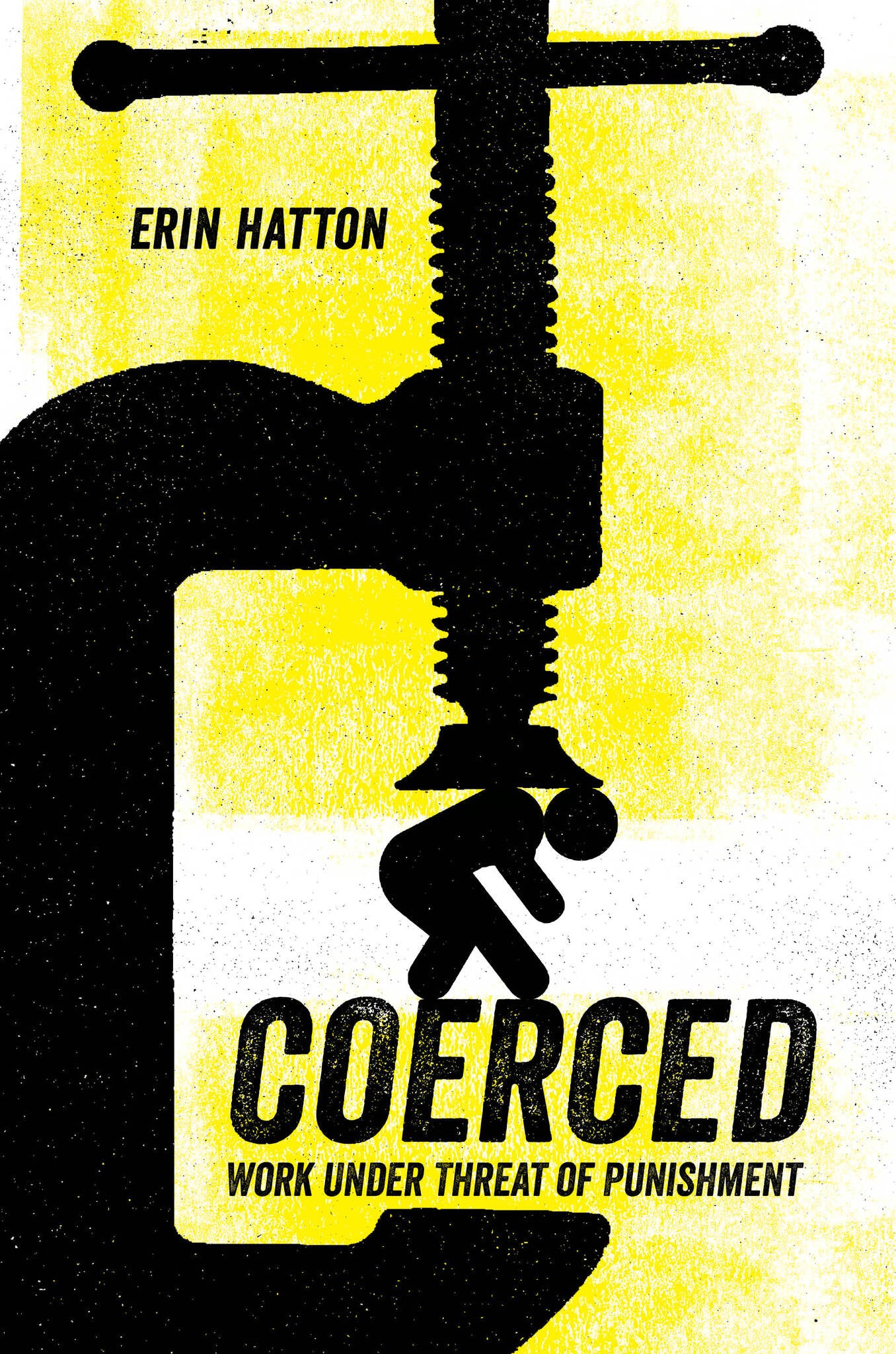
What do prisoner laborers, graduate students, welfare workers, and college athletes have in common? According to sociologist Erin Hatton, they are all part of a growing workforce of coerced laborers.
Coerced explores this world of coerced labor through an unexpected and compelling comparison of these four groups of workers, for whom a different definition of "employment" reigns supreme—one where workplace protections do not apply and employers wield expansive punitive power, far beyond the ability to hire and fire. Because such arrangements are common across the economy, Hatton argues that coercion—as well as precarity—is a defining feature of work in America today.
Theoretically forceful yet vivid and gripping to read, Coerced compels the reader to reevaluate contemporary dynamics of work, pushing beyond concepts like "career" and "gig work." Through this bold analysis, Hatton offers a trenchant window into this world of work from the perspective of those who toil within it—and who are developing the tools needed to push back against it.
Coerced explores this world of coerced labor through an unexpected and compelling comparison of these four groups of workers, for whom a different definition of "employment" reigns supreme—one where workplace protections do not apply and employers wield expansive punitive power, far beyond the ability to hire and fire. Because such arrangements are common across the economy, Hatton argues that coercion—as well as precarity—is a defining feature of work in America today.
Theoretically forceful yet vivid and gripping to read, Coerced compels the reader to reevaluate contemporary dynamics of work, pushing beyond concepts like "career" and "gig work." Through this bold analysis, Hatton offers a trenchant window into this world of work from the perspective of those who toil within it—and who are developing the tools needed to push back against it.

Price: $29.95
Pages: 304
Publisher: University of California Press
Imprint: University of California Press
Publication Date:
24 March 2020
ISBN: 9780520973404
Format: eBook

List of Tables
Acknowledgments
Foreword
Introduction
1. “Wicked” and “Blessed”: Cultural Narratives of Coerced Labor
2. “Either You Do It or You’re Going to the Box”: Coercion and Compliance
3. “They Talk to You in Any Kind of Way”: Subjugation, Vulnerability, and the Body
4. “Stay Out They Way”: Agency and Resistance
5. “I’m Getting Ethiopia Pay for My Work”: Hegemony and Counter-Hegemony
Conclusion
Appendix A. The Story of This Book
Appendix B. People qua Data
Notes
Selected Bibliography
Index
Acknowledgments
Foreword
Introduction
1. “Wicked” and “Blessed”: Cultural Narratives of Coerced Labor
2. “Either You Do It or You’re Going to the Box”: Coercion and Compliance
3. “They Talk to You in Any Kind of Way”: Subjugation, Vulnerability, and the Body
4. “Stay Out They Way”: Agency and Resistance
5. “I’m Getting Ethiopia Pay for My Work”: Hegemony and Counter-Hegemony
Conclusion
Appendix A. The Story of This Book
Appendix B. People qua Data
Notes
Selected Bibliography
Index