


Some error occured while loading the Quick View. Please close the Quick View and try reloading the page.
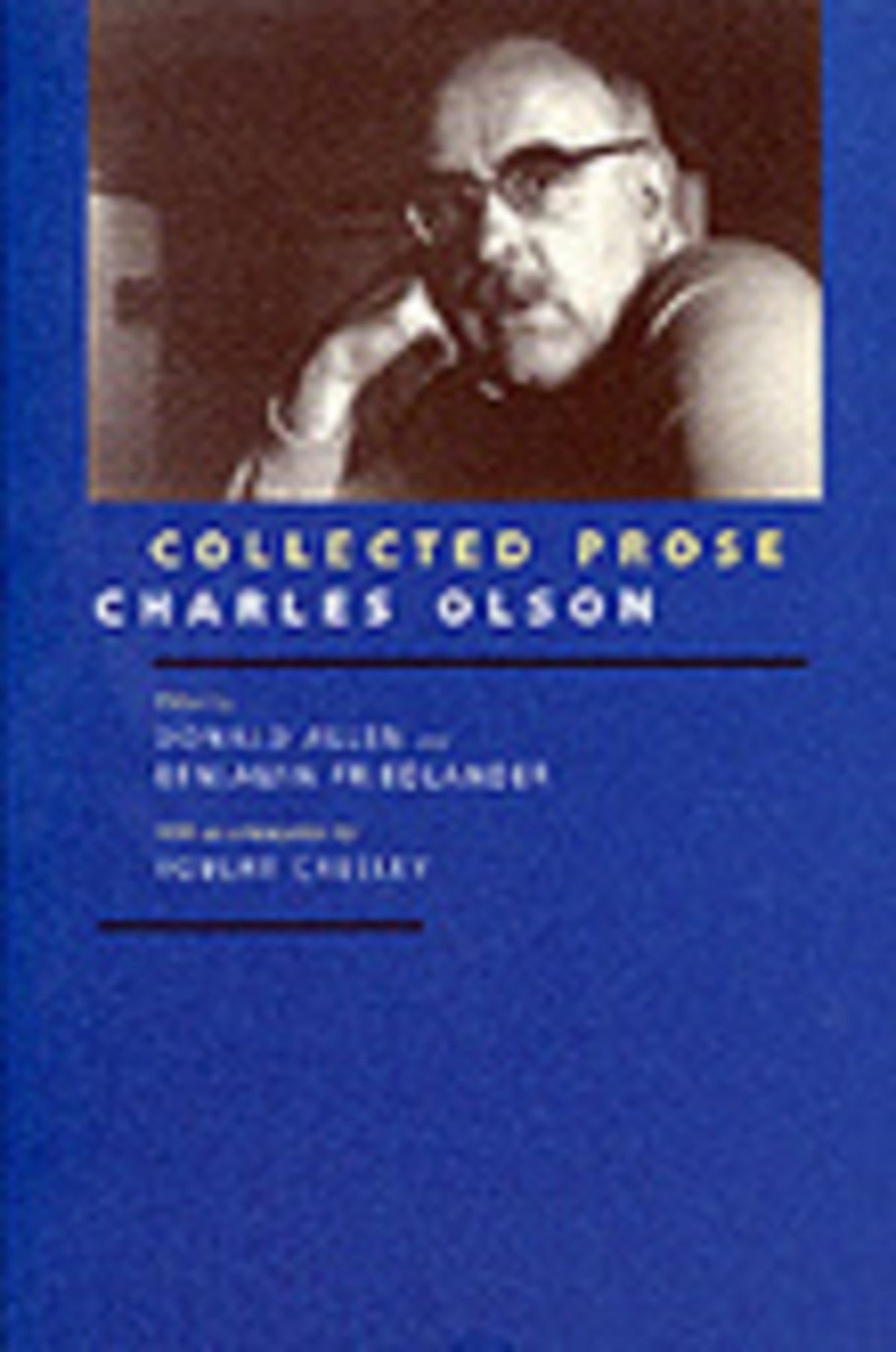
The prose writings of Charles Olson (1910–1970) have had a far-reaching and continuing impact on post-World War II American poetics. Olson's theories, which made explicit the principles of his own poetics and those of the Black Mountain poets, were instrumental in defining the sense of the postmodern in poetry and form the basis of most postwar free verse.
The Collected Prose brings together in one volume the works published for the most part between 1946 and 1969, many of which are now out of print. A valuable companion to editions of Olson's poetry, the book backgrounds the poetics, preoccupations, and fascinations that underpin his great poems. Included are Call Me Ishmael, a classic of American literary criticism; the influential essays "Projective Verse" and "Human Universe"; and essays, book reviews, and Olson's notes on his studies. In these pieces one can trace the development of his new science of man, called "muthologos," a radical mix of myth and phenomenology that Olson offered in opposition to the mechanistic discourse and rationalizing policy he associated with America's recent wars in Europe and Asia.
Editors Donald Allen and Benjamin Friedlander offer helpful annotations throughout, and poet Robert Creeley, who enjoyed a long and mutually influential relationship with Olson, provides the book's introduction.
The Collected Prose brings together in one volume the works published for the most part between 1946 and 1969, many of which are now out of print. A valuable companion to editions of Olson's poetry, the book backgrounds the poetics, preoccupations, and fascinations that underpin his great poems. Included are Call Me Ishmael, a classic of American literary criticism; the influential essays "Projective Verse" and "Human Universe"; and essays, book reviews, and Olson's notes on his studies. In these pieces one can trace the development of his new science of man, called "muthologos," a radical mix of myth and phenomenology that Olson offered in opposition to the mechanistic discourse and rationalizing policy he associated with America's recent wars in Europe and Asia.
Editors Donald Allen and Benjamin Friedlander offer helpful annotations throughout, and poet Robert Creeley, who enjoyed a long and mutually influential relationship with Olson, provides the book's introduction.

Price: $38.95
Pages: 382
Publisher: University of California Press
Imprint: University of California Press
Publication Date:
December 19, 1997
ISBN: 9780520919020
Format: eBook

Editors' Preface
Introduction
by Robert Creeley
Call Me Ishmael
On Melville, Dostoevsky, Lawrence, and Pound
David Young, David Old
The Materials and Weights of Herman Melville
Equal, That Is, to the Real Itself
Dostoevsky and The Possessed
D. H. Lawrence and the High Temptation of the Mind
The Escaped Cock
This Is Yeats Speaking
GrandPa, GoodBye
Human Universe
Human Universe
Footnote to HU (lost in the shuffle)
The Gate and the Center
The Resistance
Cy Twombly
Proprioception
Place; & Names
"you can't use words ... "
The Present Is Prologue
"The Present Is Prologue"
Stocking Cap
Mr. Meyer
The Post Office
Poetry and Poets
Projective Verse
Letter to Elaine Feinstein
"On Poets and Poetry"
Notes on Language and Theater
Against Wisdom as Such
Theocritus
A Foot Is to Kick With
Quantity in Verse, and Shakespeare's Late Plays
Introduction to Robert Creeley
Robert C reeley's For Love: Poems 1950- 1960
Paterson, Book V
"Ed Sanders' Language"
Space and Time
Introduction to The Sutter-Marshall Lease
A Bibliography on America for Ed Dorn
Billy the Kid
Brooks Adams' The New Empire
Captain John Smith
Five Foot Four, but Smith Was a Giant
The Contours of American History
The Vinland Map Review
Other Essays, Notes, and Reviews
Ernst Robert Curtius
It Was. But It Ain't.
Homer and Bible
Bill Snow
A House Built by Capt. John Somes 1763
The Advantage of Literacy Is That Words Can Be on the Page
Review of Eric A. Havelock's Preface to Plato
A Further Note on the Critical Advantages of Eric
Havelock's Preface to Plato
Statement for the Cambridge magazine
A comprehension (a measure, that
"Clear Shining Water," De Vries says
What's Back There
The Animate versus the Mechanical, and Thought
Continuing Attempt to Pull the Taffy off the Roof of the Mouth
Abbreviations
A Note on Olson's Sources
Editors' Notes
Index
Introduction
by Robert Creeley
Call Me Ishmael
On Melville, Dostoevsky, Lawrence, and Pound
David Young, David Old
The Materials and Weights of Herman Melville
Equal, That Is, to the Real Itself
Dostoevsky and The Possessed
D. H. Lawrence and the High Temptation of the Mind
The Escaped Cock
This Is Yeats Speaking
GrandPa, GoodBye
Human Universe
Human Universe
Footnote to HU (lost in the shuffle)
The Gate and the Center
The Resistance
Cy Twombly
Proprioception
Place; & Names
"you can't use words ... "
The Present Is Prologue
"The Present Is Prologue"
Stocking Cap
Mr. Meyer
The Post Office
Poetry and Poets
Projective Verse
Letter to Elaine Feinstein
"On Poets and Poetry"
Notes on Language and Theater
Against Wisdom as Such
Theocritus
A Foot Is to Kick With
Quantity in Verse, and Shakespeare's Late Plays
Introduction to Robert Creeley
Robert C reeley's For Love: Poems 1950- 1960
Paterson, Book V
"Ed Sanders' Language"
Space and Time
Introduction to The Sutter-Marshall Lease
A Bibliography on America for Ed Dorn
Billy the Kid
Brooks Adams' The New Empire
Captain John Smith
Five Foot Four, but Smith Was a Giant
The Contours of American History
The Vinland Map Review
Other Essays, Notes, and Reviews
Ernst Robert Curtius
It Was. But It Ain't.
Homer and Bible
Bill Snow
A House Built by Capt. John Somes 1763
The Advantage of Literacy Is That Words Can Be on the Page
Review of Eric A. Havelock's Preface to Plato
A Further Note on the Critical Advantages of Eric
Havelock's Preface to Plato
Statement for the Cambridge magazine
A comprehension (a measure, that
"Clear Shining Water," De Vries says
What's Back There
The Animate versus the Mechanical, and Thought
Continuing Attempt to Pull the Taffy off the Roof of the Mouth
Abbreviations
A Note on Olson's Sources
Editors' Notes
Index