


Some error occured while loading the Quick View. Please close the Quick View and try reloading the page.
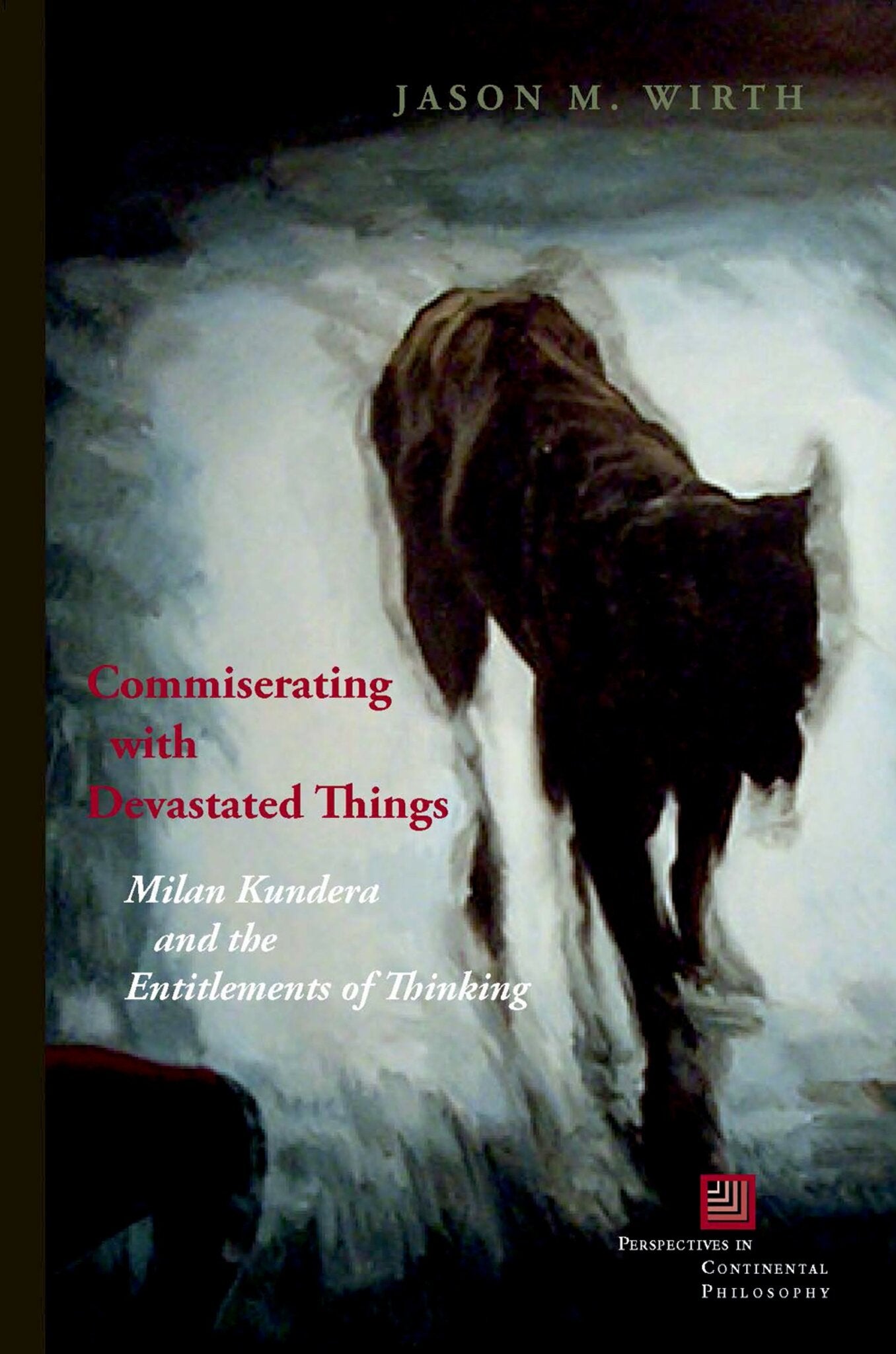
Commiserating with Devastated Things seeks to understand the place Milan Kundera calls “the universe of the novel.” Working through Kundera’s oeuvre as well as the continental philosophical tradition, Wirth argues that Kundera transforms—not applies—philosophical reflection within literature.
Reading between Kundera’s work and his self-avowed tradition, from Kafka to Hermann Broch, Wirth asks what it might mean to insist that philosophy does not have a monopoly on wisdom, that the novel has its own modes of wisdom that challenge philosophy’s.


Wirth’s book is an enormous gift. It flirts successfully with Philosophy’s self-proclaimed grandeur without giving up on its deepest, often laughable desires. It is in its encounter with the novel that Philosophy is best tested, teased, and held accountable. And in the absence of a conversation with Philosophy, perhaps the novel’s own explorations—of contingency, ambiguity, and irony—lack the kind of pursuit its implications demand. Wirth’s commiserations with Kundera’s concerns and with Philosophy’s display the best of both worlds, with rich and stunning force.
Perhaps no novelist satirizes Philosophy more compellingly than Kundera while seducing any thinker to dare rescuing it from its own well-worn fantasies. I can think of no one who’s done a greater service than Wirth at crossing the borders, at putting Kundera’s labors and those of Philosophy into such compelling dialogue. Both testaments risk betrayal; neither is betrayed. We can be grateful for Wirth’s exceptional guidance in how to inhabit both worlds so fully.
“A unique, groundbreaking work that crosses the disciplinary lines between philosophy and literature to advance a highly creative thesis regarding the nature of thinking itself.”---Leah Kalmanson, Drake University
I can think of no one who has done a greater service than Wirth at straddling these margins between philosophy and the novel and, in so doing, putting the novel—with Kundera as representative—and
philosophy into such a cogent entretien. Wirth proves himself to be a profound guide through the minefield placed along the line between these two worlds which are difficult enough to navigate on their own, but which grant us insights exponentially when placed side by side.