


Some error occured while loading the Quick View. Please close the Quick View and try reloading the page.
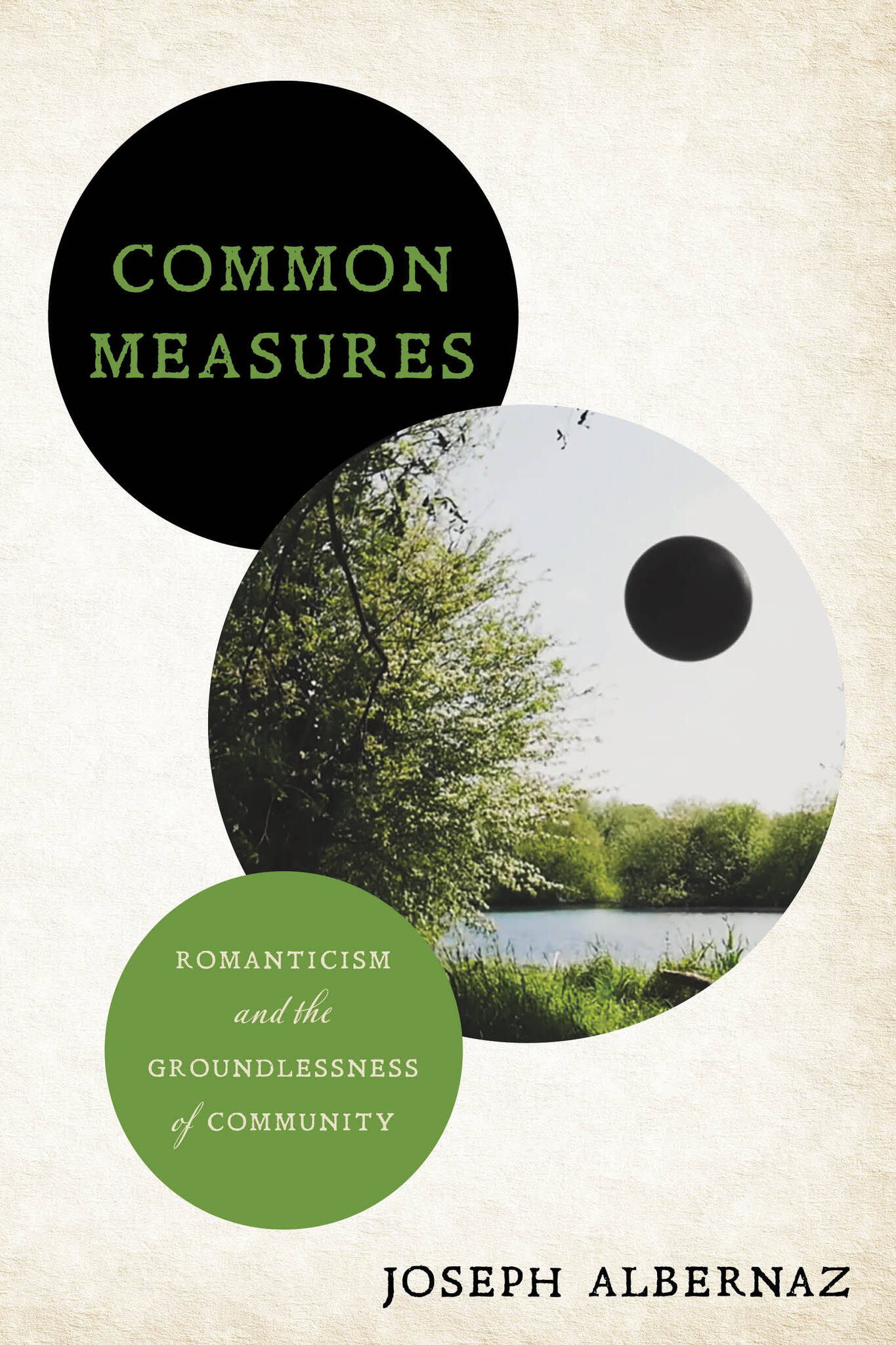
What happens to the experience of community when the grounds of communal life collapse? The Romantic period's upheaval cast both traditional communal organizations of life and outgrowths of the new revolutionary age into crisis. In this context, Joseph Albernaz argues that Romantic writers articulate a vital conception of "groundless community," while following this idea through its aesthetic, ecological, political, and philosophical registers into the present.
Amidst the violent expropriation of the commons, Romantic writers including the Wordsworths, Clare, Hölderlin, and the revolutionary abolitionist Robert Wedderburn reimagined the forms of their own lives through literature to conceive community as groundless, a disposition toward radically open forms of sharing—including with nonhuman beings—without recourse to any collective identity. Both a poetics and ethics, groundless community names an everyday sociality that surges beneath and against the enclosures of property and identity, binding us to the movements of the earth.
Unearthing Romanticism's intersections with the history of communism and the general strike, Albernaz also demonstrates how Romantic literature's communal imagination reverberates through later theories of community in Bataille, Derrida, Nancy, Moten, and others. With sharp close readings, new historical constellations, and innovative theoretical paradigms, Common Measures recasts the relationship of the Romantic period to the basic terms of modernity.


"Common Measures is not only a major contribution to our understanding of the political dimension of Romanticism but also to our conception of the relationship between that period and the aesthetic, political and ecological concerns of today." —Kir Kuiken, University at Albany, SUNY
"This insightful study will be of great interest to scholars of Romanticism and of literary theory, especially poststructuralism and ecocriticism. Highly recommended." —D. D. Schierenbeck, CHOICE
"It is Albernaz's impressive readings of Romantic texts that stand out, offering us new and intriguing approaches to Romantic literature and Romanticism itself." —Seth T. Reno, European Romantic Review
Introduction. All Things Common
One. Singularity à deux: Rousseau
Two. Homeward Unbound: The Wordsworths
Three. Nonsovereign Circulations: William Blake
Interlude. Sunray of the Negative: Blake and Bataille
Four. Of Weeds and Worlds: John Clare
Five. To Strike the Root: Robert Wedderburn
Coda. Communism of Spirits
Notes
Index