


Some error occured while loading the Quick View. Please close the Quick View and try reloading the page.
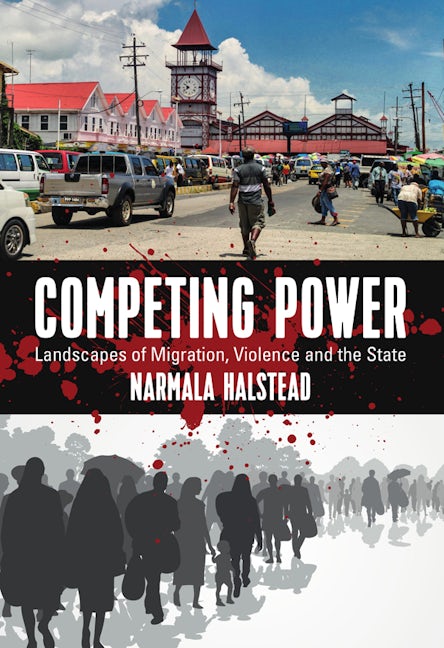
Drawing from ethnographic material based on long-term research, this volume considers competing forms of power at micro- and macro-levels in Guyana, where the local is marked by extensive migration, corruption, and differing levels of violence. It shows how the local is occupied and re-occupied by various powerful and powerless people and entities (“big ones” and “small ones”), and how it becomes the site of intense power negotiations in relation to external ideas of empowerment.


“This book looks at the phenomenon of Guyanese migration with elegance and sensibility, bringing to light the intricate relationship between intimate affects and broader socio-economic issues. Competing Power is timely, well-written, and engaging.” • Federica Guglielmo, Liverpool School of Tropical Medicine
“This is a highly original study… The reader learns about individual and group, formal and informal, and regular and innovative means of dealing with power, often never explored and exposed in such compelling detail.” • Judith Okely, University of Oxford
Narmala Halstead is a Research Associate at the University of Sussex. Previously, she was a Reader in Anthropology at the University of East London (UEL) and also held a permanent lectureship at Cardiff University. Her research focuses on Guyana and Caribbean migrants and diaspora in New York, and currently she is working on digital personhood, rights, and debates in cities across three countries. She is the editor of the Journal of Legal Anthropology.
Acknowledgements
Introduction: Competing Power: Landscapes of Violence, Migration and the State
Chapter 1. Amidst Illegality and Violence: Flight and the State
Chapter 2. Illegality and Big Ones: Disengaging Structural Violence
Chapter 3. Local Others: Residents, Bandits, Migrants
Chapter 4. Local Lives, Global Selves: New Local Imaginaries and ‘Go-and-Come’
Chapter 5. Re-presencing the Local
Chapter 6. Co-occupying Public Power: Challenges, Abuse and Structural Violence
Chapter 7. Materializing a Strange-Familiar Local: Individuals, Migrants’ Experiences and Strategies of Governance
Chapter 8. In and Out of the Local: Blame-Sharing, Faulty Persons and the State
Concluding Reflections
Glossary
Bibliography
Index