


Some error occured while loading the Quick View. Please close the Quick View and try reloading the page.
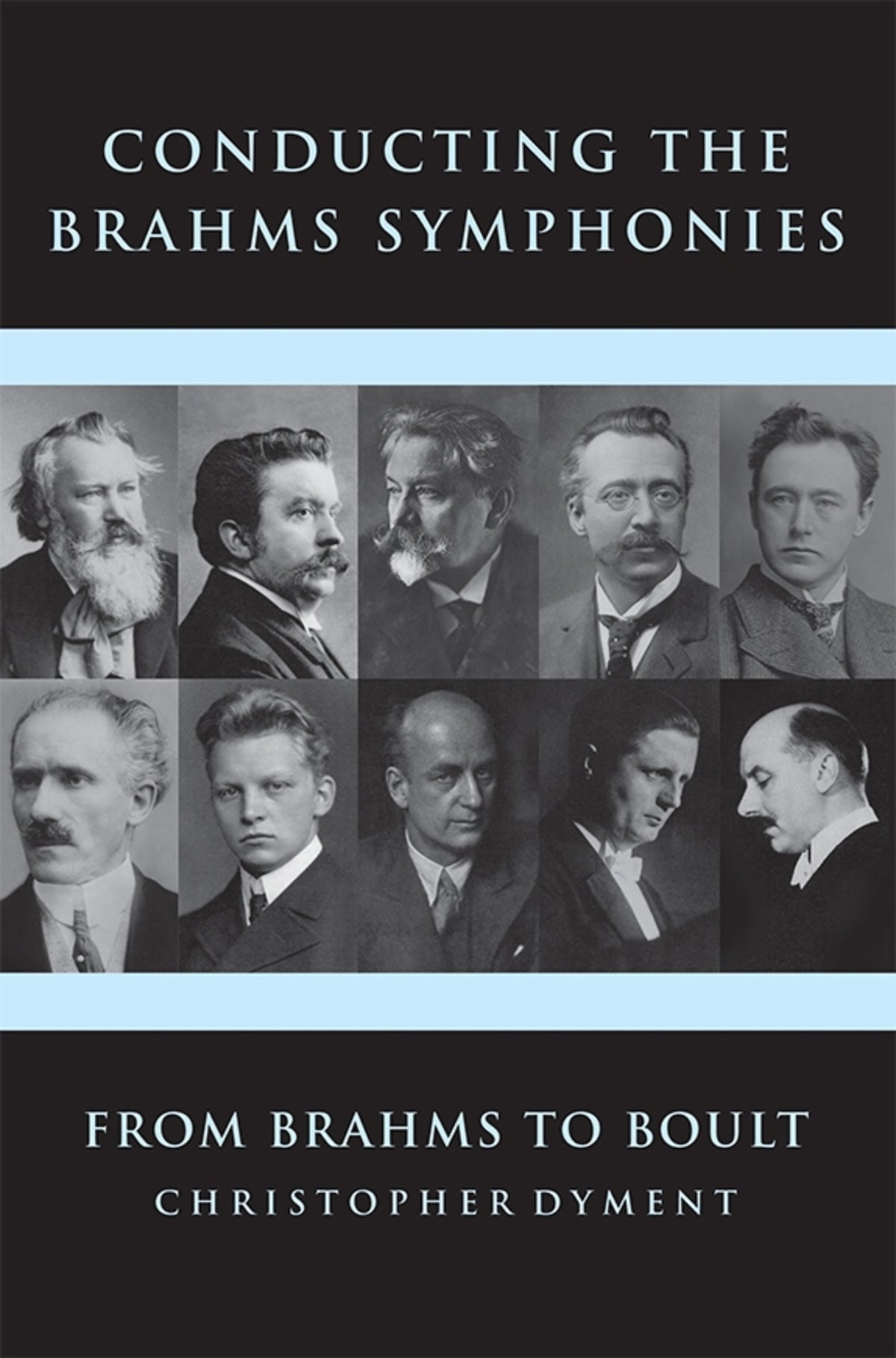
A major study sure to fascinate musicians, Brahms enthusiasts and those interested in the history of recorded music.
How did Brahms conduct his four symphonies? What did he want from other conductors when they performed these works, and to which among them did he give his approval? And crucially, are there any stylistic pointers to these performances in early recordings of the symphonies made in the first half of the twentieth century?
For the first time, Christopher Dyment provides a comprehensive and in-depth answer to these important issues. Drawing together thestrands of existing research with extensive new material from a wide range of sources - the views of musicians, contemporary journals, memoirs, biographies and other critical literature - Dyment presents a vivid picture of historic performance practice in Brahms's era and the half-century that followed. Here is a remarkable panorama showcasing Brahms himself conducting, together with those conductors whom he heard, among them Levi, Richter, Nikisch, Weingartner and Fritz Steinbach, and their disciples, such as Toscanini, Stokowski, Boult and Fritz Busch. Here, too, are other famed Brahms conductors of the early twentieth century, including Furtwängler and Abendroth, whose connections with the Brahms tradition are closely examined. Dyment then analyses recordings of the symphonies by these conductors and highlights aspects which the composer might well have commended. Finally, Dyment suggests the importanceof his conclusions for those contemporary conductors who are currently attempting to rediscover genuine performance traditions in their own re-creations of the symphonies.
This major study is complemented with forty photographs and a frontispiece. It is sure to fascinate musicians, Brahms enthusiasts and those interested in the history of recorded music.
CHRISTOPHER DYMENT is author of Felix Weingartner: Recollections and Recordings(Triad Press 1976) and Toscanini in Britain (The Boydell Press 2012). He has published many articles about historic conductors over the last forty years.
How did Brahms conduct his four symphonies? What did he want from other conductors when they performed these works, and to which among them did he give his approval? And crucially, are there any stylistic pointers to these performances in early recordings of the symphonies made in the first half of the twentieth century?
For the first time, Christopher Dyment provides a comprehensive and in-depth answer to these important issues. Drawing together thestrands of existing research with extensive new material from a wide range of sources - the views of musicians, contemporary journals, memoirs, biographies and other critical literature - Dyment presents a vivid picture of historic performance practice in Brahms's era and the half-century that followed. Here is a remarkable panorama showcasing Brahms himself conducting, together with those conductors whom he heard, among them Levi, Richter, Nikisch, Weingartner and Fritz Steinbach, and their disciples, such as Toscanini, Stokowski, Boult and Fritz Busch. Here, too, are other famed Brahms conductors of the early twentieth century, including Furtwängler and Abendroth, whose connections with the Brahms tradition are closely examined. Dyment then analyses recordings of the symphonies by these conductors and highlights aspects which the composer might well have commended. Finally, Dyment suggests the importanceof his conclusions for those contemporary conductors who are currently attempting to rediscover genuine performance traditions in their own re-creations of the symphonies.
This major study is complemented with forty photographs and a frontispiece. It is sure to fascinate musicians, Brahms enthusiasts and those interested in the history of recorded music.
CHRISTOPHER DYMENT is author of Felix Weingartner: Recollections and Recordings(Triad Press 1976) and Toscanini in Britain (The Boydell Press 2012). He has published many articles about historic conductors over the last forty years.

Price: $49.95
Pages: 268
Publisher: Boydell & Brewer Inc.
Imprint: Boydell Press
Publication Date:
18 February 2016
Trim Size: 9.21 X 6.14 in
ISBN: 9781783271009
Format: Hardcover
BISACs:
MUSIC / Genres & Styles / Classical, Art music, orchestral and formal music, MUSIC / Instruction & Study / Conducting, Techniques of music / music tutorials / teaching of music

Dyment's book contains much useful information that will attract both performers and scholars, gathering together a number of relevant primary source materials.
A valuable addition to the fascinating history of great conductors of the past. Focuses in more detail on specific performances of the Brahms symphonies, each movement, each section from the score.
This study is a major addition to Brahms Scholarship. It is most comprehensively recommended.
Presents an engaging and thorough discussion. . . . This book will be of interest to students of Brahms and his symphonies, performance practice and aesthetics [of] the late 19th century, the many conductors referenced, and the history of recorded music.
'It would be hard ... to describe how detailed and impressive Dyment's research is ... Of great interest ... to lovers of Brahms and followers of early conductors.
A valuable addition to the fascinating history of great conductors of the past. Focuses in more detail on specific performances of the Brahms symphonies, each movement, each section from the score.
This study is a major addition to Brahms Scholarship. It is most comprehensively recommended.
Presents an engaging and thorough discussion. . . . This book will be of interest to students of Brahms and his symphonies, performance practice and aesthetics [of] the late 19th century, the many conductors referenced, and the history of recorded music.
'It would be hard ... to describe how detailed and impressive Dyment's research is ... Of great interest ... to lovers of Brahms and followers of early conductors.
Brahms conducts: the composer and his contemporaries
The documentary evidence: lines of authority
Recorded evidence: Traditions traced or lost
Conclusions
Bibliography
The documentary evidence: lines of authority
Recorded evidence: Traditions traced or lost
Conclusions
Bibliography