


Some error occured while loading the Quick View. Please close the Quick View and try reloading the page.
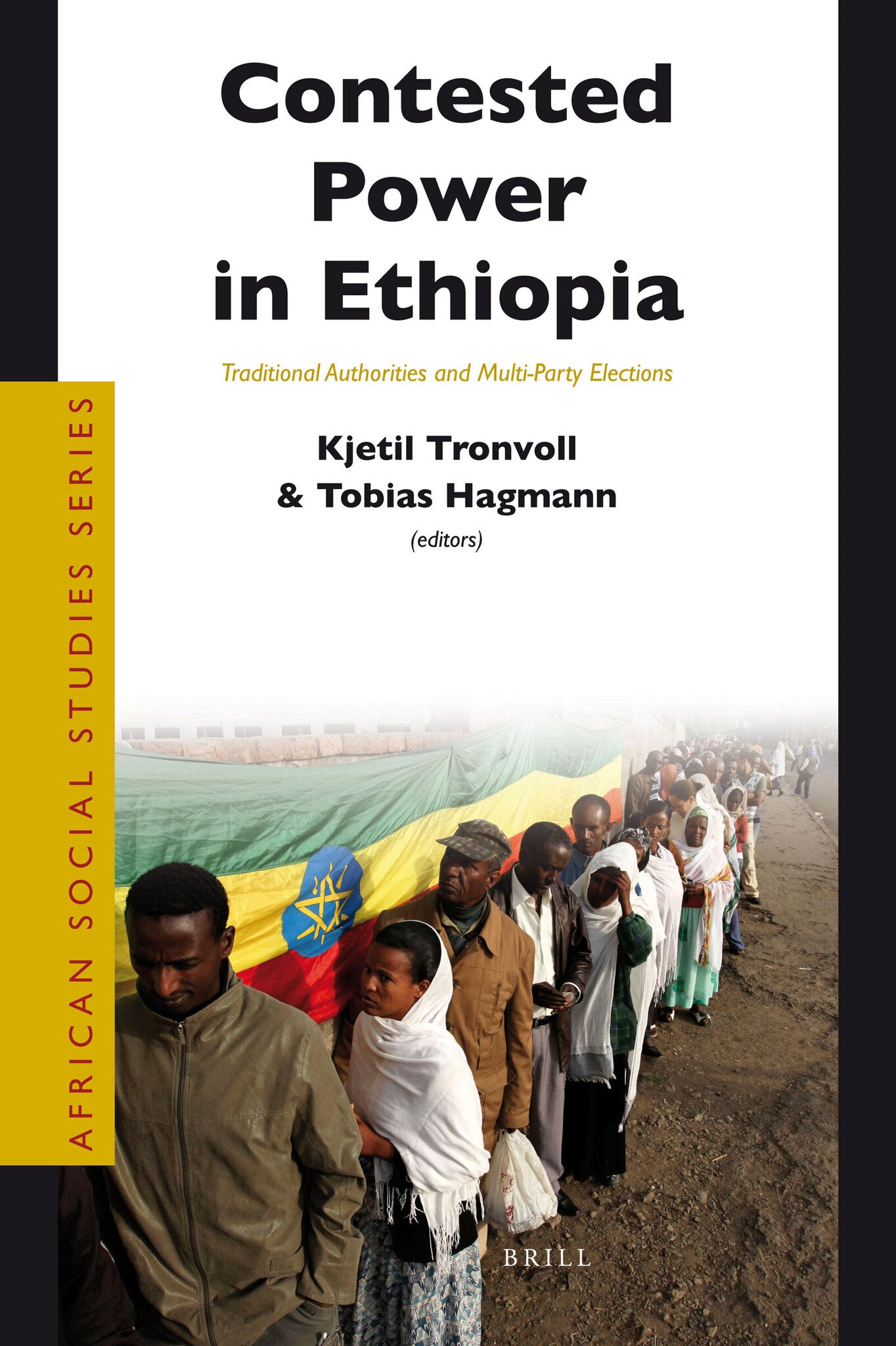
This book offers a comparative ethnography of the contested powers that shape democratization in Ethiopia. Although multi-party elections have become the norm in Africa, relatively little is known about the significance of non-state actors such as traditional authorities in electioneering. Focusing on Ethiopia’s competitive 2005 elections, this book analyzes how customary leaders, political parties and state officials confronted and complemented each other during election time. Case studies reveal the contemporaneousness of traditional authorities in modern politics, but also how multi-party competition reproduces traditional relations of domination among ethnic groups. The book documents the importance of customary authority in selecting party candidates and providing legitimacy to political parties, but also their limitations in a country dominated by a semi-authoritarian party-state.

Price: $97.00
Pages: 302
Publisher: Brill
Imprint: Brill
Publication Date:
09 December 2011
ISBN: 9789004218437
Format: Paperback

Kjetil Tronvoll, PhD (2003) in political anthropology from LSE, is professor of human rights at the University of Oslo and Senior Partner of the International Law and Policy Institute. He has published extensively on the Horn of Africa, and his latest monograph is War and the Politics of Identity in Ethiopia (James Currey, 2009).
Tobias Hagmann, Ph.D. (2007), University of Lausanne, is a visiting scholar at UC Berkeley. He has published on politics in the Horn of Africa and is co-editor of Negotiating Statehood: Dynamics of Power and Domination in Africa (Wiley Blackwell, 2011).
Tobias Hagmann, Ph.D. (2007), University of Lausanne, is a visiting scholar at UC Berkeley. He has published on politics in the Horn of Africa and is co-editor of Negotiating Statehood: Dynamics of Power and Domination in Africa (Wiley Blackwell, 2011).