


Some error occured while loading the Quick View. Please close the Quick View and try reloading the page.
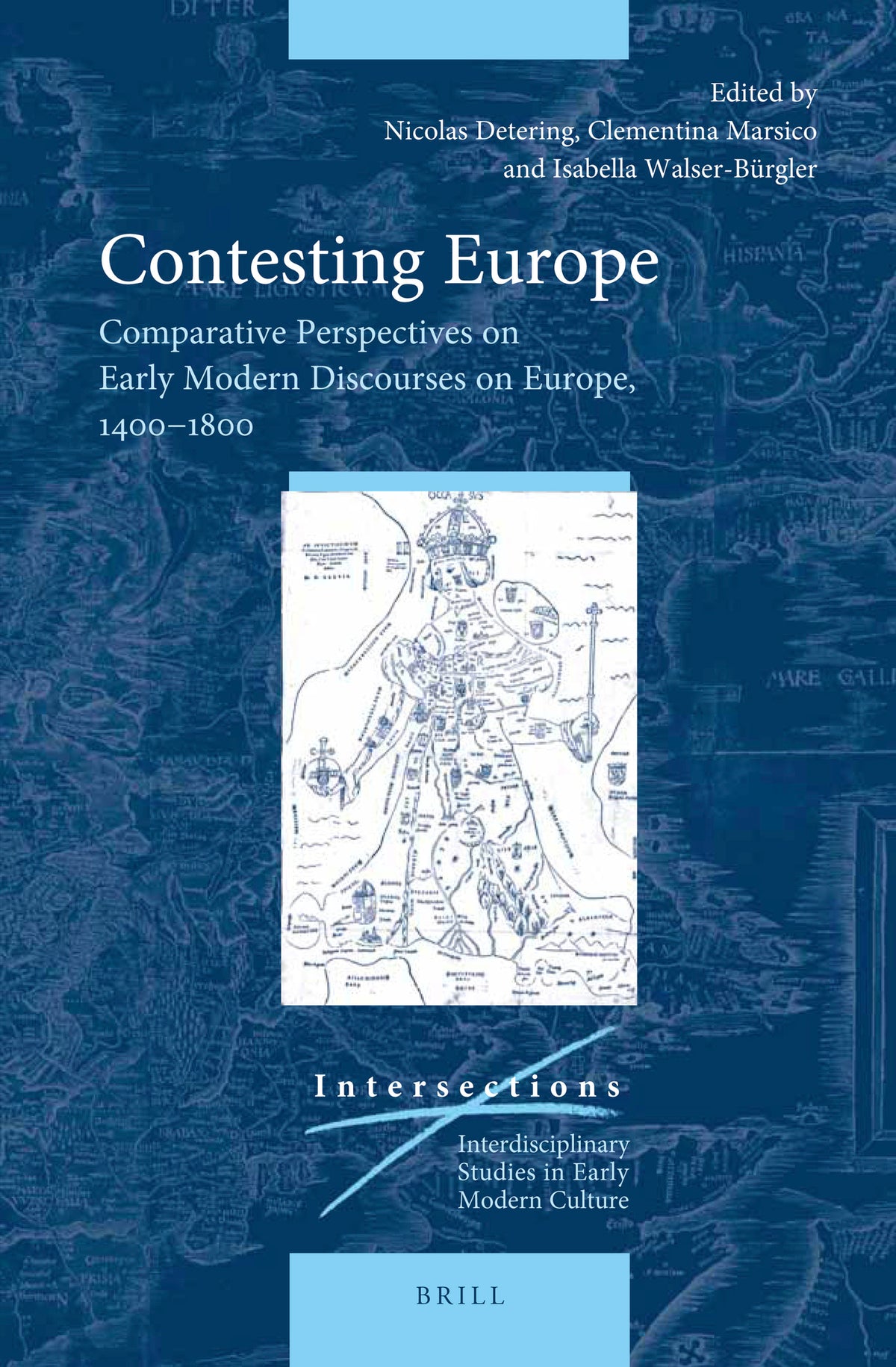
While the term ‘Europe’ was used sporadically in ancient and medieval times, it proliferated between the fifteenth and sixteenth centuries, and gained a prevalence in the seventeenth and eighteenth centuries which it did not possess before. Although studies on the history of the idea of Europe abound, much of the vast body of early modern sources has still been neglected. Assuming that discourses tend to transcend linguistic, historical and generic boundaries, this book has gathered experts from various fields of study who examine vernacular and Latin negotiations of Europe from the late fifteenth to the early eighteenth century. This multi-angled approach serves to identify similarities and differences in the discourses on Europe within their different national and cultural communities.
Contributors are: Ovanes Akopyan, Volker Bauer, Piotr Chmiel, Nicolas Detering, Stefan Ehrenpreis, Niels Grüne, Peter Hanenberg, Ulrich Heinen, Ronny Kaiser, Niall Oddy, Katharina N. Piechocki, Dennis Pulina, Marion Romberg, Lucie Storchová, Isabella Walser-Bürgler, Michael Wintle, and Enrico Zucchi.
Contributors are: Ovanes Akopyan, Volker Bauer, Piotr Chmiel, Nicolas Detering, Stefan Ehrenpreis, Niels Grüne, Peter Hanenberg, Ulrich Heinen, Ronny Kaiser, Niall Oddy, Katharina N. Piechocki, Dennis Pulina, Marion Romberg, Lucie Storchová, Isabella Walser-Bürgler, Michael Wintle, and Enrico Zucchi.

Price: $168.00
Pages: 386
Publisher: Brill
Imprint: Brill
Publication Date:
December 19, 2019
ISBN: 9789004376052
Format: Hardcover

"Compared to previous research on the discursive construction of “Europe”, the volume differs in three respects: Firstly, it takes into account little-noticed spatial peripheries and their sources in the various national languages and in Neo-Latin. This multi-perspectivity positively sets the volume apart from many other English-language compilations. Second, the contributions expand the range of sources to include a multitude of visual media and text genres. Third, with the 250 years from the late 15th to the early 18th century, it deals with the "pre-Enlightenment" part of the early modern period, which is often left out." (translated from German)
Joachim Berger, Leibniz Institute of European History, in H-Soz-Kult, 15.12.2020
"Gegenüber bisherigen Forschungen zur diskursiven Konstruktion „Europas“ unterscheidet sich der Band in dreifacher Hinsicht: Er berücksichtigt erstens wenig beachtete räumliche Peripherien und ihre Quellen in den verschiedenen Landessprachen und im Neulateinischen. Diese Multiperspektivität erstreckt sich zudem auf die (auch osteuropäische) Forschungsliteratur, die rezipiert wird; das hebt den Band positiv von manch anderem englischsprachigen Sammelwerk ab. Zweitens besteigen die Beiträge nicht nur die Höhenkämme des Schrifttums und der bildenden Künste, sondern erweitern das Quellenspektrum um eine Vielzahl visueller Medien und Textgattungen. Drittens behandelt er mit den gut 250 Jahren vom späten 15. zum frühen 18. Jahrhundert den „voraufklärerischen“ Teil der Frühneuzeit, der aufgrund von Peter Burkes wirkmächtigem Zweifel, ob es vor 1700 ein auf Europa bezogenes "collective consciousness" gegeben habe, häufig ausgespart wurde."
Joachim Berger, Leibniz Institute of European History, in H-Soz-Kult, 15.12.2020
Joachim Berger, Leibniz Institute of European History, in H-Soz-Kult, 15.12.2020
"Gegenüber bisherigen Forschungen zur diskursiven Konstruktion „Europas“ unterscheidet sich der Band in dreifacher Hinsicht: Er berücksichtigt erstens wenig beachtete räumliche Peripherien und ihre Quellen in den verschiedenen Landessprachen und im Neulateinischen. Diese Multiperspektivität erstreckt sich zudem auf die (auch osteuropäische) Forschungsliteratur, die rezipiert wird; das hebt den Band positiv von manch anderem englischsprachigen Sammelwerk ab. Zweitens besteigen die Beiträge nicht nur die Höhenkämme des Schrifttums und der bildenden Künste, sondern erweitern das Quellenspektrum um eine Vielzahl visueller Medien und Textgattungen. Drittens behandelt er mit den gut 250 Jahren vom späten 15. zum frühen 18. Jahrhundert den „voraufklärerischen“ Teil der Frühneuzeit, der aufgrund von Peter Burkes wirkmächtigem Zweifel, ob es vor 1700 ein auf Europa bezogenes "collective consciousness" gegeben habe, häufig ausgespart wurde."
Joachim Berger, Leibniz Institute of European History, in H-Soz-Kult, 15.12.2020
Nicolas Detering, Ass.-Prof. Dr. (* 1985), is assistant professor of German Literature at the University of Bern. He specialises in early modern literature and has published on German poetry and ideas of Europe in the seventeenth century.
Clementina Marsico, Dr. (* 1983), Ludwig Boltzmann Institute for Neo-Latin Studies, Innsbruck, is a researcher of Italian Humanism. She has published monographs, editions and commentaries, collected volumes and many articles on Renaissance Italy in general and Lorenzo Valla in particular.
Isabella Walser-Bürgler, Dr. (* 1988), Ludwig Boltzmann Institute for Neo-Latin Studies, Innsbruck, is key researcher at that institute. She has published various editions and articles on the Neo-Latin novel, the concept of Europe in Neo-Latin literature, and university orations.
Clementina Marsico, Dr. (* 1983), Ludwig Boltzmann Institute for Neo-Latin Studies, Innsbruck, is a researcher of Italian Humanism. She has published monographs, editions and commentaries, collected volumes and many articles on Renaissance Italy in general and Lorenzo Valla in particular.
Isabella Walser-Bürgler, Dr. (* 1988), Ludwig Boltzmann Institute for Neo-Latin Studies, Innsbruck, is key researcher at that institute. She has published various editions and articles on the Neo-Latin novel, the concept of Europe in Neo-Latin literature, and university orations.