


Some error occured while loading the Quick View. Please close the Quick View and try reloading the page.
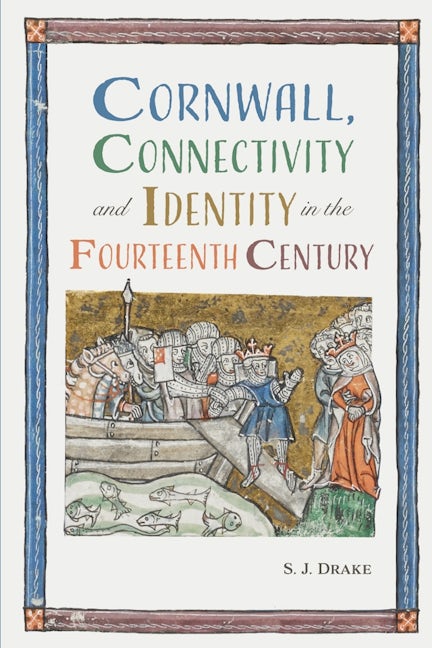
The links between Cornwall, a county frequently considered remote and separate in the Middle Ages, and the wider realm of England are newly discussed.
WINNER: The Federation of Old Cornwall Societies (FOCS) Holyer an Gof Cup for non-fiction, 2020.
Stretching out into the wild Atlantic, fourteenth-century Cornwall was a land at the very ends of the earth. Within itsboundaries many believed that King Arthur was a real-life historical Cornishman and that their natal shire had once been the home of mighty giants. Yet, if the county was both unusual and remarkable, it still held an integral place in the wider realm of England.
Drawing on a wide range of published and archival material, this book seeks to show how Cornwall remained strikingly distinctive while still forming part of the kingdom. It argues that myths,saints, government, and lordship all endowed the name and notion of Cornwall with authority in the minds of its inhabitants, forging these people into a commonalty. At the same time, the earldom-duchy and the Crown together helped to link the county into the politics of England at large. With thousands of Cornishmen and women drawn east of the Tamar by the needs of the Crown, warfare, lordship, commerce, the law, the Church, and maritime interests, connectivity with the wider realm emerges as a potent integrative force.
Supported by a cast of characters ranging from vicious pirates and gentlemen-criminals through to the Black Prince, the volume sets Cornwall in the latest debates about centralisation, devolution, and collective identity, about the nature of Cornishness and Englishness themselves.
S.J. DRAKE is a Research Associate at the Institute of Historical Research. He was born and brought up in Cornwall.
WINNER: The Federation of Old Cornwall Societies (FOCS) Holyer an Gof Cup for non-fiction, 2020.
Stretching out into the wild Atlantic, fourteenth-century Cornwall was a land at the very ends of the earth. Within itsboundaries many believed that King Arthur was a real-life historical Cornishman and that their natal shire had once been the home of mighty giants. Yet, if the county was both unusual and remarkable, it still held an integral place in the wider realm of England.
Drawing on a wide range of published and archival material, this book seeks to show how Cornwall remained strikingly distinctive while still forming part of the kingdom. It argues that myths,saints, government, and lordship all endowed the name and notion of Cornwall with authority in the minds of its inhabitants, forging these people into a commonalty. At the same time, the earldom-duchy and the Crown together helped to link the county into the politics of England at large. With thousands of Cornishmen and women drawn east of the Tamar by the needs of the Crown, warfare, lordship, commerce, the law, the Church, and maritime interests, connectivity with the wider realm emerges as a potent integrative force.
Supported by a cast of characters ranging from vicious pirates and gentlemen-criminals through to the Black Prince, the volume sets Cornwall in the latest debates about centralisation, devolution, and collective identity, about the nature of Cornishness and Englishness themselves.
S.J. DRAKE is a Research Associate at the Institute of Historical Research. He was born and brought up in Cornwall.

Price: $190.00
Pages: 512
Publisher: Boydell & Brewer Inc.
Imprint: Boydell Press
Publication Date:
15 December 2019
Trim Size: 9.21 X 6.14 in
ISBN: 9781783274697
Format: Hardcover
BISACs:
HISTORY / Europe / Medieval, European history: medieval period, middle ages, HISTORY / Europe / General, HISTORY / Europe / Great Britain / General, Urban communities

Overall, this is an interesting and useful volume which offers a substantial amount of historical flesh to clothe the archaeological bones for this intriguing period of Cornwall's history.
Preface: a Little Understood Land
Part I: Cornwall: Its Gentlemen, Government and Identity
The Very Ends of the Earth: an Overview of Fourteenth-Century Cornwall
Office-Holding in a Wild Spot
Since the Time of King Arthur: Gentry Identity and the Commonalty of Cornwall
An Extraordinary Folk: the Cornish People
Part II: Distant Dominium: Comital, Ducal and Regnal Lordship
The Final Tempestuous Years of the Earldom, 1300-1336
The Black Prince and his Duchy, 1337-1376
Richard of Bordeaux: Duke of Cornwall and King of England, 1376-1399
Part III: Connectivity: Cornwall and the Wider Realm
Communication, Movement, and Exchange: Connectivity Frameworks
Sovereign Kings and Loyal Subjects: Regnal Connectivity
Pillagers with Long Knives: Military Connectivity
Formidable Lords and True Tenants: Lordly Connectivity
Gold, Tin, and Terrible Ale: Commercial Connectivity
Lawless Judges and Litigious Cornishmen: Legal Connectivity
God and Cornwall: Ecclesiastical Connectivity
Of Shipmen, Smugglers, and Pirates: Maritime Connectivity
Connecting Cornwall
Conclusion: Cornish Otherness and English Hegemony?
Epilogue: Contesting Cornwall
Appendix I. Cornwall's Office-holders, c. 1300-c. 1400
Appendix II. Cornish Men-at-Arms and Mounted Archers who Served the King between c. 1298 and c. 1415
Appendix III. Cornish Ports that Sent Ships to Royal Fleets between c. 1297 and c. 1420
Bibliography
Part I: Cornwall: Its Gentlemen, Government and Identity
The Very Ends of the Earth: an Overview of Fourteenth-Century Cornwall
Office-Holding in a Wild Spot
Since the Time of King Arthur: Gentry Identity and the Commonalty of Cornwall
An Extraordinary Folk: the Cornish People
Part II: Distant Dominium: Comital, Ducal and Regnal Lordship
The Final Tempestuous Years of the Earldom, 1300-1336
The Black Prince and his Duchy, 1337-1376
Richard of Bordeaux: Duke of Cornwall and King of England, 1376-1399
Part III: Connectivity: Cornwall and the Wider Realm
Communication, Movement, and Exchange: Connectivity Frameworks
Sovereign Kings and Loyal Subjects: Regnal Connectivity
Pillagers with Long Knives: Military Connectivity
Formidable Lords and True Tenants: Lordly Connectivity
Gold, Tin, and Terrible Ale: Commercial Connectivity
Lawless Judges and Litigious Cornishmen: Legal Connectivity
God and Cornwall: Ecclesiastical Connectivity
Of Shipmen, Smugglers, and Pirates: Maritime Connectivity
Connecting Cornwall
Conclusion: Cornish Otherness and English Hegemony?
Epilogue: Contesting Cornwall
Appendix I. Cornwall's Office-holders, c. 1300-c. 1400
Appendix II. Cornish Men-at-Arms and Mounted Archers who Served the King between c. 1298 and c. 1415
Appendix III. Cornish Ports that Sent Ships to Royal Fleets between c. 1297 and c. 1420
Bibliography