


Some error occured while loading the Quick View. Please close the Quick View and try reloading the page.
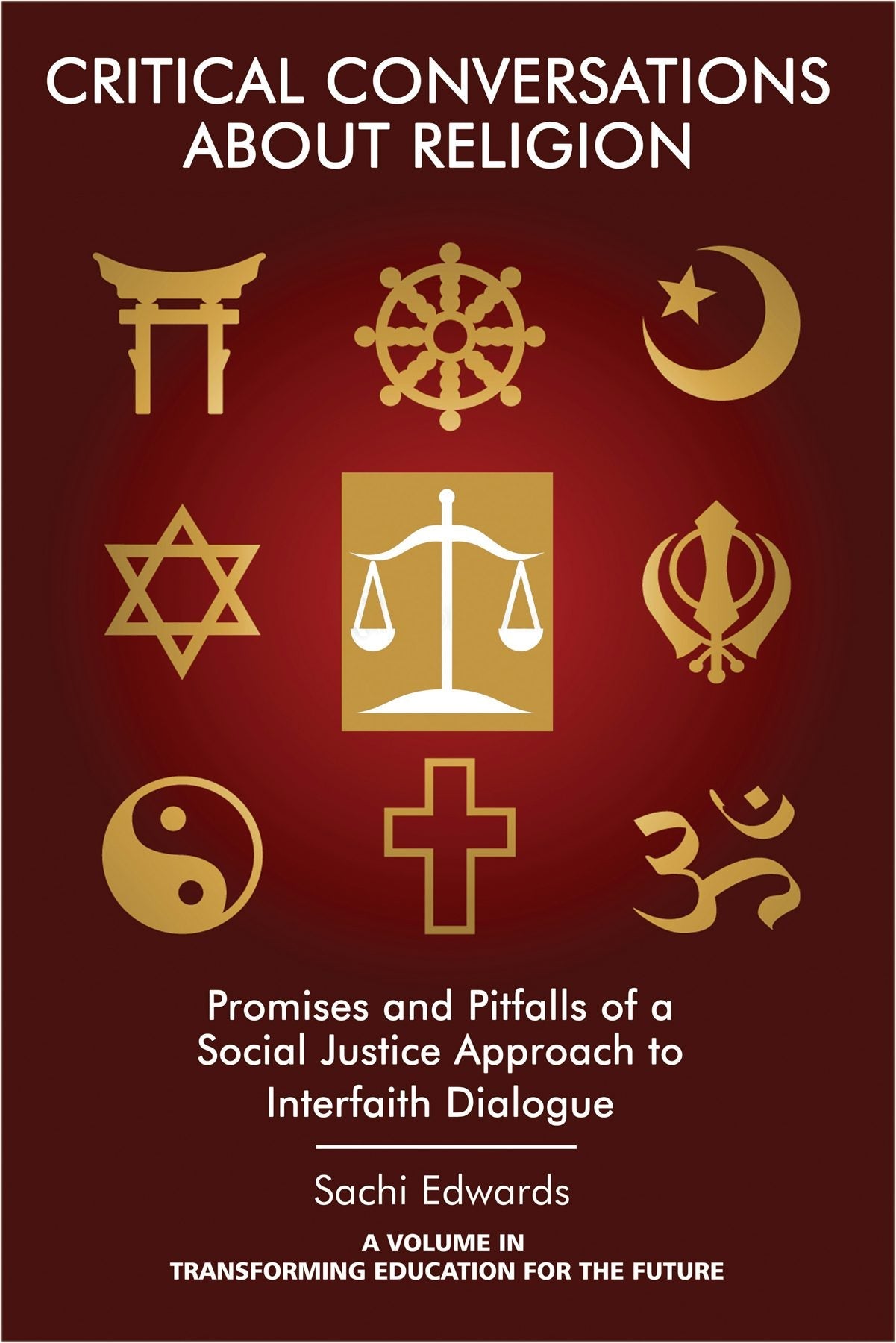
Interfaith initiatives are increasingly prevalent on college and university campuses around the country. In large part, this trend responds both to ongoing religious violence throughout the world and to increasing religious tension in the United States. As such, these interfaith initiatives often attempt to bolster interfaith collaboration and increase awareness of different religious cultures, identities, beliefs, and traditions. In this book, Edwards reviews the various goals and processes associated with the interfaith movement, and offers both warnings and suggestions for those who are interested in pursuing an approach to interfaith dialogue that is oriented toward social justice. In doing so, this book fills a critical gap in academic literature surrounding the impact of religious identity and interfaith relations on pedagogy, educational experiences, and campus climates.
Through three descriptive case studies set in a large public university in the United States, Edwards explores the use of Intergroup Dialogue as a pedagogical model for interfaith dialogue. While the goal of this pedagogy is to increase student understanding of privilege, oppression, and social injustice pertaining to religious identity, the cases in this book demonstrate how and why social justice oriented interfaith dialogue can be easily derailed and, if so, may potentially have harmful implications for religious minorities. Accordingly, Edwards offers five necessary conditions for assuring that social justice oriented interfaith dialogue (which Intergroup Dialogue is intended to be) succeeds. By focusing on the unique perspectives of four particular student participants (all of whom have religious identities outside of the three dominant Abrahamic religions) Edwards also highlights the experiences of those from religious identity groups that are the most overlooked and under-represented in the discourse on interfaith dialogue.


Acknowledgments.
Introduction.
Chapter 1. Defining Interfaith Dialogue.
Chapter 2. Integrating Interfaith Dialogue With Education.
Chapter 3. Intergroup Dialogue Pedagogy.
Chapter 4. Case Study One: Interfaith Dialogue Without a Clear Purpose.
Chapter 5. Case Study Two: Interfaith Dialogue as Religious Studies.
Chapter 6. Case Study Three: Interfaith Dialogue as a Philosophical Debate.
Chapter 7. Missing the Target, Misunderstanding the Point: What Went Wrong? Expectations and Motivations for Interfaith Dialogue.
Chapter 8. Necessary Conditions for Facilitating Social Justice Oriented Interfaith Dialogue.
References.
Appendix 1: Participants' Religious Identities.
About the Author.