


Some error occured while loading the Quick View. Please close the Quick View and try reloading the page.
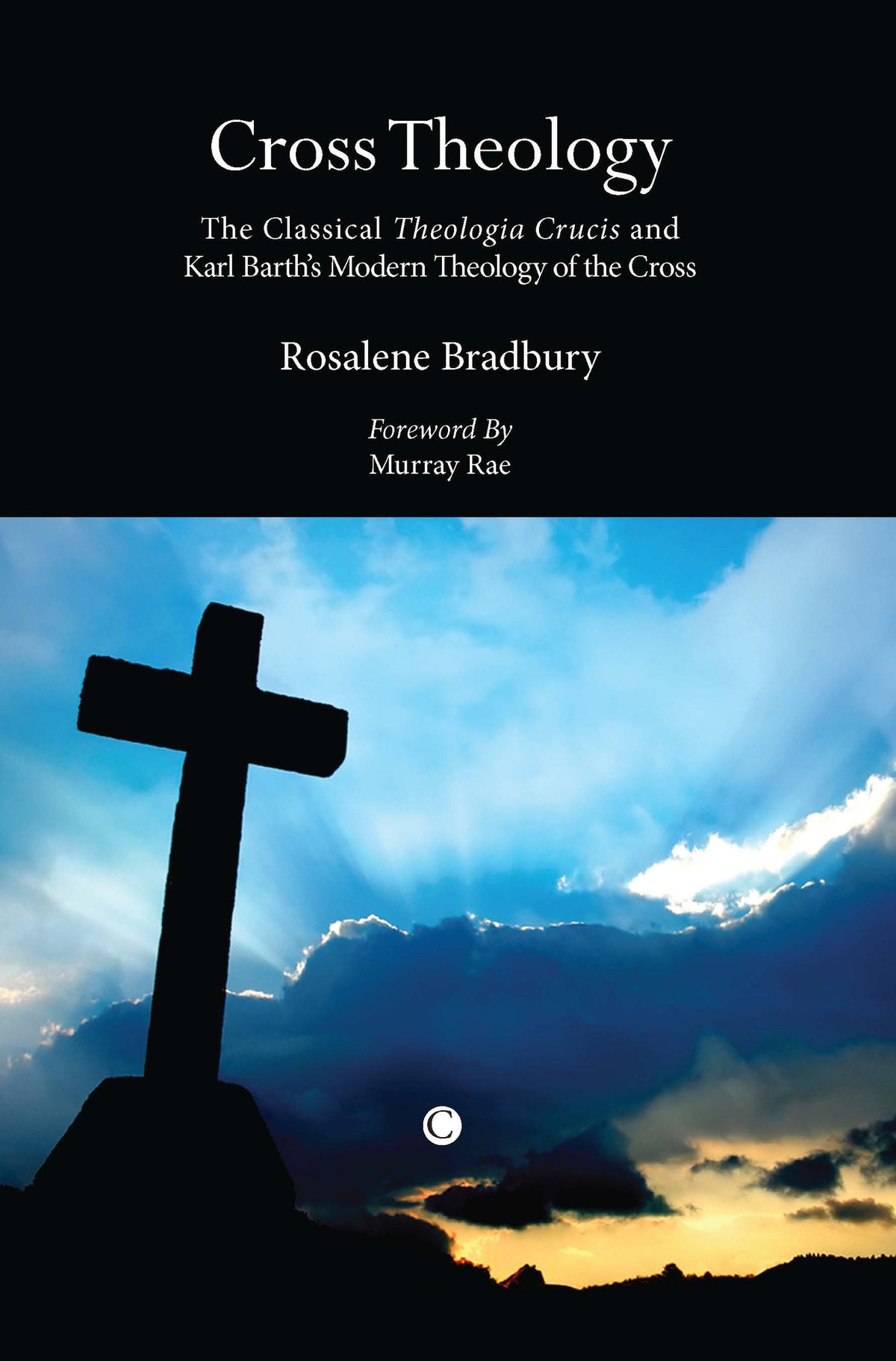
An astute and thought-provoking analysis of the theologia crucis and the significance of Karl Barth as a modern exponent of this theological tradition.
What is the Theologica Crucis? What are its radical claims? Which theologians stood within this subversive tradition? Is Karl Barth amongst them?
In this volume New Zealand theologian Rosalene Bradbury throws light on these – surprisingly contentious – questions. She argues that tethered to the tradition that gave rise to it, the term theologia crucis references a theological system centred on notions of false and true glory, and an ancient conviction that from the cross of Jesus Christ came a revelatory and a saving Word.
The apostle Paul, Athanasius, a school of medieval mystics, and the reformer Martin Luther, are all shown to be significant classical representatives of these ideas. Bradbury then argues that seminal twentieth-century theologian Karl Barth exhibits many of the classical crucicentric system’s defining characteristics, so that he himself might fairly be deemed a modern theologian of the cross. Until now Barth’s pivotal role in this long, crucicentric tradition has been unsung; this book sheds important new light on his theology.
What is the Theologica Crucis? What are its radical claims? Which theologians stood within this subversive tradition? Is Karl Barth amongst them?
In this volume New Zealand theologian Rosalene Bradbury throws light on these – surprisingly contentious – questions. She argues that tethered to the tradition that gave rise to it, the term theologia crucis references a theological system centred on notions of false and true glory, and an ancient conviction that from the cross of Jesus Christ came a revelatory and a saving Word.
The apostle Paul, Athanasius, a school of medieval mystics, and the reformer Martin Luther, are all shown to be significant classical representatives of these ideas. Bradbury then argues that seminal twentieth-century theologian Karl Barth exhibits many of the classical crucicentric system’s defining characteristics, so that he himself might fairly be deemed a modern theologian of the cross. Until now Barth’s pivotal role in this long, crucicentric tradition has been unsung; this book sheds important new light on his theology.

Price: $36.95
Pages: 338
Publisher: Boydell & Brewer Inc.
Imprint: James Clarke
Publication Date:
29 March 2012
Trim Size: 9.02 X 5.98 in
ISBN: 9780227680308
Format: Paperback
BISACs:
RELIGION / Christian Theology / Systematic, RELIGION / Christianity / History

Bradbury's book explores the range of meaning behind the term 'theology of the cross', arguing for an extended systematic understanding of the term, as opposed to more narrow approaches. [...] ...some interesting research on the term...
— Adam J Johnson
A succinct theological-historical account of this central Christian doctrine. The book is accessible and would be well suited on an entry-level undergraduate reading list. Reading Barth alongside Luther is a profitable business, for which the book should be commended, and so too for its attempt to demonstrate the pervasive importance of the theology of the cross in Barth's theology and clear up many mis-interpretations of Barth's theological handling of the cross.
— Ashley Cocksworth
Rosalene Bradbury believes that the theology of the cross in Karl Barth's work has been overlooked and attempts to put this right. [...] Cross Theology sets out the shape and form of classic crucicentric thinking, and argues that Barth can be seen as a modern theologian continuing this tradition.
— Adam J Johnson
A succinct theological-historical account of this central Christian doctrine. The book is accessible and would be well suited on an entry-level undergraduate reading list. Reading Barth alongside Luther is a profitable business, for which the book should be commended, and so too for its attempt to demonstrate the pervasive importance of the theology of the cross in Barth's theology and clear up many mis-interpretations of Barth's theological handling of the cross.
— Ashley Cocksworth
Rosalene Bradbury believes that the theology of the cross in Karl Barth's work has been overlooked and attempts to put this right. [...] Cross Theology sets out the shape and form of classic crucicentric thinking, and argues that Barth can be seen as a modern theologian continuing this tradition.
Foreword by Murray Rae
Preface
Acknowledgements
Introduction
Part One:
Identifying the Classical Theologia Crucis, its Dogmatic Shape,
Theological Content, and the Marks Characterizing its Theologians
1. Recent Conceptions of the Theology of the Cross:
Reviewing the Secondary Literature
2. The Classical Epistemology of the Cross
3. The Classical Soteriology of the Cross
4. Identifying the Classical Theologia Crucis, its Dogmatic Shape,
Theological Content, and the Marks Characterizing its Theologians
Excursus: The Systematic Foundation to the Heidelberg Disputation
Part Two:
Karl Barth’s Modern Theology of the Cross
5. From Luther to Barth
6. Recent Conceptions of the Theology of the Cross in Karl Barth:
Reviewing the Secondary Literature
7. Karl Barth’s Modern Epistemology of the Cross
8. Karl Barth’s Modern Soteriology of the Cross
9. In Final Conclusion
Bibliography
Subject and Name Index
Preface
Acknowledgements
Introduction
Part One:
Identifying the Classical Theologia Crucis, its Dogmatic Shape,
Theological Content, and the Marks Characterizing its Theologians
1. Recent Conceptions of the Theology of the Cross:
Reviewing the Secondary Literature
2. The Classical Epistemology of the Cross
3. The Classical Soteriology of the Cross
4. Identifying the Classical Theologia Crucis, its Dogmatic Shape,
Theological Content, and the Marks Characterizing its Theologians
Excursus: The Systematic Foundation to the Heidelberg Disputation
Part Two:
Karl Barth’s Modern Theology of the Cross
5. From Luther to Barth
6. Recent Conceptions of the Theology of the Cross in Karl Barth:
Reviewing the Secondary Literature
7. Karl Barth’s Modern Epistemology of the Cross
8. Karl Barth’s Modern Soteriology of the Cross
9. In Final Conclusion
Bibliography
Subject and Name Index