


Some error occured while loading the Quick View. Please close the Quick View and try reloading the page.
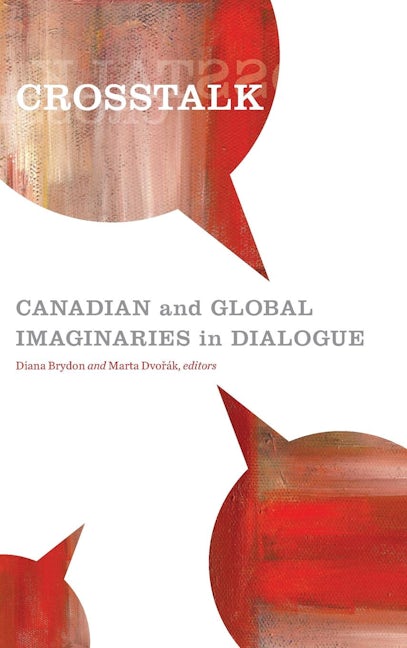
What are the fictions that shape Canadian engagements with the global? What frictions emerge from these encounters? In negotiating aesthetic and political approaches to Canadian cultural production within contexts of global circulation, this collection argues for the value of attending to narratorial, lyric, and theatrical conventions in dialogue with questions of epistemological and social justice. Using the twinned framing devices of crosstalk and cross-sighting, the contributing authors attend to how the interplay of the verbal and the visual maps public spheres of creative engagement today.
Individual chapters present a range of methodological approaches to understanding national culture and creative labour in global contexts. Through their collective enactment of methodological crosstalk, they demonstrate the productivity of scholarly debate across differences of outlook, culture, and training. In highlighting convergences and disagreements, the book sharpens our understanding of how literary and critical conventions and theories operate within and across cultures.


Diana Brydon is Canada Research Chair in Globalization and Cultural Studies and Director of the Centre for Globalization and Cultural Studies at the University of Manitoba. She has published books on Christina Stead and Timothy Findley, edited Postcolonialism: Critical Concepts in Literary and Cultural Studies, and co-edited Shakespeare in Canada and Renegotiating Community: Interdisciplinary Perspectives, Global Contexts
| Marta Dvořák is professor of Canadian and postcolonial literatures in English at the Sorbonne Nouvelle, former associate editor of The International Journal of Canadian Studies, and editor of Commonwealth Essays and Studies. Focusing her research on (post)modernism and cross-culturalism, she has authored and edited books ranging from Ernest Buckler: Rediscovery and Reassessment (WLU Press, 2001) to Tropes and Territories: Short Fiction, Postcolonial Readings, and Canadian Writings in Context (co-ed. W.H. New) and The Faces of Carnival in Anita Desai’s In Custody.
Table of Contents for Crosstalk: Canadian and Global Imaginaries in Dialogue, edited by Diana Brydon and Marta Dvořák
1. Introduction: Negotiating Meaning in Changing Times | Diana Brydon and Marta Dvořák
2. “Whirlwinds Coiled at My Heart”: Voice and Vision in a Writer’s Practice” | Olive Senior
Section One: Collaboration, Crosstalk, Improvisation
3. Voicing the Unforeseeable: Improvisation, Social Practice, Collaborative Research | Ajay Heble and Winfried Siemerling
4. Epistemological Crosstalk: Between Melancholia and Spiritual Cosmology in David Chariandy’s Soucouyant and Lee Maracle’s Daughters Are Forever | Daniel Coleman
5. Native Performance Culture, Monique Mojica, and the Chocolate Woman Workshops | Ric Knowles
6. Collaboration and Convention in the Poetry of Pain Not Bread | Alison Calder
Section Two: Dialogism, Polyphony, Voice
7. Rejoinders in a Planetary Dialogue: J.M. Coetzee, Margaret Atwood, Lloyd Jones et al. in Dialogue with Absent Texts | Marta Dvořák
8. Not Just Representation: The Sound and Concrete Poetries of the Four Horsemen | Frank Davey
9. Portraits of the Artist in Dionne Brand’s What We All Long For and Madeleine Thien’s Certainty | Pilar Cuder-Domínguez
10. Unsettling Voices: Dionne Brand’s Cosmopolitan Cities | Sandra Regina Goulart Almeida
11. Questions of Voice, Race, and the Body in Hiromi Goto’s Chorus of Mushrooms and Larissa Lai’s When Fox Is a Thousand | Charlotte Sturgess
Section Three: Space, Place, and Circulation
12. The Artialisation of Landscape in Jane Urquhart’s The Whirlpool | Claire Omhovère
13. Ghostly Voices and Arctic Blanks: From Emily Brontë's Wuthering Heights to Jane Urquhart’s Changing Heaven | Catherine Lanone
14. “You must see to understand...”: Orientalist Clichés and Transformation in Robert Lepage’s The Dragons’ Trilogy | Christine Lorre-Johnston
15. Diasporic Appropriations: Exporting South Asian Culture from Canada | Chelva Kanaganayakam
16. Negotiating Belonging in Global Times: The Hérouxville Debates | Diana Brydon
Works Cited
Contributors
Index