


Some error occured while loading the Quick View. Please close the Quick View and try reloading the page.
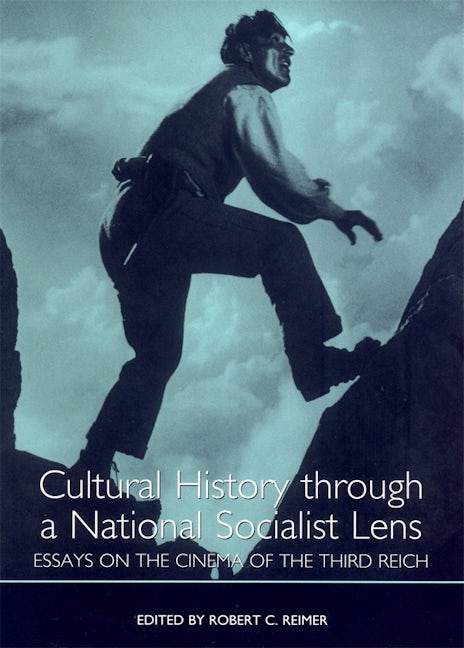
A fascinating look at Nazi Germany as revealed in its films.
This collection of essays offers a view of Nazi Germany through an analysis of twenty films, representing a sampling of the period's directors and reflecting the film medium's major genres. In spite of the control that Goebbels's film industry exercised over all aspects of filmmaking in the Third Reich, the films reveal an individuality that belies subsuming them under any one rubric or containing them within any one theory. Films such as Hitlerjunge Quex, Die große Liebe, and Auf Wiedersehen Franziska represent the Nazi film industry's efforts to propagandize through entertainment. Others such as Immensee, Kleider machen Leute, and Der Schimmelreiter reveal an attempt to expropriate Germany's rich literary past for the regime. These literary adaptations and films like Glückskinder, La Habanera, and Der Kaiser von Kalifornien today seem void of Nazi ideology if viewed outside the context of Nazism. But another film, Der ewige Jude, shocks us with its virulent anti-Semitism and hateful propaganda almost sixty years after its release. All of the films treated, regardless of their fame or notoriety or the level of commitment of their directors to the Nazi cause, played an important role in a cinema that not only represents the dreams and lives of the citizens of the Third Reich, but influencedthem as well.
Robert C. Reimer is professor of German at the University of North Carolina, Charlotte.
This collection of essays offers a view of Nazi Germany through an analysis of twenty films, representing a sampling of the period's directors and reflecting the film medium's major genres. In spite of the control that Goebbels's film industry exercised over all aspects of filmmaking in the Third Reich, the films reveal an individuality that belies subsuming them under any one rubric or containing them within any one theory. Films such as Hitlerjunge Quex, Die große Liebe, and Auf Wiedersehen Franziska represent the Nazi film industry's efforts to propagandize through entertainment. Others such as Immensee, Kleider machen Leute, and Der Schimmelreiter reveal an attempt to expropriate Germany's rich literary past for the regime. These literary adaptations and films like Glückskinder, La Habanera, and Der Kaiser von Kalifornien today seem void of Nazi ideology if viewed outside the context of Nazism. But another film, Der ewige Jude, shocks us with its virulent anti-Semitism and hateful propaganda almost sixty years after its release. All of the films treated, regardless of their fame or notoriety or the level of commitment of their directors to the Nazi cause, played an important role in a cinema that not only represents the dreams and lives of the citizens of the Third Reich, but influencedthem as well.
Robert C. Reimer is professor of German at the University of North Carolina, Charlotte.

Price: $36.95
Pages: 318
Publisher: Boydell & Brewer Inc.
Imprint: Camden House
Series: Studies in German Literature Linguistics and Culture
Publication Date:
04 October 2002
Trim Size: 9.00 X 6.00 in
ISBN: 9781571131348
Format: Paperback
BISACs:
PERFORMING ARTS / Film / History & Criticism, Film history, theory or criticism, HISTORY / Europe / Germany, European history

...gathers forward the argument that propaganda need not be defined as the willful product of government...seeks...a historical context in which, through movies, the reader might approach the complex intersections of German cultural values and Nazism. A thoughtful book with a thorough bibliography, illuminating stills, and a useful index.