


Some error occured while loading the Quick View. Please close the Quick View and try reloading the page.
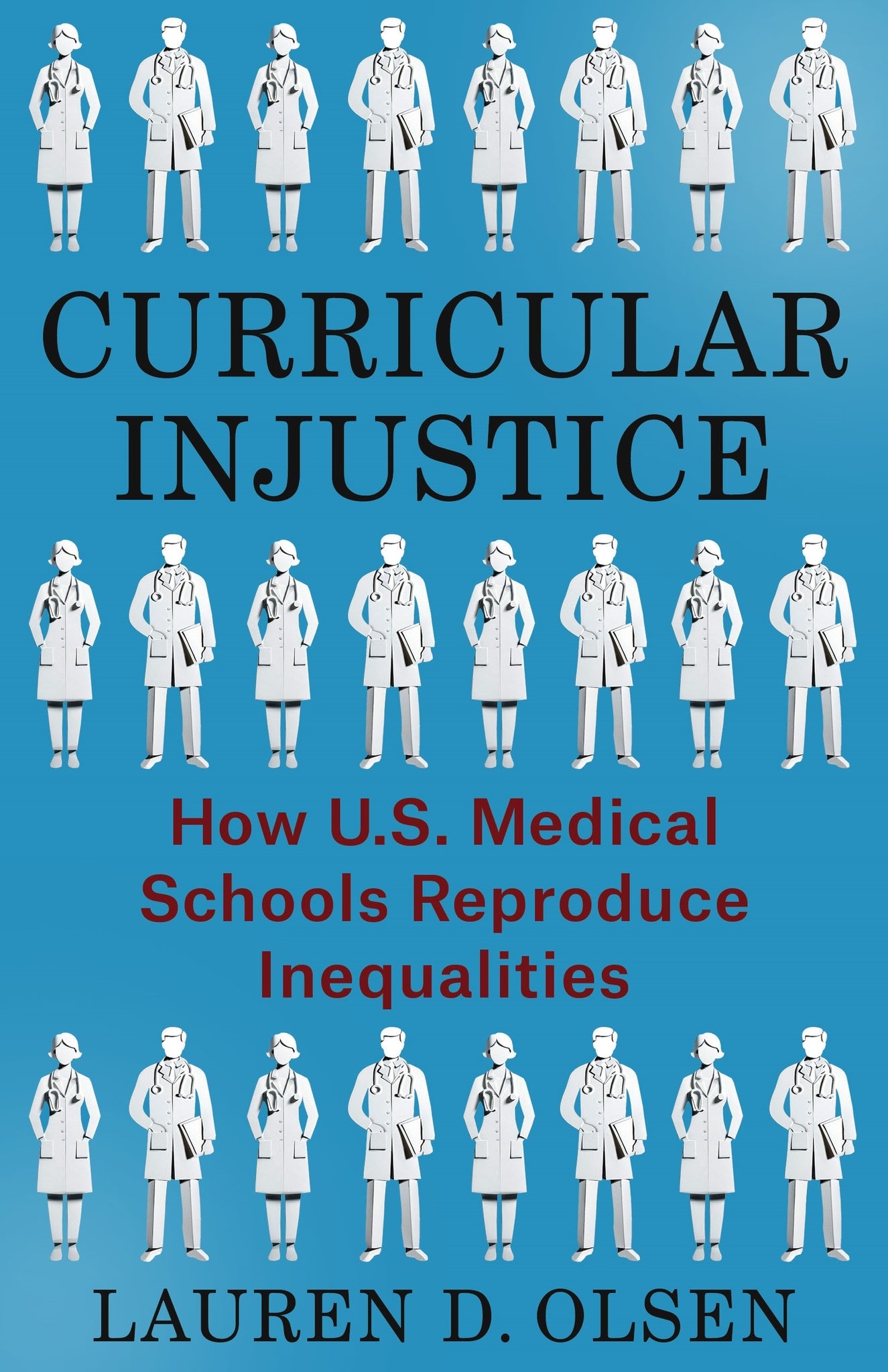
Medical schools have increasingly incorporated the humanities and social sciences into their teaching, seeking to make future physicians more empathetic and more concerned with equity. In practice, however, these good intentions have not translated into critical consciousness. Humanities and social sciences education has often not only failed to deliver on its promise but even entrenched the inequalities that the medical profession set out to address.
Lauren D. Olsen examines how U.S. medical school faculty conceived, designed, and implemented their vision of education, tracing the failures of curricular reform. She argues that the way medical students encounter humanities and social sciences material in practice has served to reinforce the status quo by teaching them to individualize systemic problems. Students learn to avoid advocacy, critique, and attention to structural inequalities—while also gathering that it will be up to them to find coping strategies for problems from burnout to systemic racism. Olsen pinpoints the limitations of how clinical faculty understand the humanities and social sciences, arguing that in structuring and teaching courses, they assumed, reinforced, and glorified a white, elite model of the medical profession. Showing how deeply intertwined professional and social identities are in medical education, Curricular Injustice has significant implications for how occupations, organizations, and institutions shape understandings of inequality.


— LaTonya J. Trotter, University of Washington Medicine
Olsen incisively specifies how medical educators misunderstand the social sciences and humanities and misrecognize the salience of these disciplines for healthcare. Curricular Injustice shows why medicine as currently taught will continue to marginalize patients and what must change for health systems and providers to offer more humane and equitable care.
— Janet K. Shim, University of California, San Francisco
Lauren Olsen’s Curricular Injustice is a pioneering, scrupulously researched, and long overdue analysis of the consequences of race-aversive medical education in the United States. A major accomplishment of this book is its explanation of how racially naïve medical educators persuaded themselves that exposing medical students to “medical humanities” courses could replace a serious engagement with the racial dimension of medicine.
— John Hoberman, University of Texas at Austin
Drawing upon unique data to craft an intriguing empirical story, Olsen's Curricular Injustice is an extremely valuable contribution to the sociological literature on medical education...It would make a terrific contribution to course reading lists in medical sociology, organizational sociology, work and the professions, and qualitative research methods.
Preface
List of Abbreviations
Introduction
1. Curricular Practices and Professional Power
2. Profession-Wide Curricular Dreams
3. Designing Curricular Practices at Each Medical School
4. Enacting Curricular Practices in the Classroom
5. Receiving Curricular Practices
Conclusion
Acknowledgments
Methodological Appendix: Data Sources and Research Design
Notes
Bibliography