


Some error occured while loading the Quick View. Please close the Quick View and try reloading the page.
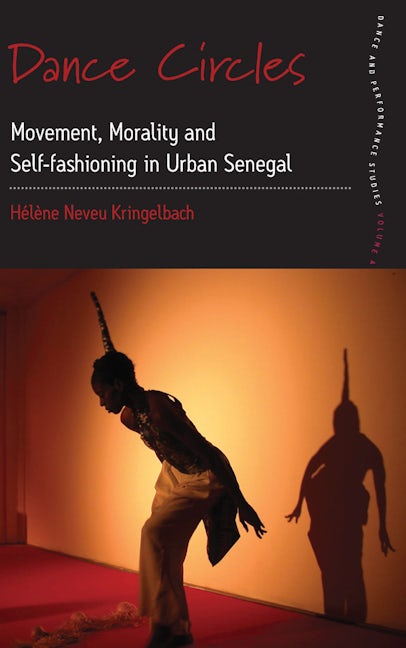
Senegal has played a central role in contemporary dance due to its rich performing traditions, as well as strong state patronage of the arts, first under French colonialism and later in the postcolonial era. In the 1980s, when the Senegalese economy was in decline and state fundingwithdrawn, European agencies used the performing arts as a tool in diplomacy. This had a profound impact on choreographic production and arts markets throughout Africa. In Senegal, choreographic performers have taken to contemporary dance, while continuing to engage with neo-traditional performance, regional genres like the sabar, and the popular dances they grew up with. A historically informed ethnography of creativity, agency, and the fashioning of selves through the different life stages in urban Senegal, this book explores the significance of this multiple engagement with dance in a context of economic uncertainty and rising concerns over morality in the public space.


“Reading Hélène Neveu Kringelbach’s ethnography, Dance Circles, took me on one of the most intellectually stimulating journeys that I have ever experienced…[It] is excellent because the author destroys the enduring belief that dance is innate to Africans. Generous space is given to learning processes, questions of transmission, and performers’ reflective practice…Historians of dance will draw on innovative themes of inquiry in their field. Anthropologists will marvel at the dense ethnographic detail. This grounded ethnography indeed invites a careful reading. In other words, one does not leaf through this book, but must really read it.” · Africa
“I enjoyed reading this book, which is very well written, focuses on a well-selected range of performance practices in Senegal and makes an interesting contribution to studies in that field. [It] provides intelligent analysis of performances by relating them in interesting and innovative ways, but its main strength lies in… offering wonderful ethnographic detail that brings out the contested nature of dance in relations between dancers and their audiences.” · Ferdinand de Jong, University of East Anglia
“This is an absolutely first-class study. It ranges across space, genre and time, though with contemporary Senegalese perspectives always to the fore. It is artfully narrated, and the voice of a well-qualified and extremely thoughtful author is clear and distinct throughout. I would put it at the forefront of dance studies today, and it also makes a valuable contribution both to anthropological thinking about expressive culture, and to West Africa studies in general.” · Martin Stokes, King’s College, London
Hélène Neveu Kringelbach is a Senior Lecturer in African Studies at UCL. She was a researcher at the African Studies Centre in Oxford. Since October 2011, she had been leading a Leverhulme-funded research project on transnational families across Senegal, France and the UK. She the co-editor of Dancing Cultures: Globalization, Tourism and Identity in the Anthropology of Dance (Berghahn Books, 2012).
List of illustrations
List of abbreviations
Chapter 1. Introduction: The Shifting Faces of Dance
Chapter 2. Cosmopolitan Performing Arts in Twentieth-Century Senegal
Chapter 3. A City Across Waters
Chapter 4. Drums, Sand and Persons
Chapter 5. Images of a Mobile Youth
Chapter 6. The Politics of Neo-Traditional Performance
Chapter 7. Senegalese 'Contemporary Dance' and Global Arts Circuits
Chapter 8. Contemporary Trajectories
Chapter 9. Movement, Imagination, and Self-Fashioning
Bibliography