


Some error occured while loading the Quick View. Please close the Quick View and try reloading the page.
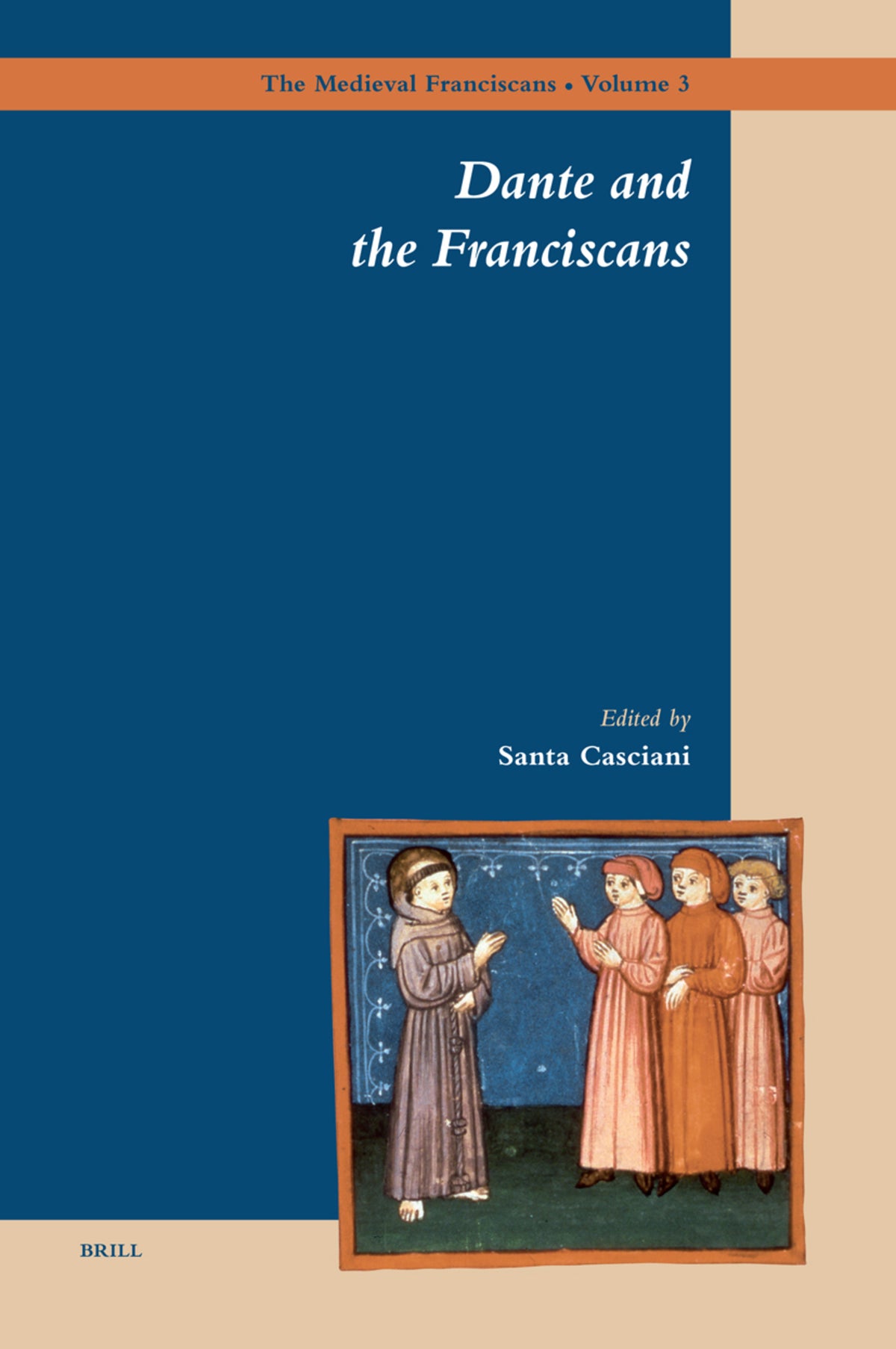
Only the second volume dedicated to Dante and the Franciscans, this collection of essays offers a Franciscan reading of the Divine Comedy. Nine of the ten essays address how Dante’s Comedy and his Vita Nuova were influenced by Franciscan spirituality; the tenth essay addresses the influence that Dante’s Comedy had on the preaching of the Franciscan Order. More specifically, the essays in this volume are truly interdisciplinary and contribute to the understanding of how Dante understood and employed Franciscan sources in his literary production and how Bernardino of Siena integrated Dante’s work in his preaching.

Price: $194.00
Pages: 360
Publisher: Brill
Imprint: Brill
Publication Date:
14 December 2006
ISBN: 9789004154957
Format: Hardcover

“An important volume providing a compendium of knowledge of Franciscan theology and the presence of Saint Francis in Dante’s work. Considering that the saint never wrote a theological text, it is even more signifcant and should be read by all readers of Dante”
Giuseppe C. di Scipio in Renaissance Quarterly 60/4, Winter 2007
"...a welcome addition ... to the literature on Dante and Franciscanism. It offers some striking new insights into the Commedia's assimilation of Franciscan culture"
Nick Havely in The Medieval Review, 07.09.23
Giuseppe C. di Scipio in Renaissance Quarterly 60/4, Winter 2007
"...a welcome addition ... to the literature on Dante and Franciscanism. It offers some striking new insights into the Commedia's assimilation of Franciscan culture"
Nick Havely in The Medieval Review, 07.09.23
Santa Casciani, Ph.D. (1994) in Italian, University of Wisconsin-Madison, is Associate Professor of Italian at John Carroll University, The Jesuit University in Cleveland. She has published on a wide variety of topics on Italian and Italian American literature and pedagogy and has co-edited and co-translated The Fiore (and the Detto d'amore) attributed to Dante (with Christopher Kleinhenz).