


Some error occured while loading the Quick View. Please close the Quick View and try reloading the page.
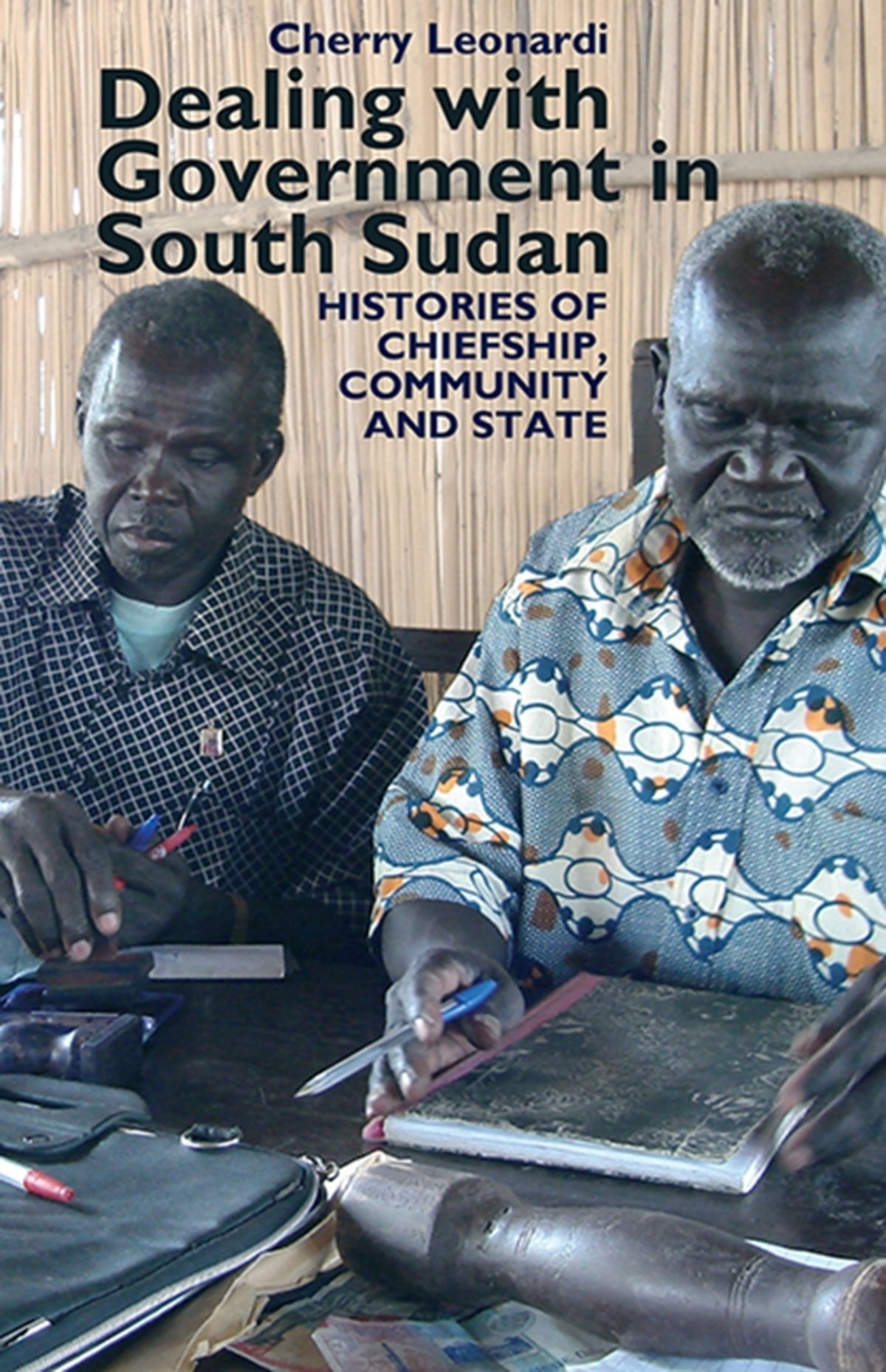
Explores various aspects of chiefly authority in South Sudan from its historical origins and evolution under colonial, postcolonial and military rule, to its current roles and value in the newly independent country.
South Sudan became Africa's newest nation in 2011, following decades of armed conflict. Chiefs - or 'traditional authorities' - became a particular focus of attention during the international relief effort and post-war reconstruction and state-building. But 'traditional' authority in South Sudan has been much misunderstood. Institutions of chiefship were created during the colonial period but originated out of a much longer process of dealing with predatory external forces. This book addresses a significant paradox in African studies more widely: if chiefs were the product of colonial states, why have they survived or revived in recent decades? By examining the long-term history ofchiefship in the vicinity of three towns, the book also argues for a new approach to the history of towns in South Sudan. Towns have previously been analysed as the loci of alien state power, yet the book demonstrates that thesegovernment centres formed an expanding urban frontier, on which people actively sought knowledge and resources of the state. Chiefs mediated relations on and across this frontier, and in the process chiefship became central to constituting both the state and local communities.
Cherry Leonardi is Senior Lecturer in African History at Durham University, a former course director of the Rift Valley Institute's Sudan course, and a member of the council of the British Institute in Eastern Africa
Published in association with the British Institute in Eastern Africa.
South Sudan became Africa's newest nation in 2011, following decades of armed conflict. Chiefs - or 'traditional authorities' - became a particular focus of attention during the international relief effort and post-war reconstruction and state-building. But 'traditional' authority in South Sudan has been much misunderstood. Institutions of chiefship were created during the colonial period but originated out of a much longer process of dealing with predatory external forces. This book addresses a significant paradox in African studies more widely: if chiefs were the product of colonial states, why have they survived or revived in recent decades? By examining the long-term history ofchiefship in the vicinity of three towns, the book also argues for a new approach to the history of towns in South Sudan. Towns have previously been analysed as the loci of alien state power, yet the book demonstrates that thesegovernment centres formed an expanding urban frontier, on which people actively sought knowledge and resources of the state. Chiefs mediated relations on and across this frontier, and in the process chiefship became central to constituting both the state and local communities.
Cherry Leonardi is Senior Lecturer in African History at Durham University, a former course director of the Rift Valley Institute's Sudan course, and a member of the council of the British Institute in Eastern Africa
Published in association with the British Institute in Eastern Africa.

Price: $130.00
Pages: 271
Publisher: Boydell & Brewer Inc.
Imprint: James Currey
Series: Eastern Africa Series
Publication Date:
June 20, 2013
Trim Size: 8.50 X 5.51 in
ISBN: 9781847010674
Format: Hardcover
BISACs:
HISTORY / Africa / General, African history, POLITICAL SCIENCE / Political Ideologies / Democracy, POLITICAL SCIENCE / American Government / State, Political structures: democracy

Well written and intellectually engaging, this book is a significant and timely piece of scholarship and a must-read for all scholars with an interest in any element of socio-political life in either of the Sudanese states, or even state formation in eastern or central Africa more widely.
This highly readable and engaging book offers new insights into southern Sudanese experiences.
[A] masterful book.
This highly informed and informative volume is a great addition to the literature on state-society relations in South Sudan. ... Likely to become a measuring stick for future anthropological works on South and should also be of interest to scholars of state-society relations and traditional authorities in other parts of Africa.
The first thorough study that has been done on the institution of chiefships in South Sudan. [Leonardi] has laid a firm foundation for the further study of this topic by other scholars. ... This book is a valuable resource for graduate students, academics, researchers, policy makers, civil societies, and non-governmental organizations (NGOs).
[Employs] a well-considered multi-disciplinary approach in tackling this lively issue and, as such, it would be of interest to students and scholars of African studies and particularly to those in the fields of anthropology, political science, history, law and economics.
Leonardi's book will for a long time be central to any deeper understanding of political structures in the newest African country. . . . This is an important book which should be read widely among all those concerned with African history and politics, not just Sudan specialists.
[Leonardi] combines an impressive mastery of the scholarship on South Sudan and Sudan, with very thorough archival research and fieldwork. At the same time, she brings to bear wide reading in related literatures, to connect the issues that she documents with broader scholarly debates. ... a quite original contribution to the study of politics and the state in modern Africa.
— Professor Charles Ambler, University of Texas at El Paso
This highly readable and engaging book offers new insights into southern Sudanese experiences.
[A] masterful book.
This highly informed and informative volume is a great addition to the literature on state-society relations in South Sudan. ... Likely to become a measuring stick for future anthropological works on South and should also be of interest to scholars of state-society relations and traditional authorities in other parts of Africa.
The first thorough study that has been done on the institution of chiefships in South Sudan. [Leonardi] has laid a firm foundation for the further study of this topic by other scholars. ... This book is a valuable resource for graduate students, academics, researchers, policy makers, civil societies, and non-governmental organizations (NGOs).
[Employs] a well-considered multi-disciplinary approach in tackling this lively issue and, as such, it would be of interest to students and scholars of African studies and particularly to those in the fields of anthropology, political science, history, law and economics.
Leonardi's book will for a long time be central to any deeper understanding of political structures in the newest African country. . . . This is an important book which should be read widely among all those concerned with African history and politics, not just Sudan specialists.
[Leonardi] combines an impressive mastery of the scholarship on South Sudan and Sudan, with very thorough archival research and fieldwork. At the same time, she brings to bear wide reading in related literatures, to connect the issues that she documents with broader scholarly debates. ... a quite original contribution to the study of politics and the state in modern Africa.
— Professor Charles Ambler, University of Texas at El Paso
Introduction: the making of chiefship, state and community in South Sudan - PART I: From zariba to merkaz: the creation of the nodal state frontier, c. 1840-1920
Frontier societies and the political economy of knowledge in the nineteenth century
Colonial frontiers and the emergence of government chiefs, c. 1900-20 - PART II: From makama to mejlis: the making of chiefship and the local state, 1920s-50s
Constituting the urban frontier: chiefship and the colonial labour economy, 1920s-40s
Claiming rights and guarantees: chiefs' courts and state justice, c. 1900-56
Containing the frontier: the tensions of territorial chiefdoms, 1930s-50s
Uncertainty on the urban frontier: chiefs and the politics of Sudanese independence, 1946-58 - PART III: From malakiya to medina: the fluctuating expansion of the urban frontier, c. 1956-2010
Trading knowledge: chiefship, local elites and the urban frontier, c. 1956-2010
Regulating depredation: chiefs and the military, 1963-2005
Reprising 'tradition': the mutual production of community and state in the twenty-first century
Knowing the system: judicial pluralism and discursive legalism in the interim period, 2005-10
Conclusion
Frontier societies and the political economy of knowledge in the nineteenth century
Colonial frontiers and the emergence of government chiefs, c. 1900-20 - PART II: From makama to mejlis: the making of chiefship and the local state, 1920s-50s
Constituting the urban frontier: chiefship and the colonial labour economy, 1920s-40s
Claiming rights and guarantees: chiefs' courts and state justice, c. 1900-56
Containing the frontier: the tensions of territorial chiefdoms, 1930s-50s
Uncertainty on the urban frontier: chiefs and the politics of Sudanese independence, 1946-58 - PART III: From malakiya to medina: the fluctuating expansion of the urban frontier, c. 1956-2010
Trading knowledge: chiefship, local elites and the urban frontier, c. 1956-2010
Regulating depredation: chiefs and the military, 1963-2005
Reprising 'tradition': the mutual production of community and state in the twenty-first century
Knowing the system: judicial pluralism and discursive legalism in the interim period, 2005-10
Conclusion