


Some error occured while loading the Quick View. Please close the Quick View and try reloading the page.
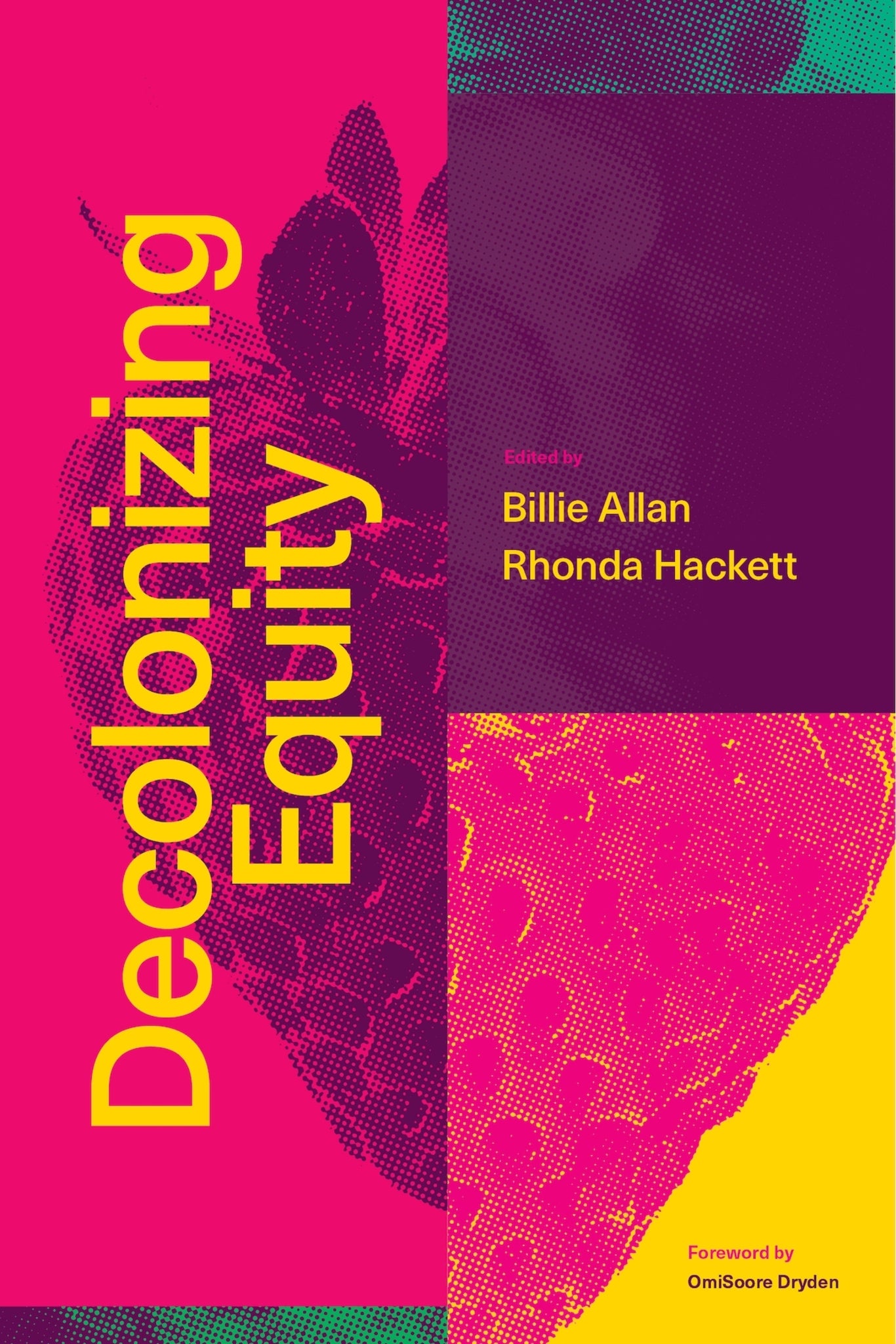
Institutions everywhere seem to be increasingly aware of their roles in settler colonialism and anti-Black racism. As such, many racialized workers find themselves tasked with developing equity plans for their departments, associations or faculties. This collection acknowledges this work as both survival and burden for Black, Indigenous and racialized peoples. It highlights what we already know and are already doing in our respective areas and offers a vision of what equity can look like through a decolonial lens. What helps us to make this work possible? How do we take care with ourselves and each other in this work? What does solidarity, collaboration or “allyship” look like in decolonial equity work? What are the implicit and explicit barriers we face in shifting equity discourse, policy and practice, and what strategies, skills and practices can help us in creating environments and lived realities of decolonial equity?
This edited collection centres the voices of Indigenous, Black and other racialized peoples in articulating a vision for decolonial equity work. Specifically, the focus on decolonizing equity is an invitation to re-articulate what equity work can look like when we refuse to separate ideas of equity from the historical and contemporary realities of colonialism in the settler colonial nation states known as Canada and the United States and when we insist on linking an equity agenda to the work of decolonizing our shared realities.


— Sara Ahmed, author of On Being Included: Racism and Diversity in Institutional Life and Complaint!
“Decolonizing Equity foregrounds nuanced ways of examining, interrogating, articulating and visioning possibilities and futurities of equity within the white-settler society of Canada. The lack of such books by community-engaged IBPOC scholars has deprived communities of social work, social justice, and education of pivotal scholarship, experiential knowledge, and radical healing. I found it to be extremely useful in thinking through the nuances, negotiations, contradictions and complexities of multiculturalism, EDI, neo-liberalism and settler colonialism. This is a rare and important contribution to emerging fields of radical study and practice that encourages liberation and healing.”
— Benita Bunjun, author of Academic Well-Being of Racialized Students
“This book features a well-chosen and exquisitely grounded BIPOC collective, making this book an excellent choice for readers, educators, and leaders working in EDI.”
— Kathleen E. Absolon, author of Kaandossiwin, How We Come to Know: Indigenous Re/search Methodologies
Billie Allan (Edited by)
Billie Allan is an assistant professor in the School of Social Work, University of Victoria, and chair of the Thunderbird Circle—Indigenous Social Work Educators Network. Dr. Allan is a Two Spirit Anishinaabe scholar from Sharbot Lake, Ontario, whose research is focused on Indigenous health and well-being, including the impact of racism and child welfare. She is the co-author, along with Dr. Janet Smylie, of First Peoples, Second Class Treatment: The role of racism in the health and well-being of Indigenous peoples in Canada.
Rhonda Hackett (Edited by)
Rhonda Hackett is an assistant professor in the School of Social Work, University of Victoria. Dr. Hackett is an African Caribbean scholar whose work is informed by extensive social work practice experience and a decolonizing theoretical lens woven from the offerings of critical race theory, Black feminist thought and Indigenous thought. Her scholarship is focused on advancing understanding of the lived experiences and knowledge of African Caribbean peoples living in the lands currently known as Canada, including matters of family and community well-being.
Opening the circle:
Round 1: Visioning for and conceptualizing decolonial equity :
: Chapter 1: Theorizing decolonial equity: Coyote takes a chapter
: Chapter 2: Decolonizing Equity Practice
: Chapter 3: A Theorizing of De-colonializing Equity and the Nation State
Round 2: Being and doing – Decolonial equity in practice:
: Chapter 4: Tkaranto Ondaadizi-Gamig: Birth is a Ceremony
: Chapter 5: Introducing Indigenous and Black Youth to a New Vision of Social Work
: Chapter 6: Decolonizing Urban Education
Round 3: On healing, wellbeing and sustainability – Taking care in the work of decolonizing equity:
: Chapter 7: A Call for Radical Healing: Integrating healing into Critical Race Education
: Chapter 8: Centring Subjectivity: Witnessing and Wellness
Closing the Circle: