


Some error occured while loading the Quick View. Please close the Quick View and try reloading the page.
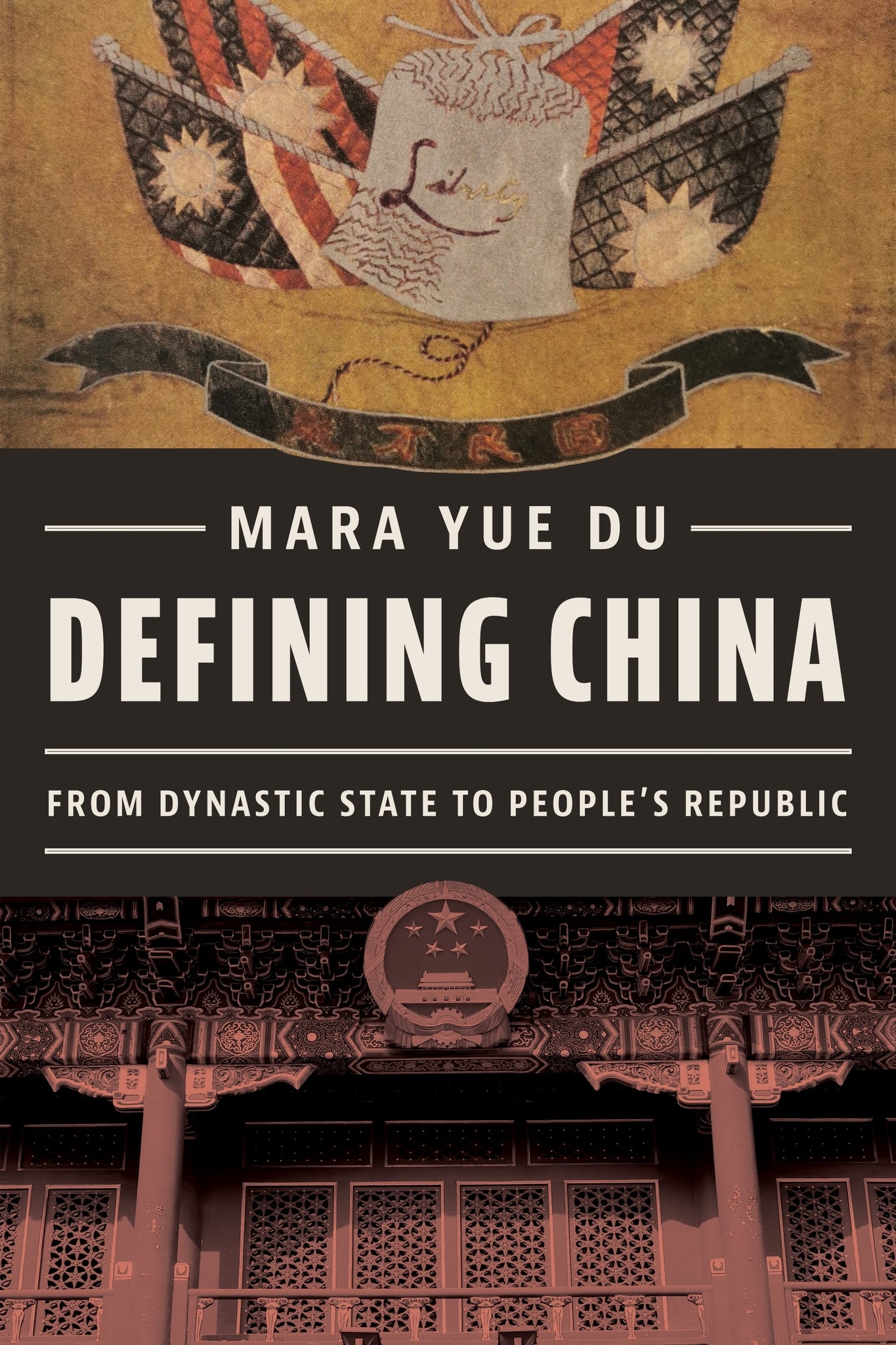
The term guo, which meant “dynastic state” in classical Chinese, has been used to signify the modern “nation-state” since the mid-nineteenth century. Yet across epochal transformations—from late Qing constitutionalism to Republican ethno-civic nationalism to Mao Zedong’s class nation—guo’s lingering association with “regime” continued to shape Chinese efforts at nation-building, with far-reaching consequences.
Defining China offers a cultural and legal genealogy of guo, examining how modern China, Chinese nationalism, and Sino-foreign relations have been shaped by this multifaceted concept. Mara Yue Du reads the premodern meanings of guo into the modern period, rather than projecting the modern sense of “nation” back onto the past. In doing so, she reframes modern Chinese history as a deeper contest between two competing conceptions of Chineseness: one shaped by China’s maritime connections, which brought Confucianism into dialogue with Western constitutionalism, and the other grounded in China’s agrarian heartland and its enduring tradition of Legalist statism, which proved surprisingly compatible with Marxism-Leninism.
By tracing the opportunities and tensions that emerged from the translation of this key concept, Du offers an ambitious reinterpretation of Chinese nationalism in Chinese terms. Connecting the fate of twentieth- and twenty-first-century China to premodern Chinese political thought, this book sheds new light on how linguistically coded local ideas have become entangled with an evolving global order, using China as a case study for revisiting fundamental questions in global history.


— Timothy Cheek, author of The Intellectual in Modern Chinese History
Mara Yue Du tackles the most basic questions—what is China? and how did an ancient empire become a modern nation-state?—to clarify how Chinese themselves have understood China as state, nation, and civilization. This is an incisive and original analysis that traces the meanings of the term guo across the realms of politics, culture, and society over the long twentieth century, and from its ancient roots to its place in today’s China. Written with unusual historical and geographical depth, this work is a refreshing and stimulating contribution to the field of Chinese studies and to the broader intellectual history of nationalism, sovereignty, and political thought.
— Peter Zarrow, author of After Empire: The Conceptual Transformation of the Chinese State, 1895-1924
This is a meticulous study of the 150 years of struggle with concepts past and present, domestic and foreign, that enabled Chinese thinkers and activists to identify the China that they could live with. I know of no other work that is as illuminating and comprehensive. Strongly recommended.
— Wang Gungwu, University Professor, National University of Singapore