


Some error occured while loading the Quick View. Please close the Quick View and try reloading the page.
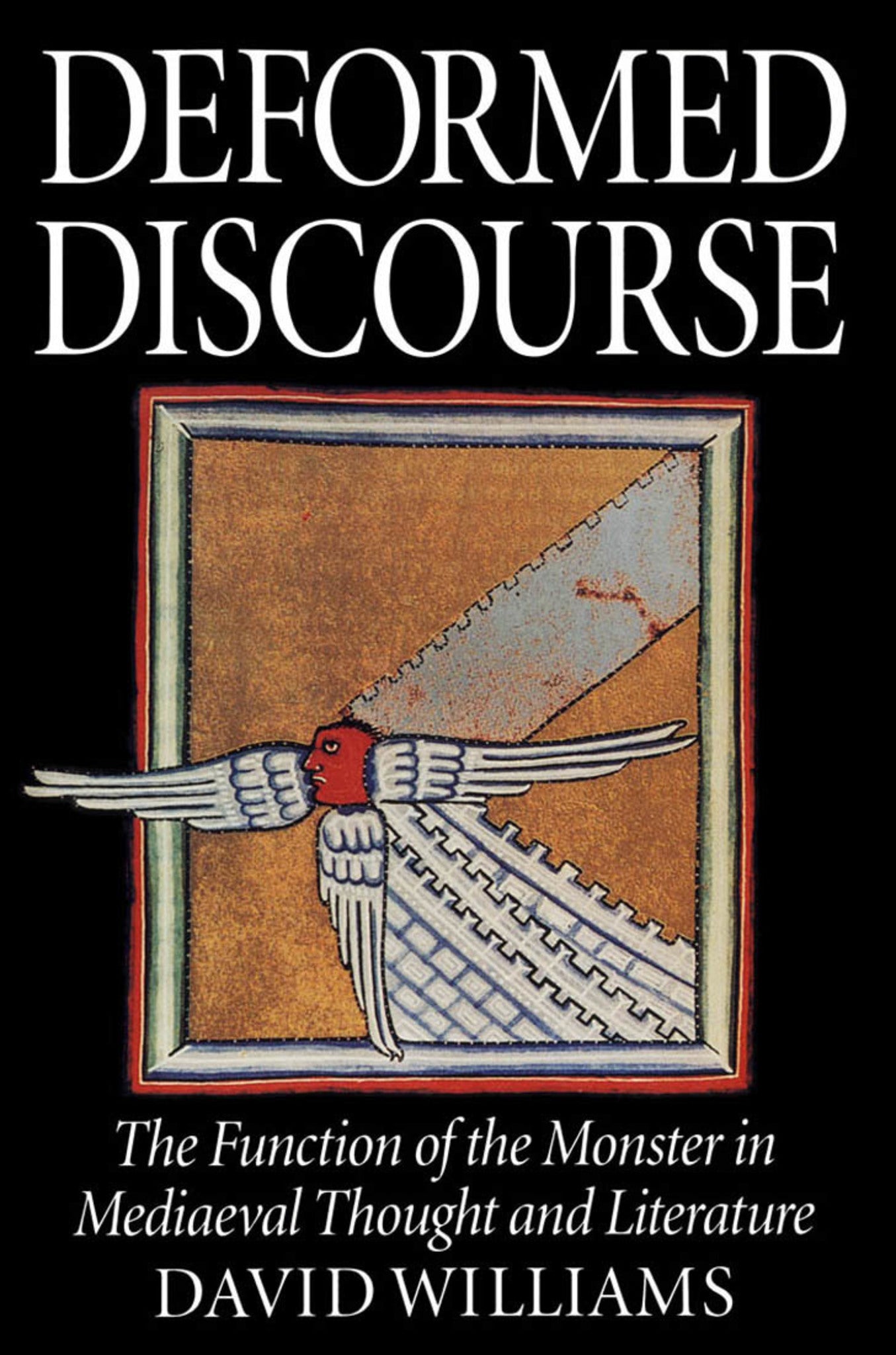
Part I traces the poetics of teratology, the study of monsters, to Christian neoplatonic theology and philosophy, particularly Pseudo-Dionysius's negative theology and his central idea that God cannot be known except by knowing what he is not. Williams argues that the principles of negative theology as applied to epistemology and language made possible a symbolism of negation and paradox whose chief sign was the monster. Part II provides a taxonomy of monstrous forms with a gloss on each, and Part III examines the monstrous and the deformed in three heroic sagas -- the medieval Oedipus, The Romance of Alexander, and Sir Gawain and the Green Knight -- and three saints' lives -- Saint Denis, Saint Christopher, and Saint Wilgeforte. The book is beautifully illustrated with medieval representations of monsters. The most comprehensive study of the grotesque in medieval aesthetic expression, Deformed Discourse successfully brings together medieval research and modern criticism.

Price: $37.95
Publisher: McGill-Queen's University Press
Imprint: McGill-Queen's University Press
Publication Date:
12 November 1996
ISBN: 9780773565883
Format: eBook
BISACs:
LITERARY CRITICISM / Medieval

"Deformed Discourse is absolutely excellent. This fundamental study marks a milestone in the history of research on the monstrous in the Middle Ages and on Western ways of thinking. I can state without hesitation that Williams has produced a magnum opus on this subject, with a highly personal approach, providing an overview of all previous works on the monster and the philosophical, theological, aesthetic, and literary context. His vision is at once encyclopedic, critical, and completely fresh ... This is clearly the work of a researcher in full maturity. Its many qualities place it in the front rank." [translation] Claude-Claire Kappler, Centre National de la Recherche Scientifique (CNRS), Paris.