


Some error occured while loading the Quick View. Please close the Quick View and try reloading the page.
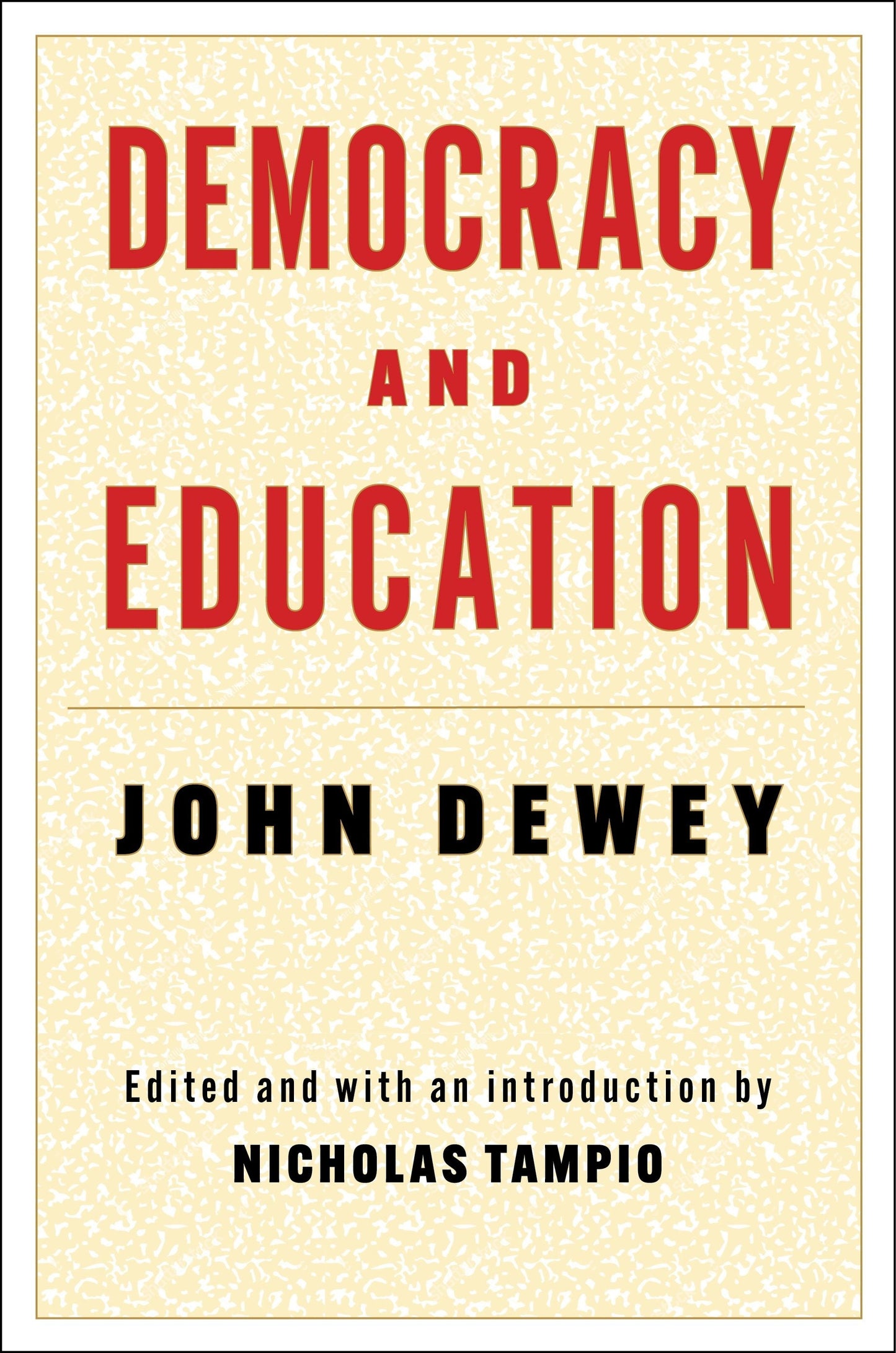
The American philosopher John Dewey transformed how people around the world view the purposes of schooling. In Democracy and Education (1916), Dewey opposed the model of education in which adults lecture at students and students follow strict rules. Instead, Dewey called upon schools to provide children with experiences such as gardening, sewing, building structures, conducting experiments in laboratories, and performing in school plays. For Dewey, democratic education teaches young people to become creative individuals who contribute to society.
This edition makes Democracy and Education come alive for a new generation of readers. The editor’s introduction explores the main themes of the book and how Dewey’s ideas contribute to debates about education standards, testing, accountability, school choice, free school lunch, recess, student discipline, and education technology. Each chapter begins with a brief overview clarifying the argument and its present-day relevance and ends with questions to prompt conversations and research papers. Drawing on more than a century of secondary literature on Dewey’s philosophy, this new edition will become the standard for scholars, teachers, and students.


John Dewey (1859–1952) was one of the great American pragmatist philosophers. He helped run the Laboratory School at the University of Chicago, and as a professor at Columbia University he taught students who brought his ideas about democratic education to places such as India, China, and Mexico.
Nicholas Tampio is a professor of political science at Fordham University. He is the author of Teaching Political Theory: A Pluralistic Approach (2022) and Common Core: National Education Standards and the Threat to Democracy (2018).
Chapter Map
Acknowledgments
Introduction: Dewey’s Vision in Democracy and Education
Preface
1. Education as a Necessity of Life
2. Education as a Social Function
3. Education as Direction
4. Education as Growth
5. Preparation, Unfolding, and Formal Discipline
6. Education as Conservative and Progressive
7. The Democratic Conception in Education
8. Aims in Education
9. Natural Development and Social Efficiency as Aims
10. Interest and Discipline
11. Experience and Thinking
12. Thinking in Education
13. The Nature of Method
14. The Nature of Subject Matter
15. Play and Work in the Curriculum
16. The Significance of Geography and History
17. Science in the Course of Study
18. Educational Values
19. Labor and Leisure
20. Intellectual and Practical Studies
21. Physical and Social Studies: Naturalism and Humanism
22. The Individual and the World
23. Vocational Aspects of Education
24. Philosophy of Education
25. Theories of Knowledge
26. Theories of Morals
Index