


Some error occured while loading the Quick View. Please close the Quick View and try reloading the page.
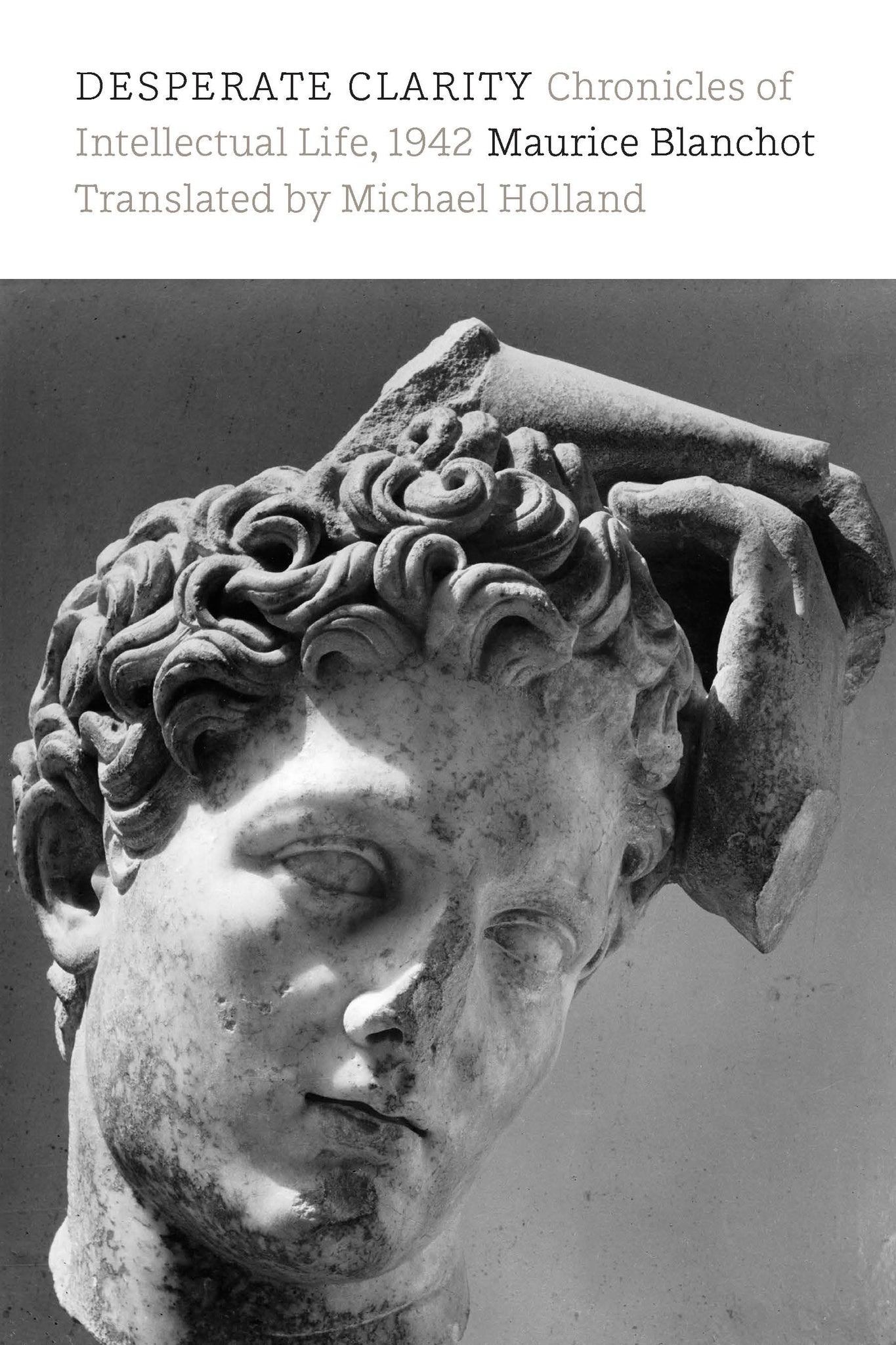
These articles gradually outline a practical project that both looks back to the radical artistic doctrines of the late nineteenth and early twentieth centuries and anticipates the most original developments in the postwar era, among writers such as Robbe-Grillet, Butor, Sarraute, and Duras, not to mention Blanchot himself. In addition Blanchot is receptive in his weekly column to the extraordinarily wide range of original writing and thinking that was produced during the dark years of occupation, in areas such as psychology, anthropology, ancient history, linguistics, and philosophy. A highly original doctrine of writing can be seen to develop in which, thanks to the desperate clarity with which Blanchot’s mind accepts and advances into what he sees as absolute and irrevocable disaster, thought is carefully and systematically deflected away from any sort of nihilism, thanks to a new relationship between reason, with its unitary subject, and the otherness to which imagination offers access.

Price: $34.00
Pages: 240
Publisher: Fordham University Press
Imprint: Fordham University Press
Publication Date:
November 1, 2013
Trim Size: 9.00 X 6.00 in
ISBN: 9780823251001
Format: Paperback
BISACs:
PHILOSOPHY / General, LITERARY CRITICISM / European / French

“Maurice Blanchot became the greatest literary critic in Europe in the second half of the twentieth century. Here, though, in these early pieces, we find him as a reviewer. And what a reviewer he is! Things emerge in what is always a strange light,’ he writes. This is the light that literature casts, he comes to think. We read these reviews with admiration: their like could never appear in today’s papers. And, when we look at them with political lenses, we learn a great deal about mid-century French political culture. Michael Holland has translated them beautifully, and his Introduction is superb.”---—Kevin Hart, The University of Virginia
This invaluable collection of articles and reviews, translated into English for the first time, provides a fascinating portrait of a critic operating under duress: working at speed for a once prestigious newspaper now in the pay of the Vichy state, at a time when Nazism’s grip on French intellectual life was growing ever tighter, and with the enduring sense, shared by others, that in circumstances such as these the better part of honour might be silence. And yet, throughout this bleak year of 1942, with imperious insight, subtle eloquence, and coded indirection, Blanchot continued to write, responding to the madness of the day, but searching too beyond the horizon of the day. For in each of these essays this is the discreet, barely audible question Blanchot’s criticism strives to answer: under what conditions might literature, in its resistance to political appropriation, thereby become a more radical form of resistance? And if so, what alternative politics does it announce, and what demands does it make on readers, writers, and critics alike?---—Leslie Hill, University of Warwick
This invaluable collection of articles and reviews, translated into English for the first time, provides a fascinating portrait of a critic operating under duress: working at speed for a once prestigious newspaper now in the pay of the Vichy state, at a time when Nazism’s grip on French intellectual life was growing ever tighter, and with the enduring sense, shared by others, that in circumstances such as these the better part of honour might be silence. And yet, throughout this bleak year of 1942, with imperious insight, subtle eloquence, and coded indirection, Blanchot continued to write, responding to the madness of the day, but searching too beyond the horizon of the day. For in each of these essays this is the discreet, barely audible question Blanchot’s criticism strives to answer: under what conditions might literature, in its resistance to political appropriation, thereby become a more radical form of resistance? And if so, what alternative politics does it announce, and what demands does it make on readers, writers, and critics alike?---—Leslie Hill, University of Warwick
Maurice Blanchot (Author)
Maurice Blanchot (1907–2003)—writer, critic, and journalist—was one of the most important voices in twentieth-century literature and thought. His books include Thomas the Obscure, The Instant of my Death, The Writing of the Disaster, and The Unavowable Community.
Michael Holland (Translator)
Michael Holland is a Fellow of St Hugh’s College, Oxford.
Maurice Blanchot (1907–2003)—writer, critic, and journalist—was one of the most important voices in twentieth-century literature and thought. His books include Thomas the Obscure, The Instant of my Death, The Writing of the Disaster, and The Unavowable Community.
Michael Holland (Translator)
Michael Holland is a Fellow of St Hugh’s College, Oxford.