


Some error occured while loading the Quick View. Please close the Quick View and try reloading the page.
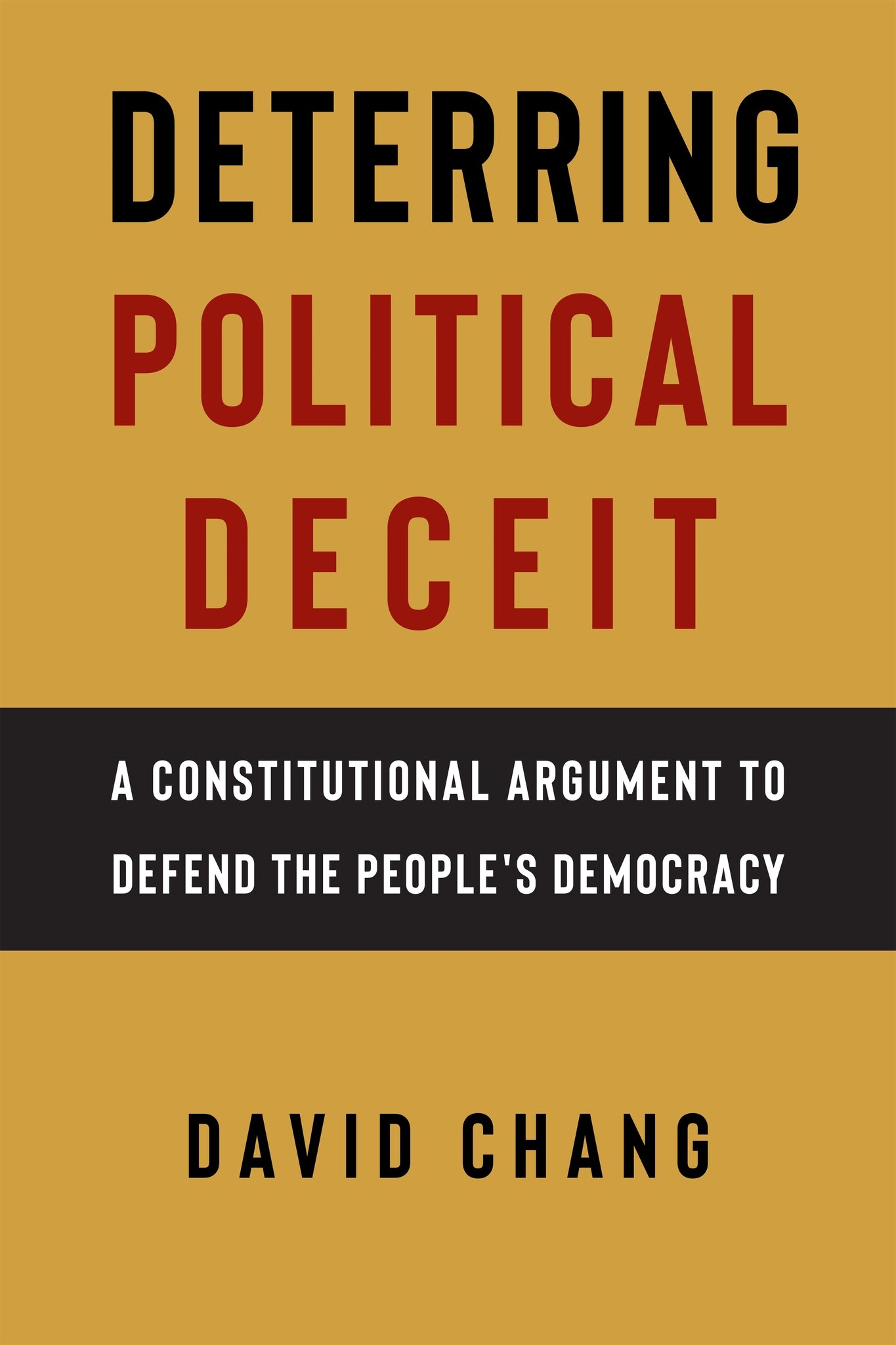
Offers a new First Amendment framework that permits deterring political deceit, while minimizing the chill of honest discourse, by targeting fraudulent intent, not false content
More than ever, influencers and politicians communicate political messages that they do not believe to be true. This political deceit is constitutionally valueless, harms public discourse, and impedes effective public decision-making. Yet, under current doctrine, the Supreme Court would invalidate any regulation of deceitful political advocacy as an abridgement of political speech.
In Deterring Political Deceit, David Chang explores why traditional efforts to target falsity in political speech have been rooted in constitutional error. While the Court has determined that the defamation of public officials is unprotected, it wrongly declared that false statements of fact lack constitutional value, and overlooked the contradiction between deceitful communicative intent and free speech values. Both errors together have prevented reformers from identifying the political fraudsters who should be deterred by law, and recognizing the politically sincere who should be protected and respected, even when wrong.
Chang makes a bold and compelling legal argument for why deceitful political speech should be excluded from First Amendment protection. He proposes a dexterous solution: A false political statement is constitutionally valuable, and deserves protection–if the speaker believes their message to be true. A political message that the speaker did not believe to be true, regardless of its content, is constitutionally valueless, societally harmful, and does not deserve protection from regulatory deterrence. Drawing upon fresh, valuable insights, Deterring Political Deceit identifies wrongdoing that challenges the survival of this constitutional democracy, and charts a path for the People’s self-defense through law.


— Jeremy Horder, author of Criminal Fraud and Election Disinformation: Law and Politics
This is an important and timely contribution to an urgent conversation about the health of our democracy. David Chang shines a light on how deceit in political advocacy can distort public discourse and undermine collective decision-making. Whether or not one agrees with his proposed solutions, this book forces us to confront what it will take to sustain a democratic system grounded in integrity and accountability.
— Deborah Archer, Margaret B. Hoppin Professor of Clinical Law, New York University School of Law
There is a widespread concern that deceitful political speech is a threat to American democracy. Professor Chang offers a provocative solution: change First Amendment doctrine. This is an important book about freedom of speech and American democracy, and it comes at the ideal moment.
— Erwin Chemerinsky, Dean and Jesse H. Choper Distinguished Professor of Law, University of California, Berkeley School of Law