


Some error occured while loading the Quick View. Please close the Quick View and try reloading the page.
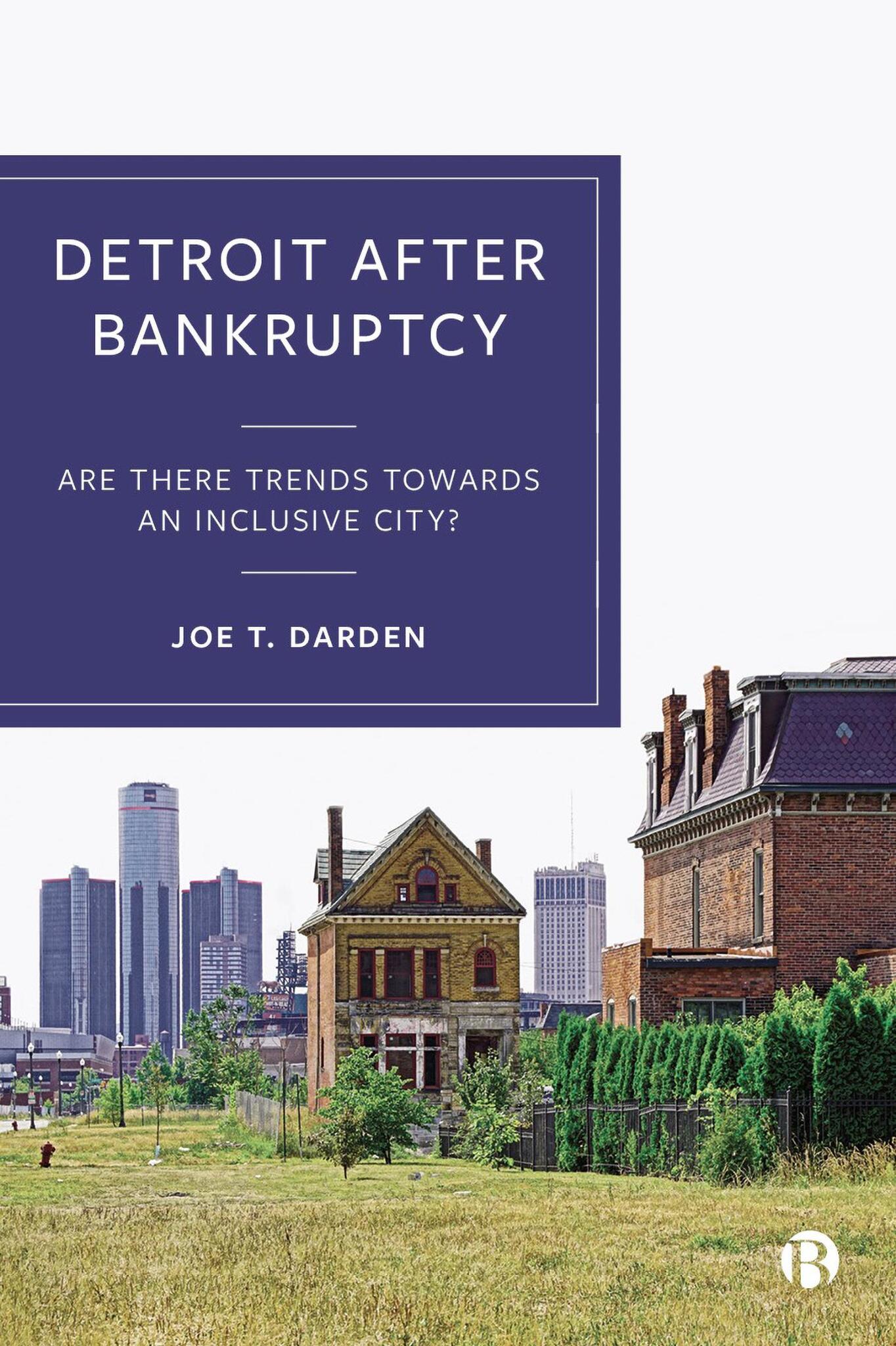
Detroit is the first city of its size to become bankrupt and some policy makers have argued that, since then, it has entered a ‘new beginning’. This book critically examines the evidence for and against this claim.
Joe T. Darden analyzes whether Detroit’s patterns of race and class neighborhood inequality have persisted or whether investments have led to improvements in academic achievement, homeownership, employment, and reductions in poverty and violent crime. He measures, quantitatively, the benefits and disadvantages of staying in urban Detroit or moving to the suburbs, and provides evidence to answer whether Detroit, after bankruptcy, is becoming an inclusive city.


1. Antecedents to Bankruptcy
2. Detroit Bankruptcy: The Characteristics of the Decision-Makers and the Differential Benefits Afterwards
3. Post-bankruptcy Social and Spatial Structure of Metropolitan Detroit: Anatomy of Class and Racial Residential Segregation
4. Gentrification: A New Method to Measure Where the Process is Occurring by Neighborhoods
5. Uneven Distribution of Economic Redevelopment: Which Neighborhoods are Excluded?
6. Black and Hispanic Underrepresentation of Business Ownership in a Majority Black City
7. Racial Inequality Between Student Academic Achievement: A Neighborhood Solution to the Problem
8. Unequal Exposure to Crime in the City: a New Method to Measure Exposure by the Characteristics of Neighborhoods
9. Solving the Problem of Extreme Race and Class Inequality: Implementing the Spatial Mobility Alternative
10. Conclusions: The Status of Residents of Detroit After Bankruptcy