


Some error occured while loading the Quick View. Please close the Quick View and try reloading the page.
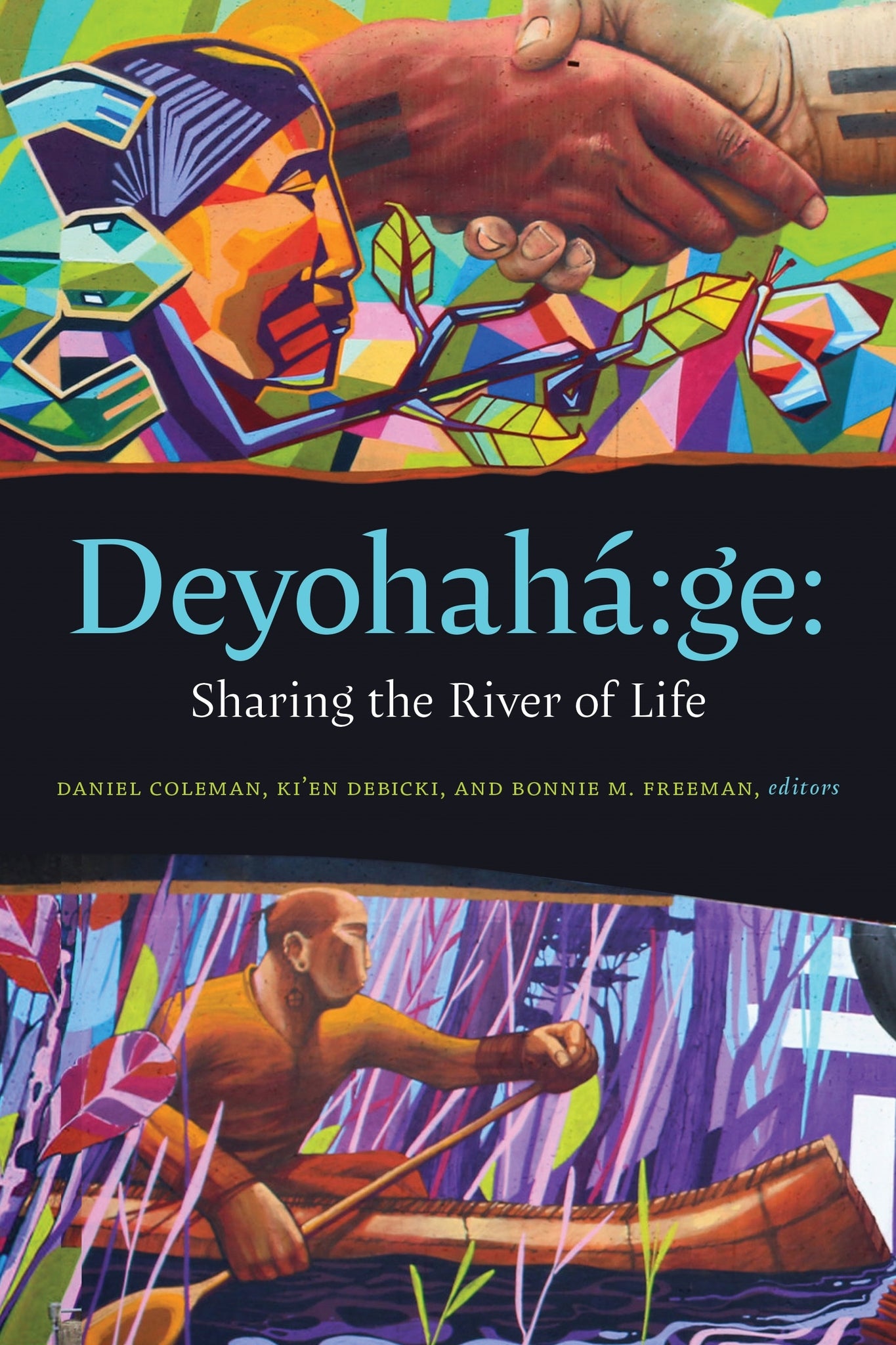
Deyohahá:ge:, “two roads or paths” in Cayuga language, evokes the Covenant Chain-Two Row Wampum, known as the “grandfather of the treaties.” Famously, this Haudenosaunee wampum agreement showed how Indigenous people and newcomers could build peace and friendship by respecting each other’s cultures, beliefs, and laws as they shared the river of life.
Written by members of Six Nations and their neighbours, this book introduces readers not only to the 17th-century history of how the Dutch and British joined the wampum agreement, but also to how it might restore good relations today. Many Canadians and Americans have never heard of the Covenant Chain or Two Row Wampum, but 200 years of disregard have not obliterated the covenant. We all need to learn about this foundational wampum, because it is resurging in our communities, institutions, and courthouses—charting a way to a future.
The writers of Deyohahá:ge: delve into the eco-philosophy, legal evolution, and ethical protocols of two-path peace-making. They tend the sacred, ethical space that many of us navigate between these paths. They show how people today create peace, friendship, and respect—literally—on the river of everyday life.


— John Borrows, Loveland Chair in Indigenous Law, University of Toronto
Daniel Coleman teaches in the Department of English and Cultural Studies at McMaster University. His research covers Canadian Literature, cultural production of categories of privilege, literatures of immigration and diaspora, and the politics of reading. His publications include White Civility (2006) and In Bed with the Word (2009) as well as co-edited scholarly volumes.
Ki’en Debicki is a queer, Kanien’keha:ka, enby poet living and loving along the banks of Kanyatarí:io (beautiful lake) in Anonwarore’tsherakayon:ne (Hamilton ON). They are an assistant professor at McMaster University, and associate professor at Six Nations Polytechnic. Ki’en’s writing has been published in The Malahat Review, Grain Magazine, Studies in Canadian Literature and Storytelling, Self, Society, among others.
Bonnie Freeman is Algonquin/Mohawk and a member of the Six Nations of the Grand River. She is an Associate Professor in the School of Social Work and Indigenous Studies at McMaster University, as well with the Six Nations Polytechnic. Bonnie has published the article, “Promoting global health and well-being of Indigenous youth through the connection of land and culture-based activism.”
Ohèn:ton Karihwatéhkwen: The Words That Come Before All Else
Acknowledgements, Greetings, and Thanks
Introduction, Daniel Coleman, Ki’en Debicki, and Bonnie Freeman
Section One: Original Instructions
Gä•sweñta’ Reflections – Oren Lyons
Where the Roots Touch: tsi niyothahinen ne Tehontatenentshonteronhtáhkwa – Amber Meadow Adams
Wunnáumwash: Wampum Justice – Kelsey Leonard
The Chain, Naturally Understood – Kayanesenh Paul Williams
Section Two: Learning from the River
Guswenta Space: An Invitation to Dialogue – David Newhouse
Navigating the Two Row in the Academy – Vanessa Watts
Two Rows of Reconciliation – Rick Hill
Below Decks in the Covenant: Blackness in the Two Row Tradition – Phanuel Antwi
Towards Peace: Living in the Three White Rows of the Two Row – Sara General
Section Three: Living on the River
The Pen Pal Project: Bridging the Divide with the Teachings of the Two Row Wampum Treaty – Suzie Miller and Scot Cooper
Deyohahage Gihe gowa’hneh: Living the Two Row Wampum, on the Grand River – Ellie Joseph and Jay Bailey
The Deep and Rippling Consciousness of Water: Youth Experiences of Transition with the Two Row on the Grand River Paddle – Bonnie Freeman and Trish van Katwyk
Contributors
Glossary – Taylor Leeal Gibson
Notes
Bibliography
Index