


Some error occured while loading the Quick View. Please close the Quick View and try reloading the page.
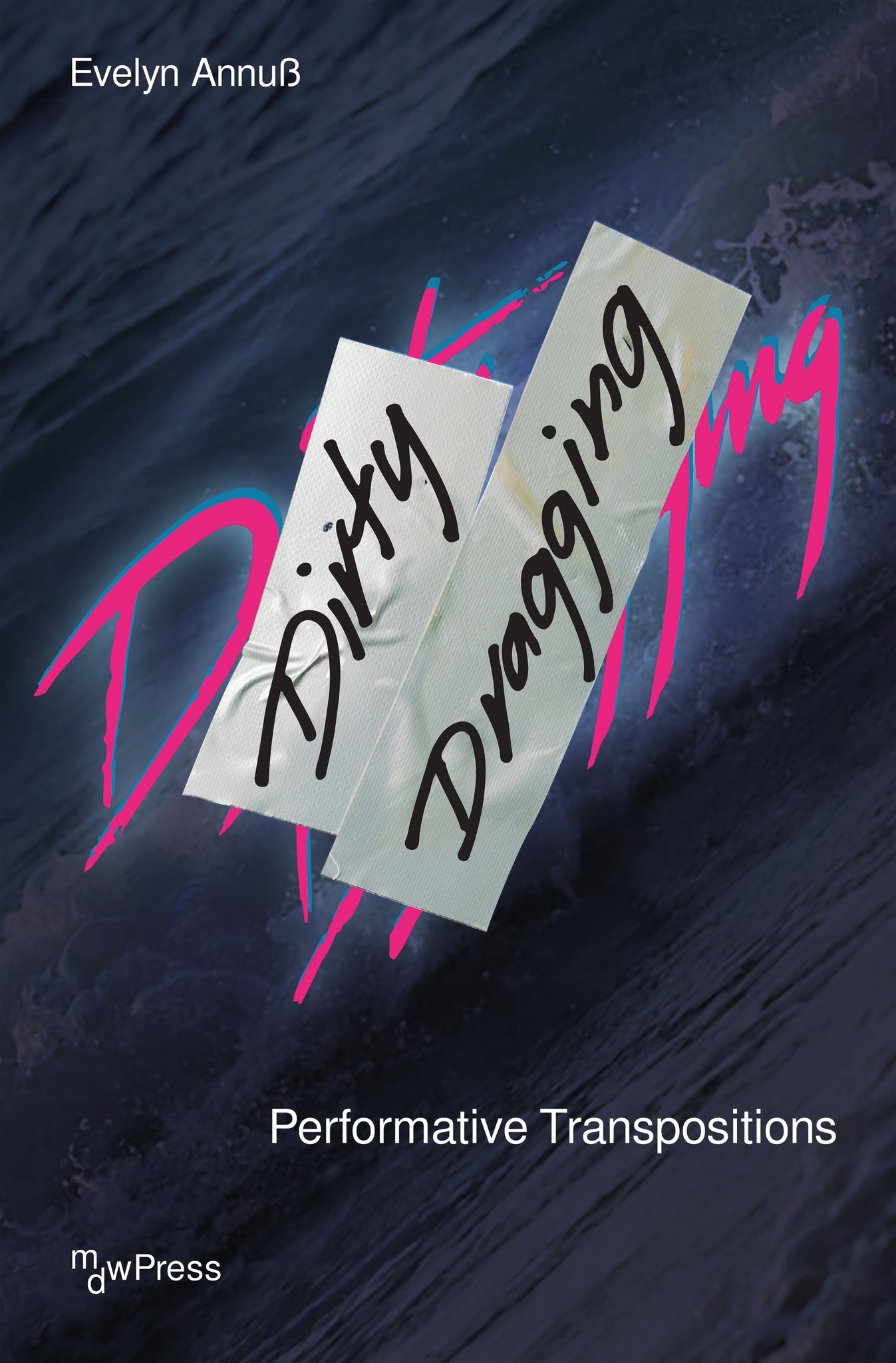
In Dirty Dragging, Evelyn Annuß reformulates queer theorizations of drag, exploring the ambivalence of transgressive performances under apartheid, Nazism, and Jim Crow through a transoceanic lens. Taking up the ambivalence of “dirty” performance modes spanning drag and carnival to propaganda, she extends readings of gender bending by incorporating perspectives on blackface and “racialized drag.” She thereby explores violent, locally specific mobilizations of the transgressive along with the ways in which queer and creolized forms of performance intertwine to oppose identitarian boundaries. Given the current slide into right-wing authoritarianism, the book thus gestures toward the potential joy of collectively making societal conditions dance.

Price: $35.00
Pages: 304
Publisher: transcript publishing
Imprint: mdwPress
Series: mdwPress
Publication Date:
27 June 2026
Trim Size: 8.86 X 5.83 in
ISBN: 9783837674750
Format: Paperback
BISACs:
SOCIAL SCIENCE / Gender Studies, SOCIAL SCIENCE / Sociology / General

»Evelyn Annuß has written a definitive, detailed, multi-sited, transnational history of drag. This book offers a sinuous history of performance, race, collective world-making and unmaking and it uses various national archives to resist any simple equation between drag and subversion. Spectacles of cross-dressing and black-face, she shows, intertwine across several racial regimes confounding the usual separation of these practices and demanding a careful investigation into when and how racial and gender crossing and passing are deployed within toxic nationalism and when and how they become a repudiation of purity and a queer and radical embrace of the inauthentic, the barbaric and the other. Dirty Dragging offers startlingly new readings of drag performance and is an instant classic!«
»Dirty Dragging is a must-read: a highly productive and politically important intervention in queer and gender studies, cultural and theatre studies, and above all in performance studies. Dirty Dragging has the potential to shape these disciplines in exemplary ways, because it not only breaks open binary and dualistic perspectives. By focusing on processes of creolization, drag, gender, racialization, and class can be understood as interconnected in new ways.«
— Isabell Lorey, KHM Köln
»Evelyn Annuß thinks across history, geography, and forms of political practice to offer a capacious conception of dragging. The non-linear weft of this work complicates notions of genealogy, origins, and indigeneity.«
»Dirty Dragging is a must-read: a highly productive and politically important intervention in queer and gender studies, cultural and theatre studies, and above all in performance studies. Dirty Dragging has the potential to shape these disciplines in exemplary ways, because it not only breaks open binary and dualistic perspectives. By focusing on processes of creolization, drag, gender, racialization, and class can be understood as interconnected in new ways.«
— Isabell Lorey, KHM Köln
»Evelyn Annuß thinks across history, geography, and forms of political practice to offer a capacious conception of dragging. The non-linear weft of this work complicates notions of genealogy, origins, and indigeneity.«
Evelyn Annuß is professor of gender studies and director of the International Research Center Gender and Performativity (ICGP) at mdw – Universität für Musik und darstellende Kunst Wien. Her work engages the intersections of aesthetics, theories of performativity, and political critique. As a scholar of theater and literature, she focuses on political spectacle, and in particular on its historicity and mediality in contexts of National Socialism, colonial racisms, and (re)fascization. ---