Skip to product information
1 of 1

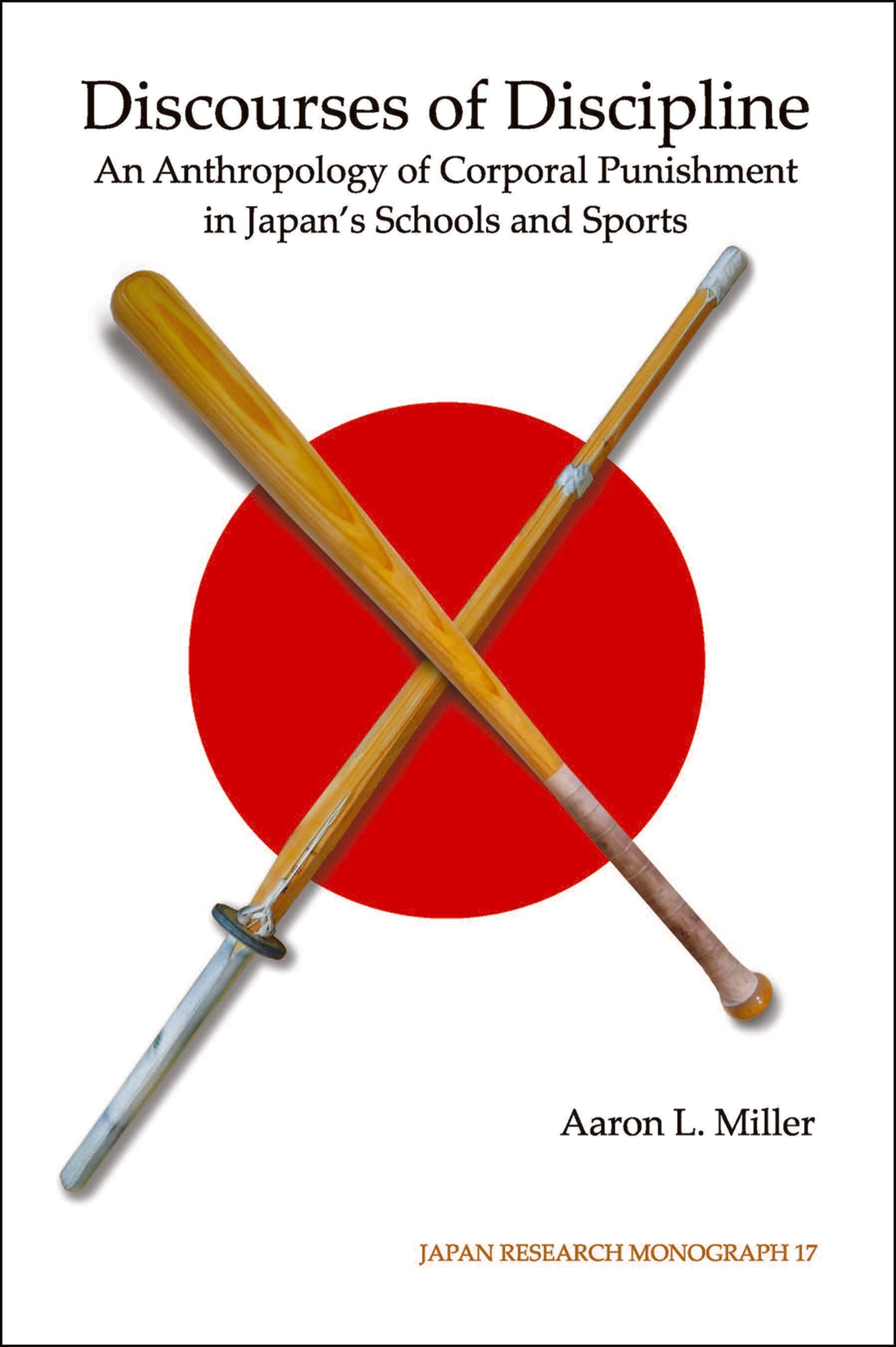
Discourses of Discipline

Regular price $32.00
Regular price $0.00 Sale price $32.00
Sold out
This book is about the many "discourses of discipline" around "corporal punishment" (taibatsu) in Japanese schools and sports. These discourses encompass the ways that people discuss discipline, th...
Read More
  • 01 August 2013
View Product Details
This book is about the many "discourses of discipline" around "corporal punishment" (taibatsu) in Japanese schools and sports. These discourses encompass the ways that people discuss discipline, the patterns of rhetoric about what discipline would be, and what discipline signifies. By scrutinizing these discourses we can disentangle the allegedly intimate connections among culture, discipline, and pedagogy in Japan. This anthropological study sheds light on the relationship of the education system and the economy and differences between Japan and other nations, as well as between classroom education and sports education.
files/i.png Icon
Price: $32.00
Pages: 260
Publisher: Institute of East Asian Studies, University of California, Berkeley
Imprint: Institute of East Asian Studies, University of California, Berkeley
Series: Japan Research Monograph
Publication Date: 01 August 2013
Trim Size: 9.00 X 6.00 in
ISBN: 9781557291059
Format: Paperback
REVIEWS Icon
Aaron L. Miller is an assistant professor and Hakubi Scholar at Kyoto National University. He has worked extensively on Japanese sports coaching and educational discipline. He is the author of Discourses of Discipline: An Anthropology of Corporal Punishment in Japan's Schools and Sports (IEAS, 2013). Education: B.A., Political Science, University of California, Los Angeles; M.S./Ph.D, Socio-cultural Anthropology, University of Oxford

Introduction – 1
    Three Stories of Taibatsu
    What Is Taibatsu?
    Why We Should Study Taibatsu in Japanese Schools and Sports
    Thesis and Chapter Summaries

1. Anthropology and Corporal Punishment – 31
    Corporal Punishment (Research) Today
    How Anthropology Can Help Us Better Understand Corporal Punishment

2. Histories – 47
    "Taibatsu" Before the Term "Taibatsu" Existed
    Prewar Legal Prohibitions of Taibatsu
    Postwar Legal Prohibitions of Taibatsu
    The Postwar Construction of Taibatsu as "Solution," "Problem," and "Non-Issue"

3. Contexts – 82
    The Importance of Context
    The Forms of Discipline
    The Genders of Discipline
    The Spaces of Discipline
    The Inflictors of Discipline
    The "Languages" of Discipline

4. Ethics – 98
    Conflicting Sports and Classroom Pedagogies
    Arguments of Right and Wrong
    Arguments in Favor
    Arguments Against

5. Purported Causes and Plural Cultures – 125
    Causal Interpretations of Corporal Punishment Worldwide
    Structural "Causes" of Taibatsu in Japanese Schools and Sports
    Cultural "Causes" of Taibatsu in Japanese Schools and Sports
    Beyond Culturalism

6. Discourses of Power and the Power of Discourse – 154
    The Importance of Historical and Cross-Cultural Analysis
    Theories of Power, Violence, and the Body
    Silence, Words, and Actions: How Discourses of Discipline Are "Powerful" in Their Own Right

Epilogue – 164
    Beyond the "Violent Culture" Myth

Appendices – 171
Bibliography – 203
Index – 235