


Some error occured while loading the Quick View. Please close the Quick View and try reloading the page.
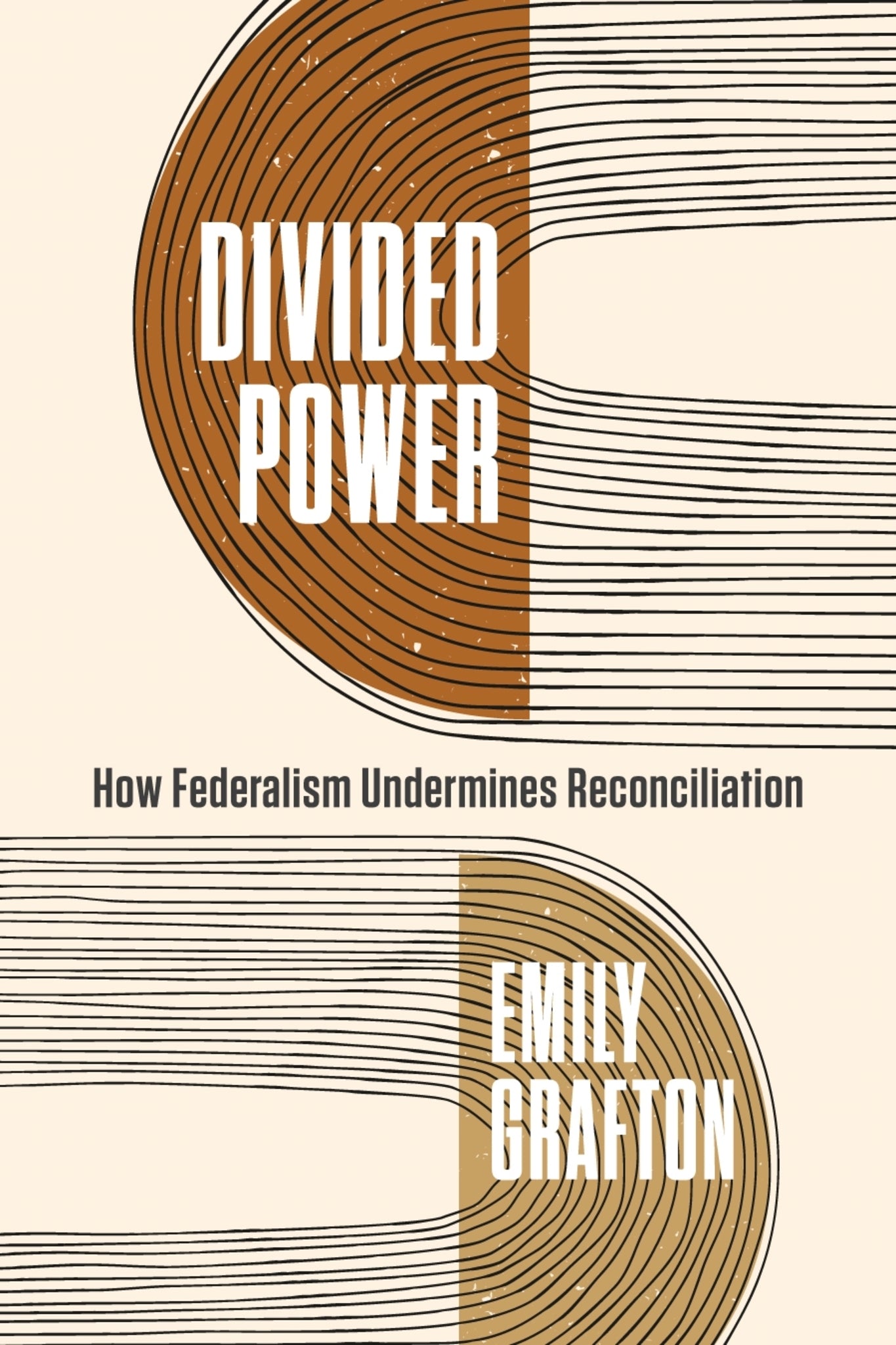
Reconciliation, as set out by the Truth and Reconciliation Commission, is a process of understanding the Canadian state's genocide against Indigenous Peoples and creating a new relationship between Indigenous Peoples and settlers based on mutual respect and dignity. Given the racism and paternalism embedded in the Canadian state and related institutions, building such a relationship is a monumental task, but in addition, there is a major structural roadblock in the way: federalism, the political system that organizes Canadian governance.
Divided Power argues that Canada’s system of federalism, rooted in settler colonialism, has dispossessed Indigenous Peoples for settler benefit. Far from being a neutral, balanced way to distribute responsibilities and powers, the division between the state and provinces and territories obstructs Indigenous Peoples’ agency and governance. Under such coercive political exclusion, how can truth and reconciliation be fully achieved? Emily Grafton meticulously traces the ways that federalism limits the potential for reconciliation and proposes alternative power-sharing models.
Guiding readers through the terrain of debate, Grafton deftly and accessibly merges a political analysis of federalism with a clear assessment of settler colonialism to argue that reconciliation will be incomplete for as long as the current division of powers persists. Divided Power points to a promising approach to holding the Canadian state responsible for integrating the principles of truth and reconciliation into its very foundation.


— Joyce Green, Ktunaxa Nation, Professor Emerita, University of Regina; Elder-Auntie, CPSA Reconciliation Committee
“Grafton exposes the evolution and coloniality of Canadian federalism in its unjust and mundane efforts to diminish Indigenous sovereignties. Divided Power is a tour de force of alternatives, and you’ll never think of federalism the same way after reading it!”
— Ajay Parasram, author of Pluriversal Sovereignty and the State
“Grafton’s ability to weave together work on Canadian politics and settler colonialism, without losing Indigenous agency in the process, means Divided Power offers a new way of thinking about federalism. This deep but accessible book will leave you with new ideas about how we can chart a path to a decolonized future.”
— Liam Midzain-Gobin, author of Settler Colonial Sovereignty: Visions of Improvement and Indigenous Erasure
Preface: : The Location of Indigenous Self in Settler Colonial Canada
Introduction: : How Do Settler Colonial Narratives of Canadian Federalism Circumvent Indigenous Peoples’ Agency?
Chapter One: : Narratives of Settler Colonialism
Chapter Two: : The Settler Colonial Narrative of Canadian Federalism and the Constitution
Chapter Three: : Evolving Canadian Federalism and Implications for Indigenous Peoples’ Agency
Chapter Four: : Beyond Settler Colonial Federalism
Conclusion:: Settler Colonial Narratives of Canadian Federalism Circumvent Indigenous Peoples’ Agency