


Some error occured while loading the Quick View. Please close the Quick View and try reloading the page.
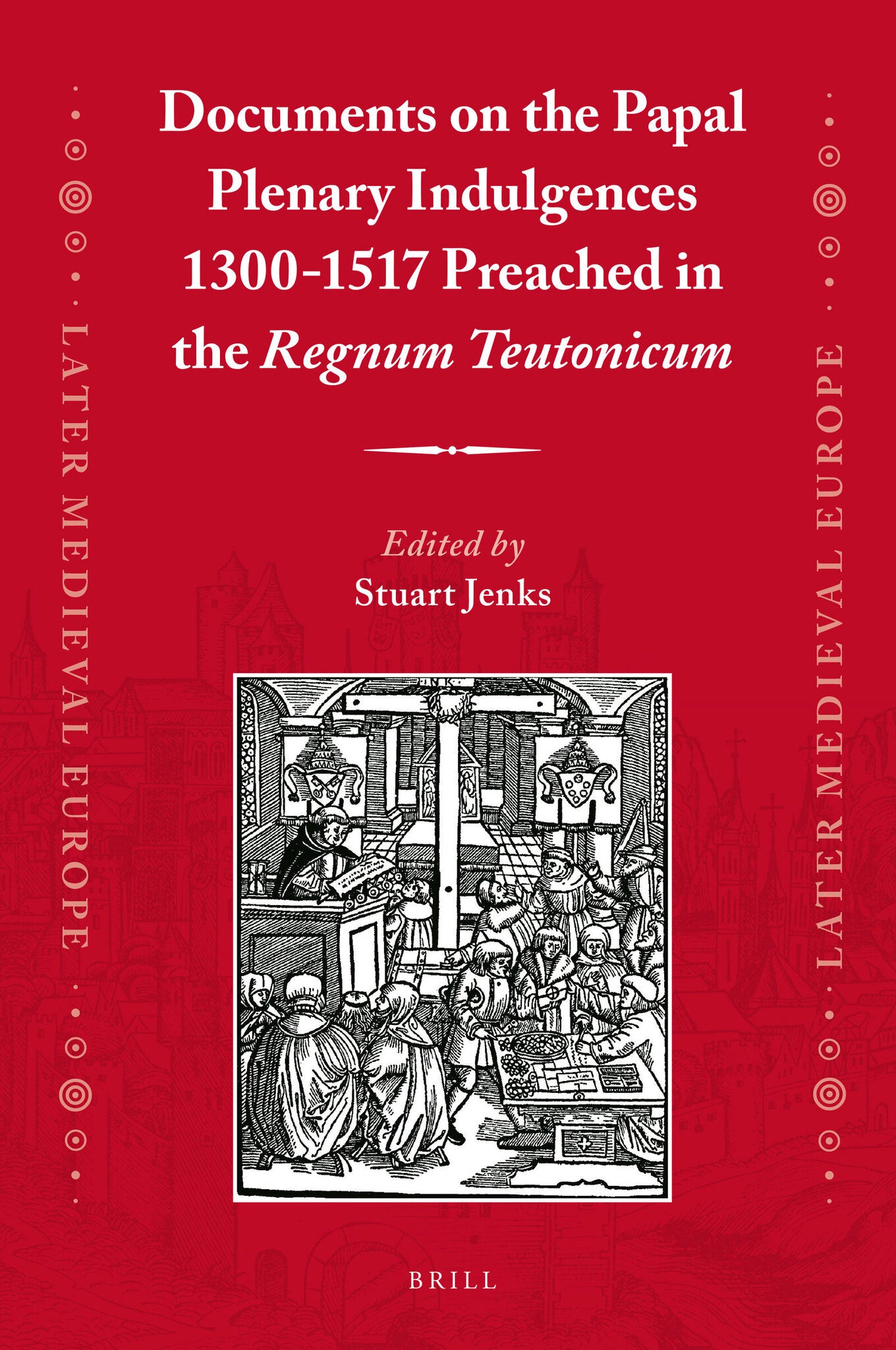
Catholics and Protestants have disputed the validity and legitimacy of papal plenary indulgences for 500 years without a unitary corpus of the relevant texts documenting the indulgence campaigns which so exercised Luther and his contemporaries. This volume prints for the first time in a modern edition the full text of all available papal bulls and brevia between 1300 and 1517 which granted plenary indulgences (i.e. those which cancelled all previously accrued temporal punishment due to sin), the instructions to the commissioners on how to preach (and defend) the indulgences and conduct the campaigns, and finally the extensions of indulgence campaigns. The Regnum Teutonicum provides the geographical framework, since it includes all the areas where the Reformation initially broke out.

Price: $267.00
Pages: 812
Publisher: Brill
Imprint: Brill
Publication Date:
03 May 2018
ISBN: 9789004360129
Format: Hardcover

"This is a source edition for those interested in plenary indulgences and the Holy Roman Empire in the Middle Ages. As the editor states in the introduction, it is unclear why these documents have not previously been edited and printed systematically, since without knowing their precise content, it is impossible to fully understand the dynamics that led to Luther’s criticism of papal indulgences and to the birth of the Reformation movement. This book, published soon after the five-hundredth anniversary of the Reformation, finally fills this gap." - Kirsi Salonen, in: Journal of Ecclesiastical History, 70 (2019)
"Stuart Jenks’ verdienstvolle Quellensammlung regt dazu an,weiterführende Fragen zu stellen. Sie leistet eine erstmalige und übersichtliche Zusammenstellung der normativenTexte zu den Plenarablässen mit Bezugzum Heiligen Römischen Reichundist daher ein nützliches Hilfsmittel für die Erforschungdes mittelalterlichen Ablasswesens und die Einordnung der Reformation" - Alex Ehlers, in: Zeitschrift für Historische Forschung 46:2 (2019)
"Es ist auffällig, dass es zwar viele Studien zum Ablass im Mittelalter gibt, dass aber die Publikation der einschlägigen Quellen unbefriedigend ist. Eine rühmliche Ausnahme ist die mustergültige, umfassende Edtion der Plenarablässe im Regnum Teutonicum von 1300 bis 1517, die Stuart Jenks unternommen hat." - Theodor Dieter, Wolfgang Thönissen (eds.), in Der Ablassstreit. Band I: Vorgeschichte des Ablassstreits 1095-1517, Leipzig 2021, p. xxiii
"Stuart Jenks’ verdienstvolle Quellensammlung regt dazu an,weiterführende Fragen zu stellen. Sie leistet eine erstmalige und übersichtliche Zusammenstellung der normativenTexte zu den Plenarablässen mit Bezugzum Heiligen Römischen Reichundist daher ein nützliches Hilfsmittel für die Erforschungdes mittelalterlichen Ablasswesens und die Einordnung der Reformation" - Alex Ehlers, in: Zeitschrift für Historische Forschung 46:2 (2019)
"Es ist auffällig, dass es zwar viele Studien zum Ablass im Mittelalter gibt, dass aber die Publikation der einschlägigen Quellen unbefriedigend ist. Eine rühmliche Ausnahme ist die mustergültige, umfassende Edtion der Plenarablässe im Regnum Teutonicum von 1300 bis 1517, die Stuart Jenks unternommen hat." - Theodor Dieter, Wolfgang Thönissen (eds.), in Der Ablassstreit. Band I: Vorgeschichte des Ablassstreits 1095-1517, Leipzig 2021, p. xxiii
Stuart Jenks, Ph.D. (1974), Yale University, Dr. phil. habil. (1985), Free University of Berlin, is a (retired) professor of medieval history and medieval and modern economic history at the University of Erlangen. He has edited and published extensively on these areas.