


Some error occured while loading the Quick View. Please close the Quick View and try reloading the page.
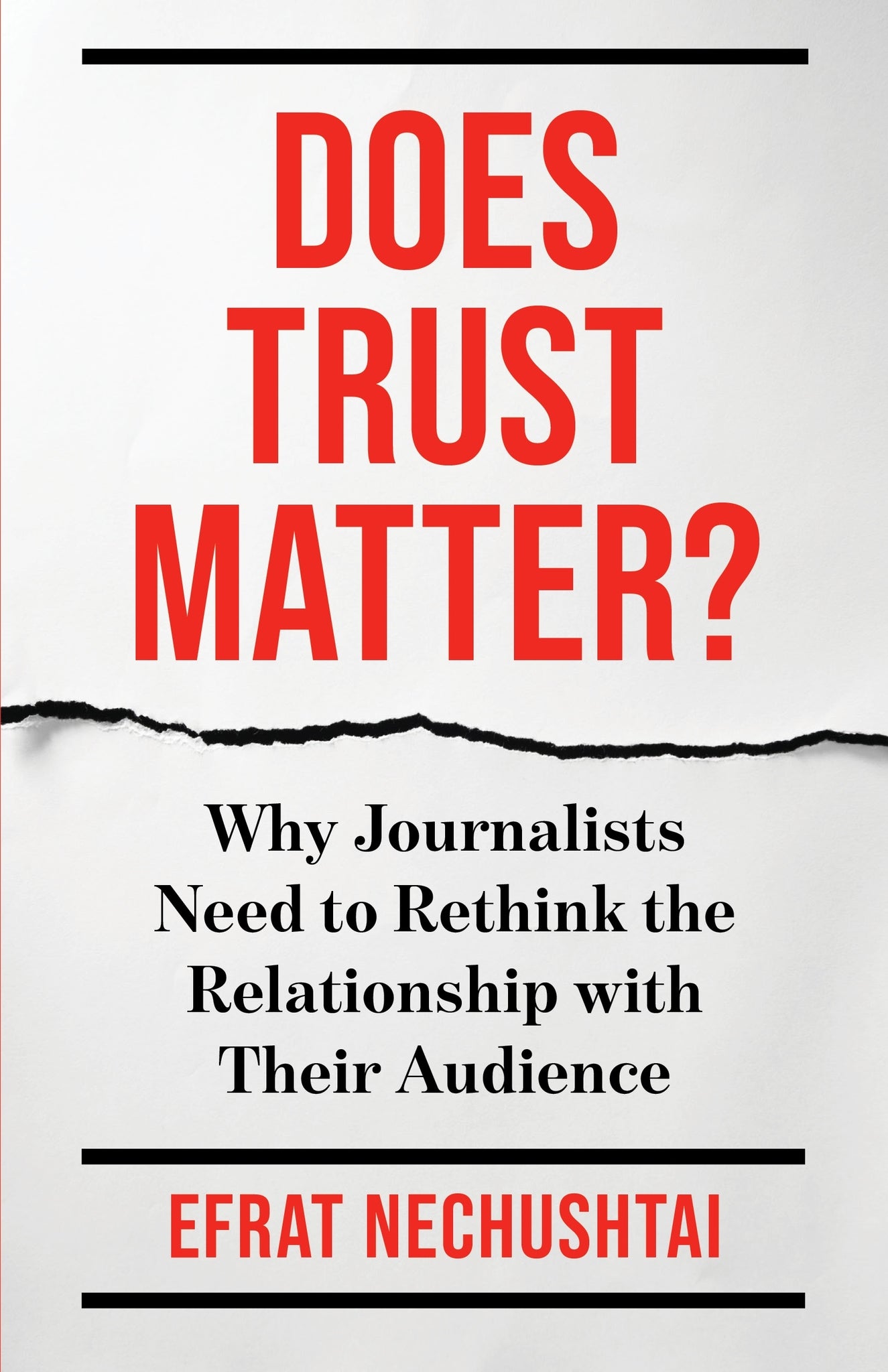
Around the world, journalism is undergoing a crisis of legitimacy. Public confidence in the news is declining; populist leaders attack the media; and journalists are routinely harassed and threatened. Many journalists and scholars believe that building trust with audiences would help weather these storms. But what do journalists risk in their pursuit of trust?
This book provides a fresh perspective by demonstrating how the desire to increase trust in the news can be weaponized against journalists. Based on in-depth interviews with nearly one hundred journalists, Does Trust Matter? challenges widely held assumptions about audience feedback that leave the media vulnerable to manipulation. Efrat Nechushtai shows how concerns over distrust have been used to increase favorable coverage of illiberal movements. She documents how the quest for public approval has led journalists to legitimize antiscience claims in the United States, racialize crime reporting in Germany, and produce “patriotic” stories in Hungary and Israel, among other cases.
Does Trust Matter? offers timely insights into how journalists can build resilience against increasingly sophisticated attempts to undermine their work, including AI-powered influence campaigns and online propaganda. Valuable for scholars and practitioners alike, this book presents practical strategies that reporters, editors, and publishers can use to navigate today’s challenging environment.


— Rodney Benson, lead author of How Media Ownership Matters
Lucid, thoughtful, and pathbreaking. Drawing on more than ninety eye-popping interviews with journalists, Efrat Nechushtai analyzes how the efforts of news organizations to rebuild media trust through face-to-face contact with community members proved useless. Journalists should read this book, as should academics who study journalism—and anyone else who is interested in how good intentions can go badly astray.
— Michael Schudson, author of Journalism: Why It Matters
Does Trust Matter? asks the question that many of us would rather avoid: What happens if journalists are wrong that the public shares their commitment to the common good, holding power to account, and liberal democracy? Nechushtai’s provocative argument is a call to action: The battle to rebuild trust in journalism may be the wrong fight. Rather, the best defense against the rising tide of illiberalism is critical journalism guided by a sense of purpose.
— Nik Usher, author of News for the Rich, White, and Blue: How Place and Power Distort American Journalism
Nechushtai has written a magisterial, thought-provoking analysis of the question of trust in journalism. Drawing from a rich set of interviews with journalists in several countries, she ably dissects the meanings of trust and the way newsrooms navigate the ambiguities of public opinion and credibility about press performance.
— Silvio Waisbord, author of An Introduction to Journalism: Thinking Globally
Introduction: In Trust We Trust: The Case for Journalistic Self-Defense
1. The Challenge of Meaning: What We Talk About When We Talk About Trust in the News
2. The Challenge of Origin: Manufacturing Distrust to Manipulate Journalists
3. The Challenge of Values: When the Bad Actor Is the Audience
4. Journalistic Self-Defense in Practice: What Journalists and Publishers Can Do
5. From Trust to Trustworthiness: Journalism in an Era of Illiberal Politics
Acknowledgments
Appendix: Methodology
Notes
Selected Bibliography
Index