


Some error occured while loading the Quick View. Please close the Quick View and try reloading the page.
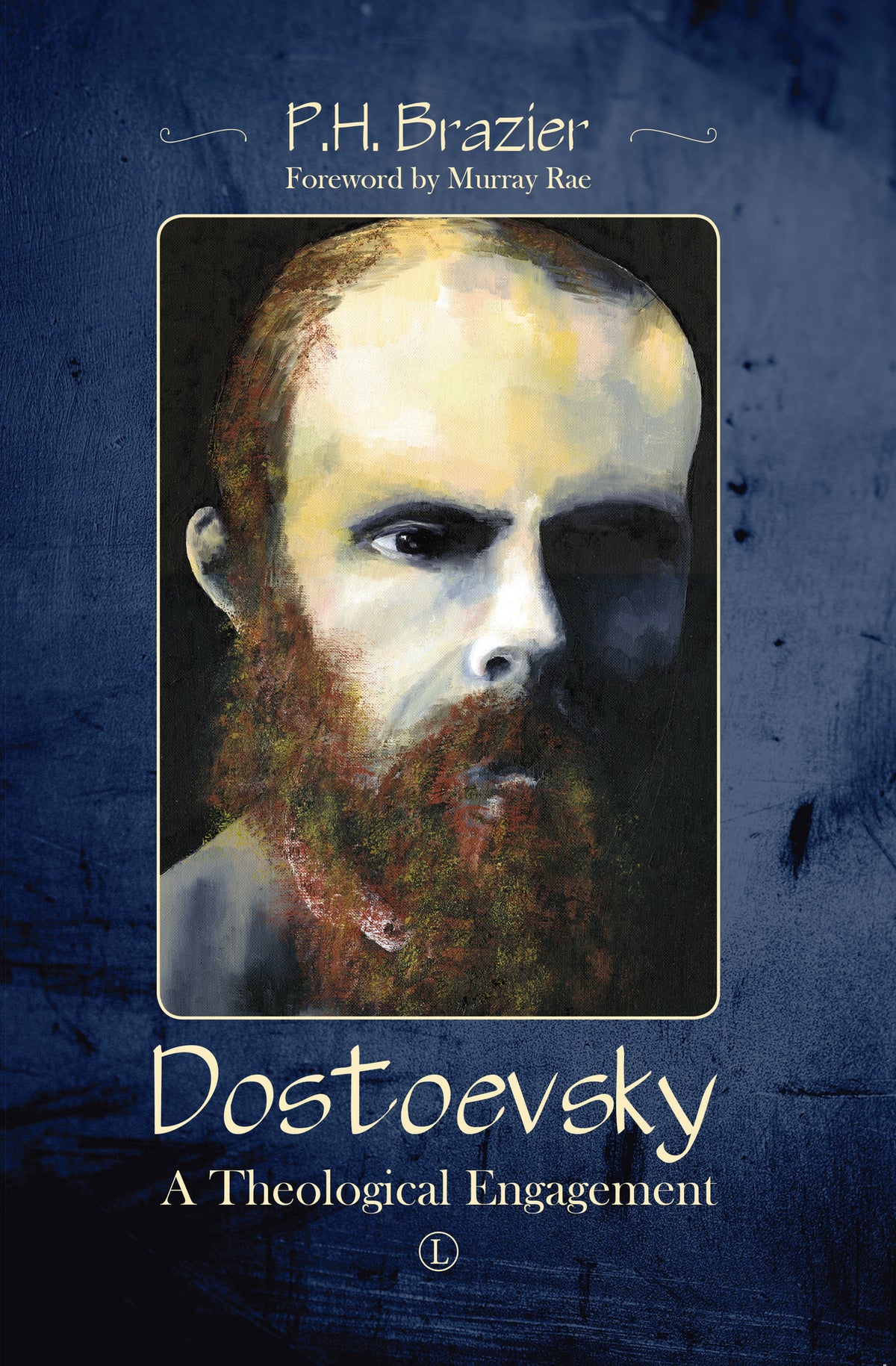
An insightful study of the theological and eschatological themes at the core of the work of the great Russian writer Fyodor Dostoevsky.
As a writer and prophet Dostoevsky was no academic theologian, yet his writings are deeply theological: his life, beliefs, even his epilepsy, all had a role in generating histheology and eschatology. Dostoevsky's novels are riven with paradoxes, are deeply dialectical, and represent a criticism of religion, offered in the service of the gospel. In this task he presented a profound understanding and portrait of humanity. Dostoevsky's novels chart the movement of the human into death: either the movement through paradox and Christlikeness into Christ's cross (a soteriology often characterized by the apophatic negation and self-denial; what we may term 'the Mark of Abel') leading to salvation and resurrection; or, conversely, the movement of those who refuse Christ's invitation to be redeemed, and continue to fall into a self-willed death and a selfgenerated hell ('the Mark of Cain'). This eschatology becomes a theological axiom which he unceasingly warned people of in his mature works. Startlingly original, stripped of all religious pretence, Dostoevsky as a prophet forewarned of the politicized humanistic delusions of the twentieth century: a prophet crying out through the wilderness.
As a writer and prophet Dostoevsky was no academic theologian, yet his writings are deeply theological: his life, beliefs, even his epilepsy, all had a role in generating histheology and eschatology. Dostoevsky's novels are riven with paradoxes, are deeply dialectical, and represent a criticism of religion, offered in the service of the gospel. In this task he presented a profound understanding and portrait of humanity. Dostoevsky's novels chart the movement of the human into death: either the movement through paradox and Christlikeness into Christ's cross (a soteriology often characterized by the apophatic negation and self-denial; what we may term 'the Mark of Abel') leading to salvation and resurrection; or, conversely, the movement of those who refuse Christ's invitation to be redeemed, and continue to fall into a self-willed death and a selfgenerated hell ('the Mark of Cain'). This eschatology becomes a theological axiom which he unceasingly warned people of in his mature works. Startlingly original, stripped of all religious pretence, Dostoevsky as a prophet forewarned of the politicized humanistic delusions of the twentieth century: a prophet crying out through the wilderness.

Price: $29.99
Pages: 216
Publisher: Boydell & Brewer Inc.
Imprint: Lutterworth Press
Publication Date:
25 October 2018
Trim Size: 9.02 X 5.98 in
ISBN: 9780718895365
Format: Paperback
BISACs:
RELIGION / Christian Theology / General, Christianity, Theology

This is not just another scholarly exegesis of Dostoevsky's theology. Paul Brazier's impeccable research clearly puts it in this category. His sharp, analytical mind takes in Dostoevsky's fiction, letters, diary, even his personal annotations in his copy of the New Testament to explicate Dostoevsky's 'theological anthropology,' a theology based on the relationship of God to humanity. The portrait of Dostoevsky that emerges from Brazier's work, through selected anecdotes and dialogues of characters, is as well developed and vivid as Dostoevsky's own Ivan Karamasov or Raskolnikov. It is a joy to read.
— Salwa Khoddam, Professor of English, Emerita, Oklahoma City University
Dostoevsky's later fiction stares unblinkingly at the true depravity of human life, but nonetheless imagines a response shaped by compassion and love. In this, he is a remarkably Christian, and relentlessly theological, author. Paul Brazier does a fine job of sifting and collecting the theological themes in Dostoevsky's work, and showing us the extent of his understanding of the gospel.
— Stephen R. Holmes, Head of School of Divinity, University of St. Andrews
An unusually lucid survey of Dostoevsky's major fiction, written from a robustly theological perspective, this will be a most useful contribution to the study of one of Europe's greatest Christian imaginations. There are arguments here that will undoubtedly provoke debate, but the discussion is careful and well documented, and makes a real contribution to the study of the subject.
— Rowan Williams, University of Cambridge; author of Dostoevsky: Language, Faith and Fiction
— Salwa Khoddam, Professor of English, Emerita, Oklahoma City University
Dostoevsky's later fiction stares unblinkingly at the true depravity of human life, but nonetheless imagines a response shaped by compassion and love. In this, he is a remarkably Christian, and relentlessly theological, author. Paul Brazier does a fine job of sifting and collecting the theological themes in Dostoevsky's work, and showing us the extent of his understanding of the gospel.
— Stephen R. Holmes, Head of School of Divinity, University of St. Andrews
An unusually lucid survey of Dostoevsky's major fiction, written from a robustly theological perspective, this will be a most useful contribution to the study of one of Europe's greatest Christian imaginations. There are arguments here that will undoubtedly provoke debate, but the discussion is careful and well documented, and makes a real contribution to the study of the subject.
— Rowan Williams, University of Cambridge; author of Dostoevsky: Language, Faith and Fiction
Table of Contents:
List of Illustrations
Acknowledgements
Foreword
Introduction
Part One
Fyodor Mikhailovich Dostoevsky, Writer and Prophet
Chapter 1 Ideas and Ideology, Eschatology and Possession
Chapter 2 Formation and Influences
Part Two
Dostoevsky's Theological Anthropology
Chapter 3 Dostoevsky, Writer and Prophet
Chapter 4 The Human Condition before God
Part Three
Dialectic and a Critique of Religion in the Service of the
Gospel
Chapter 5 Dialectic and a Critique of Religion
Chapter 6 Dostoevsky: Religion and Atheism
Chapter 7 Sin and Grace: A Dialectic of Salvation
Conclusion
Bibliography
Indices
Sectional Contents
List of Illustrations
Acknowledgements
Foreword
Introduction
Part One
Fyodor Mikhailovich Dostoevsky, Writer and Prophet
Chapter 1 Ideas and Ideology, Eschatology and Possession
Chapter 2 Formation and Influences
Part Two
Dostoevsky's Theological Anthropology
Chapter 3 Dostoevsky, Writer and Prophet
Chapter 4 The Human Condition before God
Part Three
Dialectic and a Critique of Religion in the Service of the
Gospel
Chapter 5 Dialectic and a Critique of Religion
Chapter 6 Dostoevsky: Religion and Atheism
Chapter 7 Sin and Grace: A Dialectic of Salvation
Conclusion
Bibliography
Indices
Sectional Contents