


Some error occured while loading the Quick View. Please close the Quick View and try reloading the page.
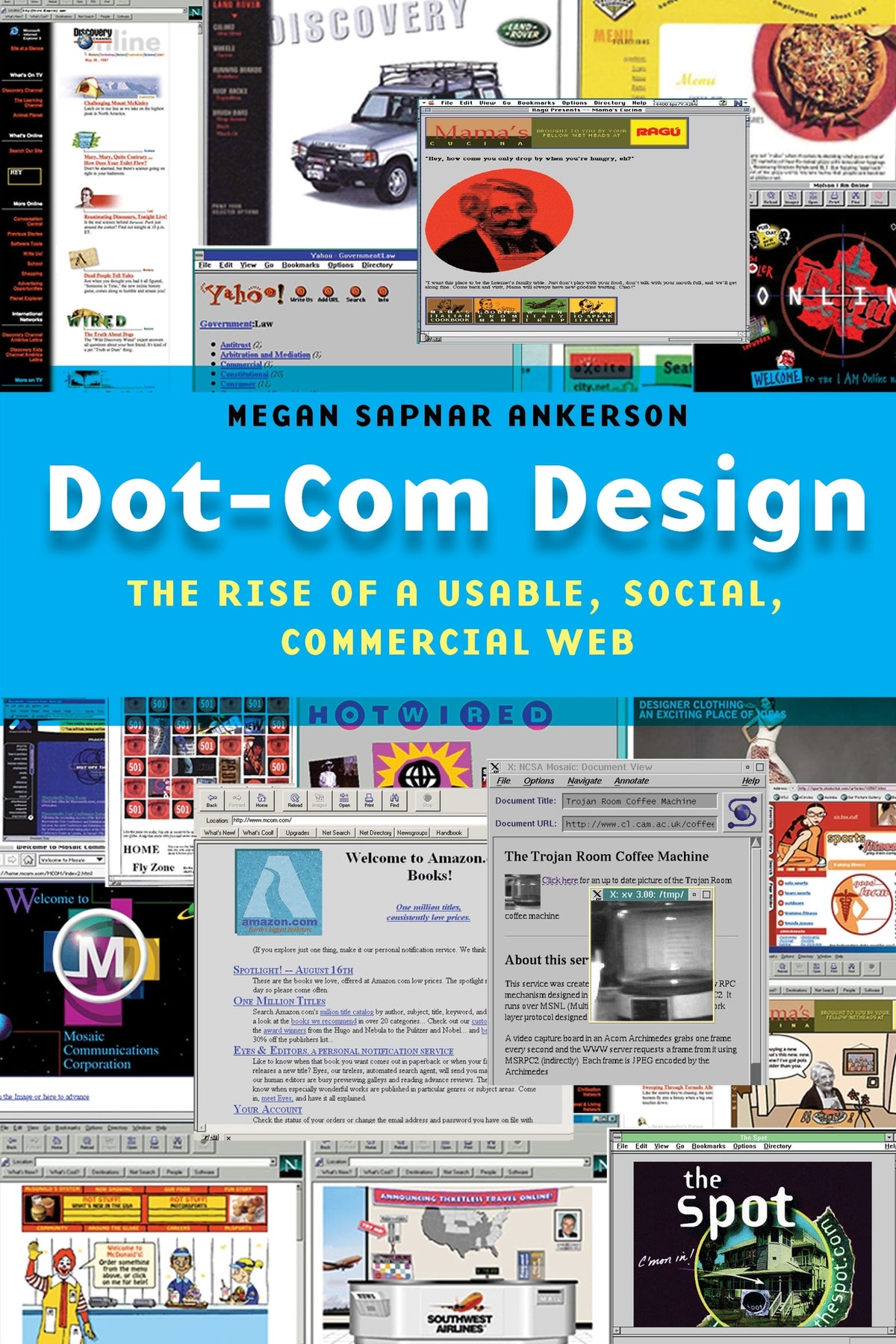
From dial-up to wi-fi, an engaging cultural history of the commercial web industry
In the 1990s, the World Wide Web helped transform the Internet from the domain of computer scientists to a playground for mass audiences. As URLs leapt off computer screens and onto cereal boxes, billboards, and film trailers, the web changed the way many Americans experienced media, socialized, and interacted with brands. Businesses rushed online to set up corporate “home pages” and as a result, a new cultural industry was born: web design. For today’s internet users who are more familiar sharing social media posts than collecting hotlists of cool sites, the early web may seem primitive, clunky, and graphically inferior. After the dot-com bubble burst in 2000, this pre-crash era was dubbed “Web 1.0,” a retronym meant to distinguish the early web from the social, user-centered, and participatory values that were embodied in the internet industry’s resurgence as “Web 2.0” in the 21st century.
Tracking shifts in the rules of “good web design,” Ankerson reimagines speculation and design as a series of contests and collaborations to conceive the boundaries of a new digitally networked future. What was it like to go online and “surf the Web” in the 1990s? How and why did the look and feel of the web change over time? How do new design paradigms like user-experience design (UX) gain traction? Bringing together media studies, internet studies, and design theory, Dot-com Design traces the shifts in, and struggles over, the web’s production, aesthetics, and design to provide a comprehensive look at the evolution of the web industry and into the vast internet we browse today.


— Choice
"What Walter Benjamin was to Paris, Megan Ankerson is to the web: she has resurrected an era attitudes and aesthetics, economics and practices, fantasies and futures to explain how the present came to be. Indispensable reading for everyone who wants to understand what the web meant, and what it means."
— Finn Brunton, author of Spam: A Shadow History of the Internet
"Ankerson opens a wormhole into the history of the World Wide Web. Hers is an original and importantly critical account of how surfing and browsing have depended upon emergent design norms. She takes her readers from the early days of hotlists, cool sites, and cyber-whatnot to the design ethos of shopping carts and "user experience" as a premium, all of which helped broker the emergence of Web 2.0 as a thinkable, shared experience"
— Lisa Gitelman, New York University
"Dot-Com Design provides deep contextualization of the many instances of dispute and sites of struggle that shaped the aesthetic, software, and hardware design of what we now term the Internet."