


Some error occured while loading the Quick View. Please close the Quick View and try reloading the page.
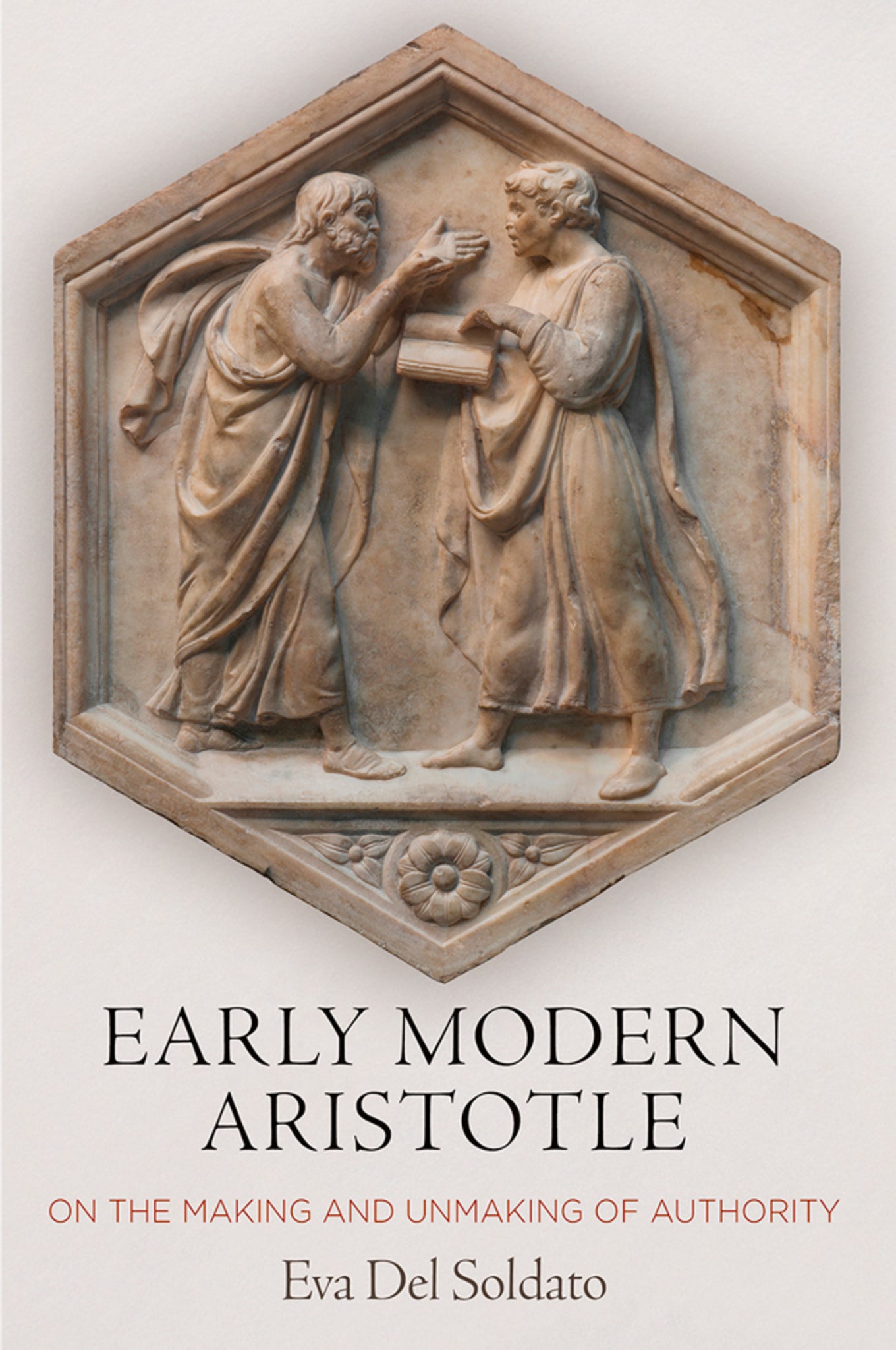
A reassessment of how the legacy of ancient philosophy functioned in early modern Europe
In his Nicomachean Ethics, Aristotle affirms that despite his friendship with Plato, he was a better friend of the truth. With this statement, he rejected his teacher's authority, implying that the pursuit of philosophy does not entail any such obedience. Yet over the centuries Aristotle himself became the authority par excellence in the Western world, and even notorious anti-Aristotelians such as Galileo Galilei preferred to keep him as a friend rather than to contradict him openly. In Early Modern Aristotle, Eva Del Soldato contends that because the authority of Aristotle—like that of any other ancient, including Plato—was a construct, it could be tailored and customized to serve agendas that were often in direct contrast to one another, at times even in open conflict with the very tenets of Peripatetic philosophy.
Arguing that recourse to the principle of authority was not merely an instrument for inculcating minds with an immutable body of knowledge, Del Soldato investigates the ways in which the authority of Aristotle was exploited in a variety of contexts. The stories the five chapters tell often develop along the same chronological lines, and reveal consistent diachronic and synchronic patterns. Each focuses on strategies of negotiation, integration and rejection of Aristotle, considering both macro-phenomena, such as the philosophical genre of the comparatio (that is, a comparison of Aristotle and Plato's lives and doctrines), and smaller-scale receptions, such as the circulation of legends, anecdotes, fictions, and rhetorical tropes ("if Aristotle were alive . . ."), all featuring Aristotle as their protagonist. Through the analysis of surprisingly neglected episodes in intellectual history, Early Modern Aristotle traces how the authority of the ancient philosopher—constantly manipulated and negotiated—shaped philosophical and scientific debate in Europe from the fifteenth century until the dawn of the Enlightenment.


Chronology
Introduction
Chapter 1. Comparing Philosophers: How to Elevate or Undermine an Authority
Chapter 2. Comparationes and External Aids
Chapter 3. Learning, Protecting, Advertising: Comparationes in University Halls
Chapter 4. Customizing Authorities: Legends, Anecdotes, Fictions
Chapter 5. If Aristotle Were Alive, or the Paradoxical Ways of Authority
Epilogue
Appendix A. Preface by Alfonso Pandolfi to His Comparatio
Appendix B. Federico Pendasio's Comparatio
Appendix C. Skeptical Attitudes Toward Philosophical Concordiae
Appendix D. Francesco Vimercato's De Dogmatibus
Notes
Bibliography
Index
Acknowledgments