


Some error occured while loading the Quick View. Please close the Quick View and try reloading the page.
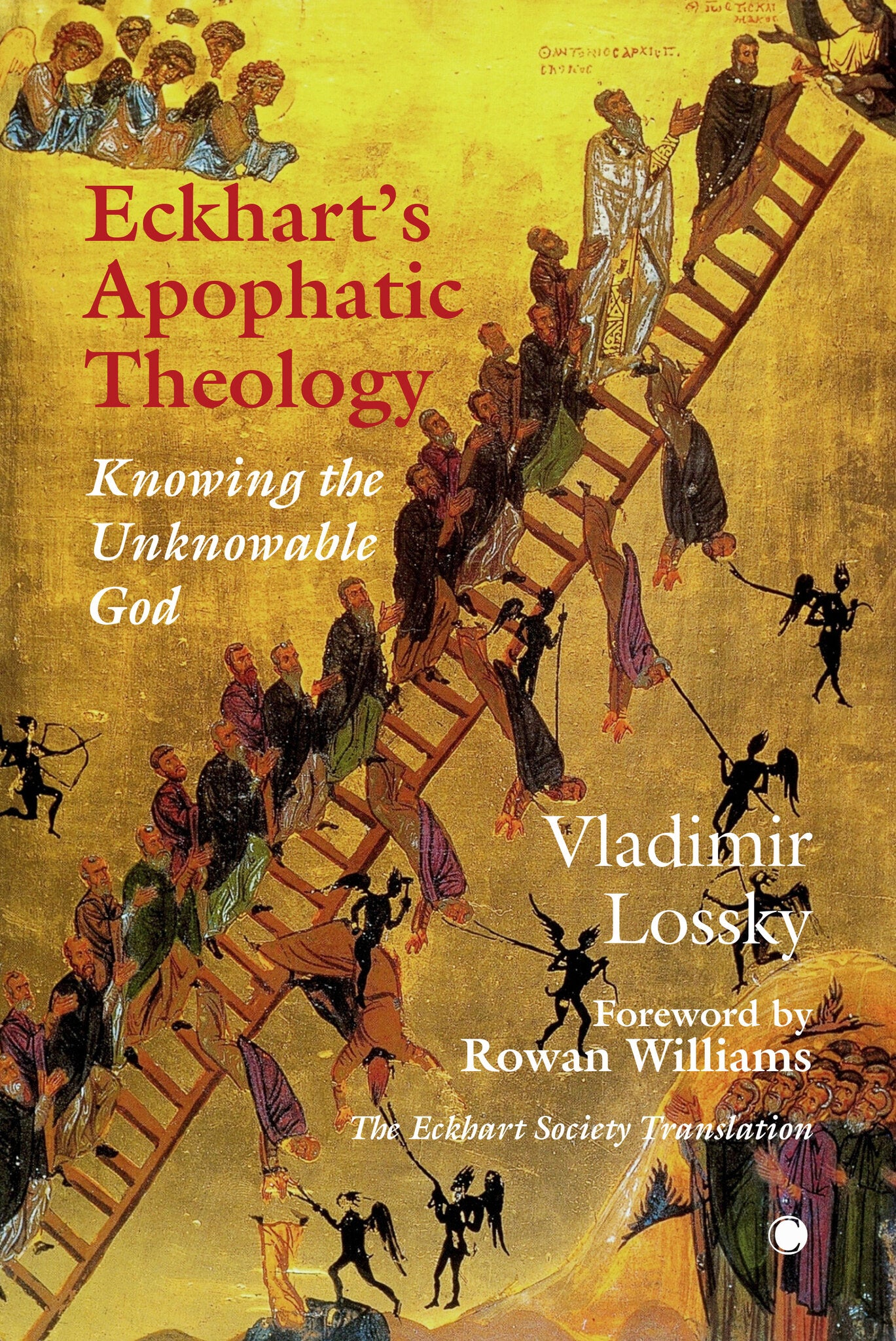
Vladimir Lossky’s posthumously published masterwork is now made available in English for the first time.
Vladimir Lossky's posthumously published masterwork is now made available in English for the first time. Eckhart's Apophatic Theology is the culmination of a long process, whereby the renowned Orthodox philosopher and theologian embraced the ways of thinking of a thirteenth-century German mendicant and mystic. While refusing to simplify Eckhart's theology to a system or single motif, Lossky explores in detail the various ramifications of Eckhart's insistence on the ineffability of God.
Is God to be regarded as 'being', or the 'One', or 'Intellect'? Does God's pure expression of each of these preclude the others? Framed by six key statements about God's essence, Lossky lays out Eckhart's approach to this dilemma. His understanding of the problem, guided by careful engagement with a multitude of sources, is exhaustive. Scholars will welcome this eagerly-anticipated translation.
Vladimir Lossky's posthumously published masterwork is now made available in English for the first time. Eckhart's Apophatic Theology is the culmination of a long process, whereby the renowned Orthodox philosopher and theologian embraced the ways of thinking of a thirteenth-century German mendicant and mystic. While refusing to simplify Eckhart's theology to a system or single motif, Lossky explores in detail the various ramifications of Eckhart's insistence on the ineffability of God.
Is God to be regarded as 'being', or the 'One', or 'Intellect'? Does God's pure expression of each of these preclude the others? Framed by six key statements about God's essence, Lossky lays out Eckhart's approach to this dilemma. His understanding of the problem, guided by careful engagement with a multitude of sources, is exhaustive. Scholars will welcome this eagerly-anticipated translation.

Price: $135.00
Pages: 540
Publisher: Boydell & Brewer Inc.
Imprint: James Clarke
Publication Date:
29 February 2024
Trim Size: 5.98 X 8.98 in
ISBN: 9780227179772
Format: Hardcover

Theologians have always insisted that God is ineffable. But what does it mean to say this? One of the premier explorations of this paradox is Vladimir Lossky's Eckhart's Apophatic Theology. Written more than sixty years ago, and now made available in this accurate and elegant English translation, this classic work will inspire renewed attention to the German Dominican and to the problem of unsaying God.
— Bernard McGinn, Neomi Shenstone Donnelley Professor emeritus Divinity School, University of Chicago
This first, fine and accurate English translation of Lossky's very important study of Eckhart's Theology is a milestone in the recovery of this medieval Dominican reliance on the Greek Christian and Islamic philosophical tradition. What had been a textbook in its German version is finally available to the English speaking readers who will thoroughly enjoy to discover a side of Eckhart that has only recently been rediscovered.
— Markus Vinzent, King's College London (ret.) and Director of the Eckhart-Research-Centre, Max-Weber-Centre, University of Erfurt.
While refusing to simplify Eckhart's theology to a system or single motif, Lossky explores in detail the various ramifications of Eckhart's insistence on the ineffability of God. Is God to be regarded as "being", or the "One" or "Intellect"? Does God's pure expression of each of these preclude the others? Presenting Eckhart's approach to this dilemma and guided by careful engagement with a multitude of sources, this erudite work is both meticulous and exhaustive.
Indeed, during a time period flooded with flaky self-help books and pop psychology, it is reassuring to know that there is still the demand for serious and thoughtful literature expounding the very essence of life. Beautifully produced by James Clarke & Co., with a foreword by Rowan Williams, former Archbishop of Canterbury, academics and scholars will welcome this eagerly anticipated rendition.
— Paula Marvell
The excellent English translation, by Monk Sophrony and Dr Jonathan Sutton, reflects Lossky's sometimes complex French while being eminently readable. He had himself translated quotations from Eckhart's German writings into French, while leaving untranslated the extensive quotations from Latin writers, from Augustine to Aquinas. The translators have followed his example, and left the Latin quotations untranslated. While this is not a book for the general reader, it is an important contribution to scholarly Eckhart studies.
— Canon Hugh Wybrew, Formerly Vicar of St Mary Magdalen's Oxford
We need to remind ourselves that this is an important book for Eckhart studies that now, sixty-odd years after its first publication, still represents an unusual approach to Eckhart, taking seriously his 'professional' Latin works - in some ways atypical in comparison with his Western contemporaries - and using them as the primary source for understanding the lineaments of his theology. The two dimensions to reading this rich and demanding book are complementary: it is the most detailed and extended work by one of the great Orthodox theologians of the last century, but also a landmark study of le maître thuringien.
— Andrew Louth
— Bernard McGinn, Neomi Shenstone Donnelley Professor emeritus Divinity School, University of Chicago
This first, fine and accurate English translation of Lossky's very important study of Eckhart's Theology is a milestone in the recovery of this medieval Dominican reliance on the Greek Christian and Islamic philosophical tradition. What had been a textbook in its German version is finally available to the English speaking readers who will thoroughly enjoy to discover a side of Eckhart that has only recently been rediscovered.
— Markus Vinzent, King's College London (ret.) and Director of the Eckhart-Research-Centre, Max-Weber-Centre, University of Erfurt.
While refusing to simplify Eckhart's theology to a system or single motif, Lossky explores in detail the various ramifications of Eckhart's insistence on the ineffability of God. Is God to be regarded as "being", or the "One" or "Intellect"? Does God's pure expression of each of these preclude the others? Presenting Eckhart's approach to this dilemma and guided by careful engagement with a multitude of sources, this erudite work is both meticulous and exhaustive.
Indeed, during a time period flooded with flaky self-help books and pop psychology, it is reassuring to know that there is still the demand for serious and thoughtful literature expounding the very essence of life. Beautifully produced by James Clarke & Co., with a foreword by Rowan Williams, former Archbishop of Canterbury, academics and scholars will welcome this eagerly anticipated rendition.
— Paula Marvell
The excellent English translation, by Monk Sophrony and Dr Jonathan Sutton, reflects Lossky's sometimes complex French while being eminently readable. He had himself translated quotations from Eckhart's German writings into French, while leaving untranslated the extensive quotations from Latin writers, from Augustine to Aquinas. The translators have followed his example, and left the Latin quotations untranslated. While this is not a book for the general reader, it is an important contribution to scholarly Eckhart studies.
— Canon Hugh Wybrew, Formerly Vicar of St Mary Magdalen's Oxford
We need to remind ourselves that this is an important book for Eckhart studies that now, sixty-odd years after its first publication, still represents an unusual approach to Eckhart, taking seriously his 'professional' Latin works - in some ways atypical in comparison with his Western contemporaries - and using them as the primary source for understanding the lineaments of his theology. The two dimensions to reading this rich and demanding book are complementary: it is the most detailed and extended work by one of the great Orthodox theologians of the last century, but also a landmark study of le maître thuringien.
— Andrew Louth
A Note from the Society
Translators
Foreword to the English Translation, by Rowan Williams
Foreword to the First Edition, by Maurice de Gandillac
Preface to the First Edition, by Étienne Gilson
1 Nomen Innominabile
The Search for the Ineffable
The Source of the 'Nomen Innominabile'
Namelessness and Polynymy
Esse Innominable
Eckhart and St Thomas
The Intimate Presences
The Wine of Cana
Mystic or Dialectician?
Ignorance of God and of Self
2 Nomen Omninominabile
Nomen Super Omne Nomen
Collatio Esse
Upper and Lower Waters
The Word without Words
Semel Locotus Est Deus, Duo haec Audivi
The One - 'The Name above All Names'
The First Determination of Being
Puritas et Plenitudo Essendi
Unum et Omnia
Oppositio Nihil Mediationne Entis
The Unity of the Universe
The Way of Unified Eminence
3.Ego Sum Qui Sum
Revelation of the Unique Being
Quidditas et Anitas
Divine Sufficiency and created Indigence
Reduplicatio
'I Live Because I Live'
The Object of Metaphysics
The Knowledge of Quiddities
Quiddity and 'Esse Secundum'
The Level of Substantiality
Essentia et Esse
Two Levels of Essentiality
Intelligere et Esse
4.Regio Dissimilitudinis Infinitae
Created Dissimilitude, the Intellect and Grace
Grace, Glory and Divine Dissimilitude
Ascensio Intellectus
The Apophasis of Opposition
The Opposition between 'Intelligere' and 'Esse'
'Cognitivum Ens' and 'Ens Reale'
Intelligible Species and Exemplary Causes
Seminal Reasons and the Divine Word
Intellectual 'Nihilism' and the 'Uncreatability' of Intellection
5.Splendor in Medio
From Assimilation to Unity
Opposition and Non-opposition
Indistinctio-Distinctio
Dissimiltude-Similtudo
Rota in Medio Rotae
Analogical Causality
God Esse Omnium and the Principle of Analogy
Analogical Predication and the Doctrine of Being
The Analogy of Attribution
'Qui Edunt Me Adhuc Esuriant'
A Deo et in Deo
6.Imago in Speculo
The Divinity-Form and Divine 'Quo Est'
Formal Causality and Divine Exemplarity
Being, Life, Intelligence
The Theology of the Image and Deifying Transformation
Analogy in the 'Transformation into the Same Image'
Index
Translators
Foreword to the English Translation, by Rowan Williams
Foreword to the First Edition, by Maurice de Gandillac
Preface to the First Edition, by Étienne Gilson
1 Nomen Innominabile
The Search for the Ineffable
The Source of the 'Nomen Innominabile'
Namelessness and Polynymy
Esse Innominable
Eckhart and St Thomas
The Intimate Presences
The Wine of Cana
Mystic or Dialectician?
Ignorance of God and of Self
2 Nomen Omninominabile
Nomen Super Omne Nomen
Collatio Esse
Upper and Lower Waters
The Word without Words
Semel Locotus Est Deus, Duo haec Audivi
The One - 'The Name above All Names'
The First Determination of Being
Puritas et Plenitudo Essendi
Unum et Omnia
Oppositio Nihil Mediationne Entis
The Unity of the Universe
The Way of Unified Eminence
3.Ego Sum Qui Sum
Revelation of the Unique Being
Quidditas et Anitas
Divine Sufficiency and created Indigence
Reduplicatio
'I Live Because I Live'
The Object of Metaphysics
The Knowledge of Quiddities
Quiddity and 'Esse Secundum'
The Level of Substantiality
Essentia et Esse
Two Levels of Essentiality
Intelligere et Esse
4.Regio Dissimilitudinis Infinitae
Created Dissimilitude, the Intellect and Grace
Grace, Glory and Divine Dissimilitude
Ascensio Intellectus
The Apophasis of Opposition
The Opposition between 'Intelligere' and 'Esse'
'Cognitivum Ens' and 'Ens Reale'
Intelligible Species and Exemplary Causes
Seminal Reasons and the Divine Word
Intellectual 'Nihilism' and the 'Uncreatability' of Intellection
5.Splendor in Medio
From Assimilation to Unity
Opposition and Non-opposition
Indistinctio-Distinctio
Dissimiltude-Similtudo
Rota in Medio Rotae
Analogical Causality
God Esse Omnium and the Principle of Analogy
Analogical Predication and the Doctrine of Being
The Analogy of Attribution
'Qui Edunt Me Adhuc Esuriant'
A Deo et in Deo
6.Imago in Speculo
The Divinity-Form and Divine 'Quo Est'
Formal Causality and Divine Exemplarity
Being, Life, Intelligence
The Theology of the Image and Deifying Transformation
Analogy in the 'Transformation into the Same Image'
Index