


Some error occured while loading the Quick View. Please close the Quick View and try reloading the page.
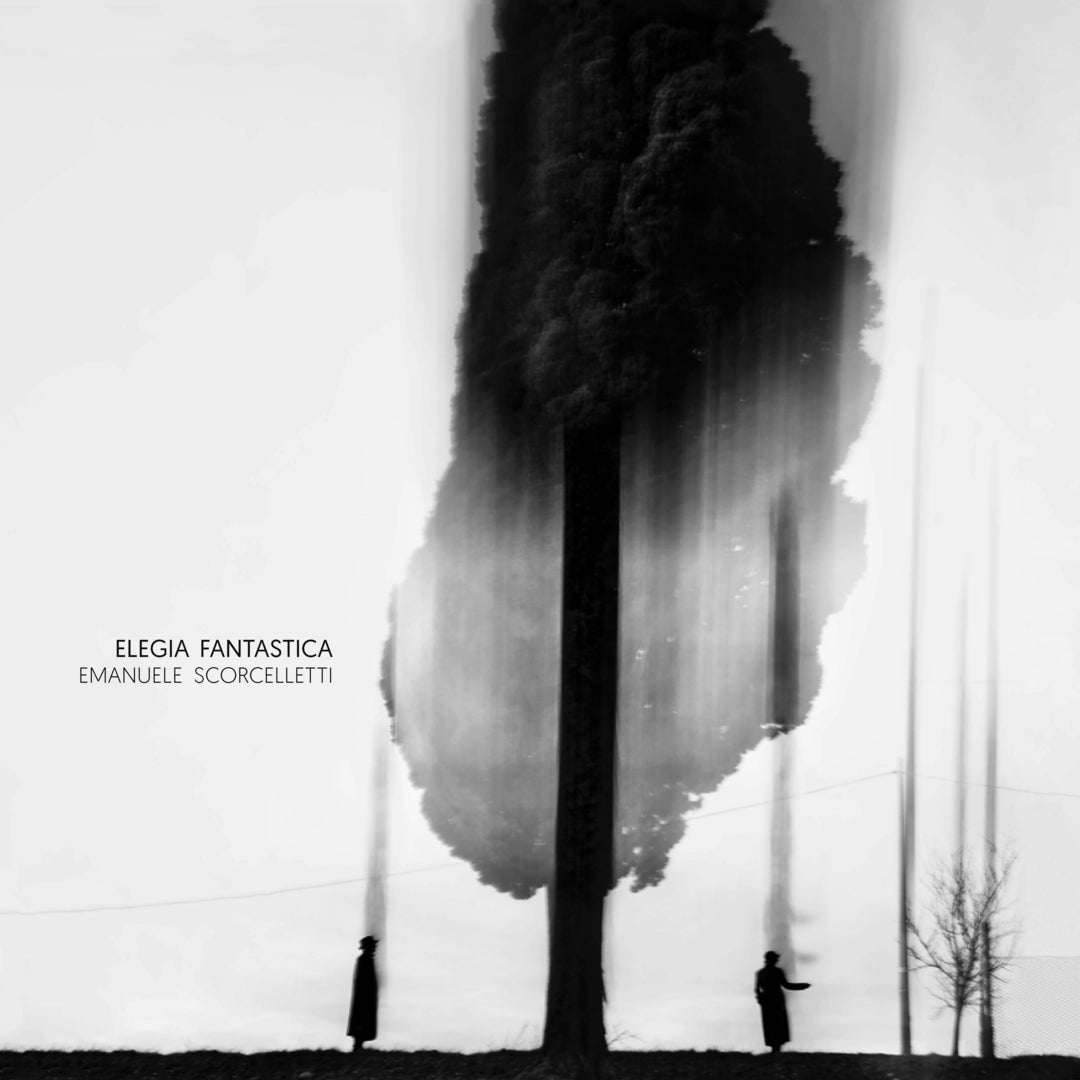
Emanuele Scorcelletti’s book thus presents a deep and meticulous photographic journey in black and white that touches on one of the most current reflections of contemporary man on the importance of places as fundamental elements to define his personal approach of existence.
The Marches are therefore the protagonists of research on the notion of place, studied in the relationships it establishes with the individuals who live there, who have lived there or who have forged strong ties with it.
As the title of the project suggests, the book is offered as a poetic composition which, as in the most refined elegies, is divided into two parts: that of memory and that of vision, the first melancholy and evocative, the second fiery and exalted. Classic images with balanced geometries characterize the first section of the book, while the shots in the second section are loaded with expressionistic and vibrant tones.


"Far from the red carpets he long walked to capture the stars from around the world, the photographer remembers the region of his youth, quiet and beautiful: Le Marche. In the heart of Italy, between the Apennines and the Adriatic, its geographical center. (...) Between melancholic memory and an evanescent vision of a motherland where the artist reinvents himself." — Le Figaro Voyages, by Jeanne Propeck
“The gaze of Emanuele Scorcelletti, known for capturing the human side of film and fashion stars, has evolved, and this is the subtlety of this book, as if this visual introspection were going to delve into a memory that is ever more distant, ever more imprecise, ever more expressionistic, bordering on the unreal. With his new work, Elegia Fantastica, memories gradually blur and Scorcelletti slowly frees himself from the traditional technical rules of photography, such as those of exposure time or framing, to obtain light-bleached portraits or hyper-contrasting black and white landscapes. In this evanescent journey and this nostalgic timelessness, ghostly and light forms evolve in cities frozen by the years, in sacred places preserved by a thousand-year-old faith, in a rural world spared by the frenzy of modernism. Images in movement that reveal a dreamlike work as an ode to eternal Italy, as a poem whispered to the wounds of life in which floats a certain perfume of innocence.” — Cyril Drouhet, Extract from the preface
Member of the Gamma photo agency from 1989 to 2009, internationally recognized for his photos of film and fashion stars, he received in 2003 the prestigious World Press prize in the “Arts and Culture” category for his black and white photo of Sharon Stone walking the carpet at the Cannes Film Festival.
But make no mistake about it, what moves Emanuele is above all otherness and everything that deeply affects people, “places and people”, whether documenting the Carnival of Venice (in its early stages), a tree planting program in the Tamil Nadu region of India for the French Yves Rocher Foundation (2017), the General States of Women for French ELLE Magazine (2010) or the relationship between man and nature (exhibition Equus in La Gacilly Festival, France, 2017).
Cyril Drouhet is director of photography of the Figaro Magazine, part of one of the most important French media. He is also a curator.
Simona Cardinali is an Art Historian at the Civic Museums in Palazzo Pianetti, Jesi (Italy).
Denis Curti is director of the monthly “Il Fotografo” and artistic director of the “Casa dei tre Oci” in Venice, artistic director of the Photography Festival of Capri.